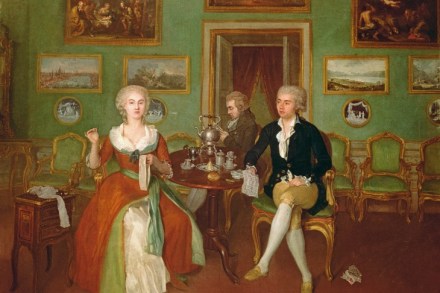
Manners

Dear Mary: What do I say to the neighbour who comments on my daily exercise?

From our UK edition

Q To your correspondent with a guest whose table manners offend (2 May), you suggest screening him off with a well-positioned vase of flowers. Mary, this may work for lockdown but whether or not his peers say that ‘table manners aren’t a thing anymore’, they certainly are still a thing among the sort of people who might give him a job. Someone needs to upset him, in the short term, for his own good in the long. I write as a parent whose daughter’s likeable but slobbish-at-the-table boyfriend will re-enter our orbit when this blessed holiday comes to an end. — Name and address withheld A. The clue is to approach the issue from a humanitarian, rather than a snobbish, perspective.

Dear Mary: How do I handle my lockdown guest’s lack of table manners?

From our UK edition

Q. I am being driven to distraction by a touchy relation who has responded to the lockdown by WhatsApping me three or four times per day with a succession of YouTube and other video clips, accompanied by messages such as ‘You’ll love this!’ If only that were the case. None of the often lengthy video clips are particularly interesting or entertaining, yet I feel obliged to open them, not least because WhatsApp allows her to see whether or not I have done so. The arrival of each new message from her fills me with dread and exhaustion. How can I stop her from continuing to bombard me without hurting her feelings?— Name and address withheld A. She cannot tell if you have muted the clips, so why not turn these interruptions to your advantage?

‘Social distance shaming’ is getting nasty

From our UK edition

The Queen said in her address to the nation that what’ll get us through the lockdown and its ramifications will be our traditional British good humour. I’m not certain. Tempers are beginning to fray — and as we are looking at another week, minimum, of house imprisonment, I predict disaster. It is getting quite tense out there. A day or so ago my wife and I, peaceable elderly folk, were bumbling along the promenade, here on the south coast. A jogger went past, shouting at us: ‘Effing morons!’ On his way back past us, he again said: ‘Effing morons! Take exercise!’ Had I a gun, I’d honestly have shot his head off. Joggers are always vile anyway, and the ones wearing face masks are the worst.

Dear Mary: How do I get out of bossy chain emails?

From our UK edition

Q. Each day while working from home, I have at least one hour-long meeting via Zoom. One of my colleagues has a dodgy internet connection and has become a terrible menace as we all politely sit through minutes of unpleasant white noise while she tries to communicate her thoughts. The meeting chair never seems to take a hard line on this; do you have any advice? — M.C., Fosbury, Wilts A. You would do well to join the Zoom meeting via a computer rather than your phone. Zoom will highlight the person who is speaking at any one time, so when the offender’s name comes up on the screen, you can turn to some ironing or an unfinished watercolour you prepared earlier.

Dear Mary: How can I self-isolate without people bothering me on Zoom?

From our UK edition

Q. Caught in Switzerland as the ski resort shut down around my ears, and feeling like a walking health hazard, I returned to Somerset to begin splendid isolation days before it became fashionable or mandatory. I’ve been getting loads of jobs done, and the dog is happier than ever, but my peace is being perforated by London friends — the sort who associate solitude with boredom — inviting me to virtual dinner parties on Zoom at a set time with the inescapable tagline ‘we know that you have no other engagements’. After a busy day out in the garden, all I want to do is settle by the log burner with a sausage supper and catch up on MasterChef.

Dear Mary: How can I stop my family scoffing our coronavirus chocolate stockpile?

From our UK edition

Q. How can I stop a member of the household from glutting out on the chocolate supply I have stockpiled? A glance into the larder would suggest we are more than adequately catered for in the event of a lockdown, but we are an unusually large family (which includes in-laws and staff) and while most of us are on board with an ethical siege spirit, two large bars of Fruit & Nut went missing over the weekend. You don’t have to be Agatha Christie to guess the culprit’s identity. My problem is: how can I catch him in the act? People are in and out of the larder at all times, so locking it would be impractical. — Name and address withheld A. First pleasantly address the household.

Dear Mary: Should I return my pod coffee maker on moral grounds?

From our UK edition

Q. I adore doing jigsaws and these days there’s an added bonus — by posting my progress on Instagram I can share the happy glow it gives me knowing that I’m reducing toxic screen-time habits. Recently I begged to borrow a magnificent 1,000-piece puzzle from a friend — a vast winter scene by Pieter Bruegel. Setting to, I succumbed to the meditative calm and satisfaction of puzzling. After two weeks of hard graft neglecting pretty much all domestic duties, the puzzle was finished, but with a piece missing! This maddening lost piece is an obscure blob of twiggy branch that nobody could love, but its absence mocks all my efforts. I cannot be sure it was I who lost it.

Dear Mary: Should I tell my friend that his expensive lunch made me ill?

From our UK edition

Q. I see a lot of two of our grandchildren because they live in our London house. We are centrally located so we see a lot of their friends, too. Our grand-children are well-mannered but conversation is always stalling because of their refusal to allow me to use shorthand to identify the friend being discussed e.g. ‘the fat one’. I do not intend to offend — they’re just shortcuts that people of my age group (70+) use when we can’t remember anyone’s name, let alone the names of our grandchildren’s friends. If I have to ask, for example, ‘Was Eric the boy in the Star Wars hoodie who ate crumpets last Tuesday?’ — rather than ‘Is Eric the fat boy?’ — dialogue becomes clunky. How can we break this impasse?

How Emily Post taught the elite to greet

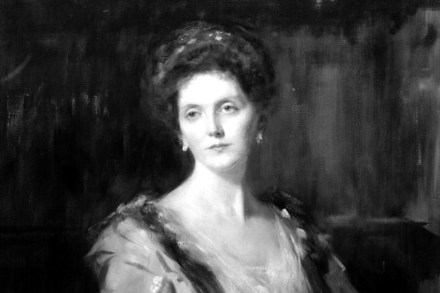
This weekend, Emily Post, born Emily Price, turns 147. Born in October of 1872 to an affluent Maryland family, her life from the start was governed by the rituals of privilege and dictated by decorum — balls, cotillion, dinner parties, calling cards, and all the other occasions and duties one can find advice about in her 1922 Etiquette in Society, in Business, in Politics, and at Home. Etiquette was the book that made her famous, and ensured her name would be forever synonymous with seemingly tedious and elite manners.

emily post

The Farm Stand Test

Tall and thin — a little stooped, his moustache and the thatch of his hair starting to show a little white — Lowell Gerry was putting out pumpkins this past week. Dozens and dozens of the things: round ones and flattened ovals. Bright orange ones, as neon as DayGlo, and deeper colours edging toward a reddish brown. A range of albino pumpkins, too, like pale sickly ghosts. Like vegetable lepers. They seem to sell fairly well. Last Tuesday, before the first snow dusted eastern South Dakota over the weekend, two or three other shoppers stopped by in the 15 minutes I was there to look for a few of the harvest’s last green tomatoes. It’s Halloween, of course, that incites the pumpkin fervour. The town of Madison is not exactly tiny, by rural standards.

farm stand test

In praise of Midwestern manners

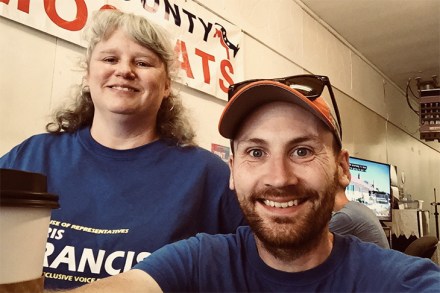
Chris Francis stopped by my table down at the Sundog coffee shop to chat for about 20 minutes last Friday, and he didn’t ask for my vote. Now, in the give and take of daily conversation — the ebb and flow of coffee-shop chatter in a small Midwestern town — lots of people don’t canvass for votes. But Chris is a Democratic candidate for one of the District 8 seats in the state legislature here in South Dakota, and he’s going to need all the support he can get when election day comes in November. The reason Chris didn’t ask may be that he assumed I already planned to vote against him, although I’ve only met the man once or twice when I stopped by the Brickhouse, the local arts centre he runs.

chris francis south dakota midwestern manners

The short step from good manners to lofty imperialism

In the gap between what we feel ourselves to be and what we imagine we might in different circumstances become, lies civility. Keith Thomas’s marvellous new book addresses the subject of ideal behaviour. It shows the way that early modern England formed notions of civilisation and proper conduct, in contrast to what was termed ‘the Other’. These alternative people were labelled ‘barbarians’ or ‘savages’ when found abroad or on the Celtic fringe. If the unacceptable was found within England, rural or impoverished, they would be called ‘clowns’ or ‘clodhoppers’.