Mali

Never underestimate the complexities of African history

From our UK edition

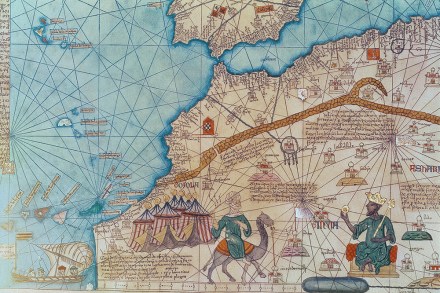
What does it take to bury an outdated argument? The thought occurred while reading Motherland, one of a series of recent books seemingly haunted by the ghost of Hugh Trevor-Roper. Back in 1964, Trevor-Roper, an expert on the English Civil War and the Third Reich, made the mistake of opining on African history. There was nothing much to teach, he said, other than the history of Europeans in Africa. ‘The rest is largely darkness... And darkness is not a subject for history.’ He then added insult to injury with a snitty reference to the ‘unrewarding gyrations of barbarous tribes’. These were silly remarks; but Trevor-Roper was the man who later authenticated the Hitler diaries, so not above the odd clanger.
Some uncomfortable truths about World Music

From our UK edition

Joe Boyd’s masterly history of what some of us still defiantly call World Music – more on which later – takes its title from Paul Simon’s ‘Under African Skies’, but is really less about the roots of rhythm than its routes. A typical chapter will start with a song from a particular geography, then wind the clock back to the country’s history, then forward again to show how that history has contributed to the development of its music, and finally move outwards, following the trade winds as they carry the sounds around the world.

The complexities of our colonial legacy

From our UK edition

It happened by accident. In 1829 the naturalist Nathaniel Bagshaw Ward was trying to hatch a moth pupa. He placed it in a sealed glass container, along with some soil and dried leaves, and set it aside. Sometime later he was surprised to find that a fern and some grass had taken root in the soil, despite having no water. As Sathnam Sanghera writes in Empireworld, the discovery ‘revolutionised the logistics of international plant transportation’. Suddenly there was a means of securely transporting seeds and seedlings across vast distances. Empireworld is a sequel to Sanghera’s wildly successful Empireland. Where the latter examined the legacies of empire in Britain, this book seeks to apply that template to the world.

Putin’s imperialism in Africa

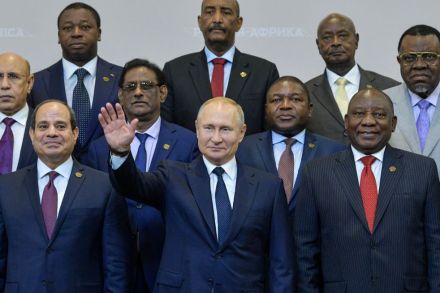
Last week, at roughly the time that photographs and stories began to filter out of liberated Bucha in Ukraine, the NGO Human Rights Watch published a report of similar massacres which took place contemporaneously in rural Mali. What linked the two was the identity of the perpetrators. In Ukraine and across Africa, these atrocities are committed by Russians. In combination with the Malian military junta, foreign soldiers "summarily executed an estimated 300 civilian men," in the town of Moura in late March. These soldiers did not speak French.

Has Putin outplayed Macron in Africa?

From our UK edition

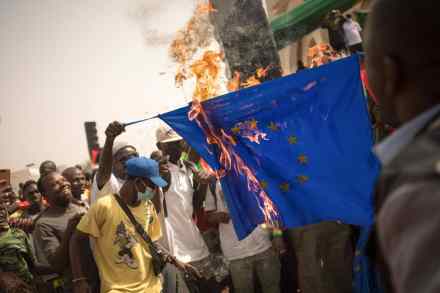
While the world is focused on Ukraine, Emmanuel Macron has withdrawn all French forces from Mali. Last weekend, thousands of soldiers were flown out of the former French colony after nine years of fighting Islamist insurgents in the Sahel. Malian protesters bid the French soldiers farewell by shouting ‘Shit to France’ at the departing planes. Following a military coup in May, Mali’s ‘interim President’ Colonel Assimi Goïta began to tire of the French and their calls for free elections. There were also lingering doubts over France’s motivation, stoked by a Russian disinformation campaign. So Goïta began looking for allies who could provide him with muscle to fight the Islamist insurgency without any lectures about democracy.