Lockdown

Lockdowns are as contagious as Covid

From our UK edition

Schools might never have closed in the first place had the coronavirus not started in China. Imagine it had started in Sweden. Whoever responded first was going to set the tone for the nations that followed. When we are uncertain about what to do, we look to the behaviour of others to guide us. Imagine walking down a street with a new restaurant on either side (you remember restaurants, right?), and that you do not know anything about either of them. One has some customers inside, the other has none. Assuming you can get a table, you would choose the one with people in it because, in the absence of any prior knowledge about the restaurants, other people provide you with a signal about which to eat in.
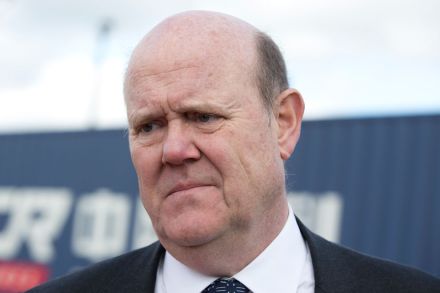
Rico Back’s departure is a first-class opportunity for Royal Mail

From our UK edition

The Royal Mail worker who rang my bell to deliver an Amazon package on Friday was wearing a glittery ball gown because she and her colleagues were fundraising for local hospitals: ‘Two thousand quid so far,’ she said cheerily as she accepted my donation and thanks. But if I had asked her what she thought of the performance of her ultimate boss Rico Back — chief executive of Royal Mail until his sudden departure after less than two years in the job — I suspect she might not even have recognised his name, so remote has this German-born, Swiss-resident big shot been from the front line of his organisation’s role in keeping us all in touch with each other during the lockdown.

Did the behavioural scientists have a point?

From our UK edition

For all the abuse heaped on the Behavioural Insights Team early in the crisis, let’s not forget that the only three immediate solutions proposed by the combined ranks of the scientific establishment were, um, behavioural. People were encouraged to wash their hands with soap for 20 seconds, to stay home where possible and to keep two metres away from those outside their household. And we adopted this advice in our millions, long before any mandate had been issued. It would be wrong, when modelling the spread of this disease, to overlook the effect of voluntary preemptive action. My last visit to London was on 12 March, 11 days before we were made to stay indoors. It was already a ghost town. Some elderly relatives had been self-isolating from the beginning of the month.

The lost world of lockdown

From our UK edition

It started when, the day after the announcement of some lockdown easing, I drove five miles along the coast road. For seven weeks there had been barely another car, and now it was like a normal pre-pandemic morning. Our little town was no longer deserted, and there were queues for newsagent and bank. Many holiday and second homes are apparently occupied, though no one is actually allowed to be here of course. Nevertheless, agencies are merrily advertising: ‘Come and lock down in beautiful, safe North Norfolk.’ The paths to the beaches are open again, and if the wind had not swung round to blow a vicious north-easterly they would have been crowded.

Coromance is blossoming

From our UK edition

It’s heartening to hear that while it’s curtains for the economy, our domestic lives are on the up. In Wuhan there was a spike in divorce rates, and in Japan, wives have been sending their husbands away to hostels. But here in Britain, there’s love in lockdown. Sales of engagement rings have risen significantly since we were all told to stay at home and couples have found creative ways to pop the question in their living rooms and local parks. For those who have been married for longer, working, eating and sleeping at home together 24/7 for weeks on end has been a strange novelty — an odd throwback to a time when the relationship was new.

Jonathan Sumption: a response to my critics on lockdown

From our UK edition

Jonathan Compton criticises my views on lockdown on two grounds. First, I suggested that it is up to us to decide what risks to run with our own bodies, not the state, and that those who did not want to run the risk of meeting infected persons could voluntarily self-isolate. For this, I am accused of ignoring the ‘societal risk’ that infection levels will rise to the point where supply chains break down, the NHS is overwhelmed and the fabric of society is at risk. Secondly, he says that my views, even if correct, should not be expressed by a former senior judge. I recognise the first argument in principle, but those who put it forward as a justification for locking everyone up must surely offer some plausible reason for supposing that these extreme consequences will happen.

Serco CEO’s lockdown breaking family trip

From our UK edition

Some unwelcome publicity this week for Rupert Soames, Churchill’s grandson and brother of the former Conservative MP Nicholas – once known as ‘Fatty’ – Soames. Rupert posted a curious tweet on Tuesday extolling the virtues of the Caledonian Sleeper train, run by the company he heads, Serco. The sleeper service from London to Scotland has had what Soames himself admits is a ‘blizzard of bad publicity’ over delays, faults and dirty cabins recently. But this particular tweet was because Soames was about to be outed for breaking the coronavirus lockdown, travelling from London to Inverness on the sleeper. His staff are members of the Rail, Maritime and Transport Union (RMT), which has long borne a grudge against the Soames family.

texas militias

Texas’s traveling economic militias are done with lockdown

TexasAs lockdowns began across America, Texans did what Texans do best. They emptied the shelves of every firearm store in the state.Urban progressives and the pundit class were quick to scorn. But those firearms, and the millions more owned by the people of Texas, are now proving useful. Texans want to reopen their economy and are turning to amateur armed guards in order to do so.A recent piece in the New York Times focused on a tattoo shop in Shepherd, Texas, about an hour outside of Houston. When Jamie Williams’s business was passed over for the first wave of permitted re-openings by Gov. Greg Abbott, she called one of what can only be described as Texas’s traveling economic militias.

Reopening schools must be our first priority

From our UK edition

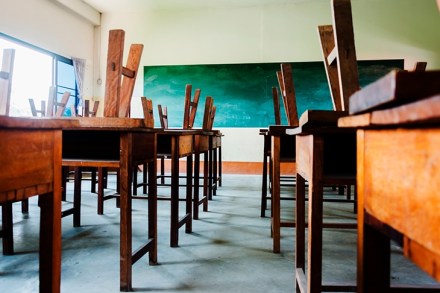
It would be a tragedy if one of the legacies of Covid-19 — a disease which hardly affects children physically — was a widening of the already broad gap in educational attainment between rich and poor. But sadly, the damage is already well under way. Back in March, Britain was the European country most keen to keep its schools open in the face of the then-burgeoning number of Covid-19 cases. Now it is the other way around. In Denmark, primary schools have been open for a month. This week, children began to return to class in Germany, France and the Netherlands. Next week, schools will start to reopen in Belgium. Yet in Britain, the earliest date we have been given for reopening schools is 1 June, and then only for some children in primary schools.

Portrait of the week: Europe’s lockdowns ease, England stays alert and Broadway stays shut

From our UK edition

Home The government changed its slogan from ‘Stay home, protect the NHS, save lives’ to ‘Stay alert, control the virus, save lives’. Authorities in Scotland, Wales and Northern Ireland refused to adopt it. The day after a 13-minute televised speech to the nation by Boris Johnson, the Prime Minister, the government published a 50-page Recovery Strategy. A 14-day quarantine would bind anyone entering the country (with exceptions, such as people from France). Everyone should continue to work from home if possible, but workplaces ‘should be open’, apart from those required to be closed.

The revenge of the oldies

From our UK edition

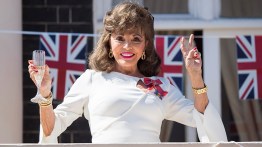
Entering my 54th day of quarantine, I recall how much I was looking forward to this spring in England. There were so many exciting events and celebrations planned. Several friends were throwing big birthday bashes; I was picking up a couple of awards, performing my one-woman show, going to Cannes, and most exciting of all, participating in a plethora of events surrounding the VE Day celebrations. All of the above have gone with the proverbial wind, except for, in a small way, the latter. The Queen’s Pageant Master, Bruno Peek, asked me if I could lead the nation’s toast to our heroes and heroines of the second world war. VE Day dawned sunny and hot. Percy and I festooned the balcony with Union Flags and bunting, and at 3 p.m.

My first post-lockdown party

From our UK edition

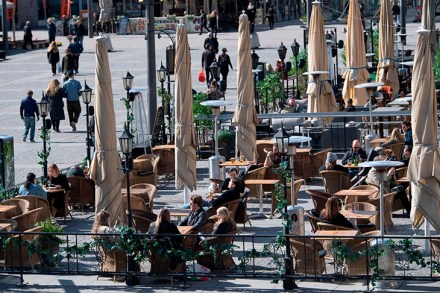
France is divided into a red zone and a green zone. We’re green. Green for go. From this morning we no longer need a signed and dated permit to leave the house; we can socialise with up to ten other people at a time; and we can travel up to 60 miles in any direction. In theory we could fill a minibus and go on a beano down to the coast tomorrow. And in spite of the government ordering bars and restaurants to remain closed, the village beer bar unexpectedly opened for business last Saturday, and the lights were on in the poshest village restaurant where people inside could be seen tucking in. Perhaps, in truth, the delicate decision about when to open the bars and restaurants has been quietly devolved to the local mayors’ offices.

This is not a natural disaster, but a manmade one

From our UK edition

Should our future permit an occupation so frivolous, historians years from now will make a big mistake if they blame the nauseating plummet of global GDP in 2020 directly on a novel coronavirus. After all — forgive the repetition, but certain figures bear revisiting — Covid’s roughly 290,000 deaths wouldn’t raise a blip on a graph of worldwide mortality (reminder: 58 million global deaths in 2019). Covid deaths will barely register in the big picture even if their total multiplies by several times. For maintaining a precious sense of proportion, check out some other annual global fatalities: influenza, up to 650,000. Typhoid fever, up to 160,000. Cholera, up to 140,000. Malaria, 620,000 in 2017, almost all in Africa (so who cares, right?).

Lives vs lives – the global cost of lockdown

From our UK edition

‘There have been as many plagues in history as there have been wars,’ wrote Albert Camus in The Plague, ‘yet always plagues and wars take people equally by surprise.’ So it was this time. The arrival of a new coronavirus blindsided governments of most advanced nations as they reached for a tool that few had ever really considered before: lockdown. It all happened too fast for a proper discussion about the implications. The biggest question — the extent to which lockdown will claim lives as well as save them — is one you can ask at a global level. We know the national costs. In the United States, there is joblessness on a scale not seen since the Great Depression, with more than 33 million unemployed.

How to get your racing fix under lockdown

From our UK edition

There is racing elsewhere in the world. It restarted in France on Monday, la course de chevaux being classed in that fine country as an agricultural activity. My friend the form guru, who combs back six races in search of clues, has even cast his net to include somewhere called Morphettville in Australia where last week he succeeded in backing a 65-1 winner. When, over the phone, he sensed my raised eyebrow at a horse with truly believable form being allowed to start at such odds, he explained that the animal had won two previous races: ‘The horse wasn’t to know they were lower-class events. He still got the same boost to his confidence.’ Good point.

When money dies

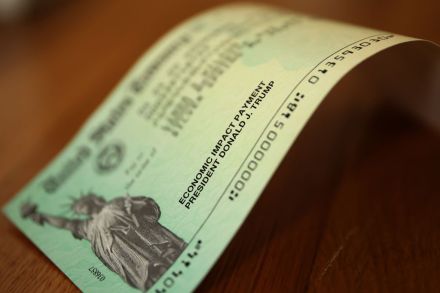
‘Money for Nothing’ is more than just the name of a Dire Straits hit from 35 years ago. Today it’s the guiding principle of an increasingly wide spectrum of American political thought. Andrew Yang built his campaign for the 2020 Democratic presidential nomination on a call for a universal basic income — a $1,000 monthly payout from the federal government to every adult in the country. When Congress in March fumbled for something grand to do in response to the coronavirus crisis, a consensus quickly settled on sending out $1,200 checks to most Americans. But free money isn’t just an emergency measure or a faddish idea from the left.

money stimulus

Ten reasons to end the lockdown now

From our UK edition

Writing in this magazine a month ago, I applauded the government’s stated aim of trying to follow the science in dealing with Covid. Such promises are easier made than kept. Following science means understanding science. It means engaging with rival interpretations of the limited data in order to tease out what is most important in what we don’t know. Instead, the government in the UK (and many other places) seems uninterested in alternative viewpoints. The chosen narrative – that lockdown has saved countless lives – has been doggedly followed by all spokespeople. No doubt is allowed. We have been seeing the groupthink response to a perceived external threat that Jonathan Haidt describes so lucidly in his excellent book on human moral thinking, The Righteous Mind.

gavin

Gavin Newsom’s beautiful walls

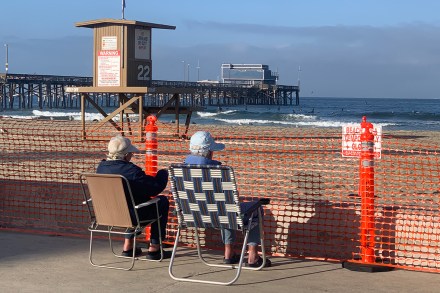
‘It is a monument to stupidity, not just vanity, to stupidity. It’s pure political theater. He creates these sideshows, this political theater, this political grandstanding.’ Guess who said that about building barriers in California?That was Gov. Gavin Newsom, a year ago, speaking about President Trump’s big, strong, permanent border wall. A wall now slowing the influx of illegal immigrants to California. An influx California is, ironically, now seeking to prevent because of the coronavirus.The irony grew last week. It was Newsom who built walls in California: walls of the cheap, orange, plastic-barrier variety. Newsom’s walls stopped healthy American seniors (see above) — and kids, and families — from strolling on their beaches.