Liberty

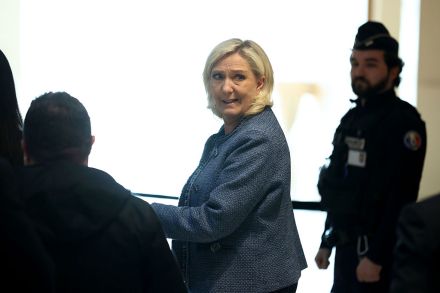
Trump, le Pen and the legal war on politics

A few days ago, Raphaël Glucksmann, a French Member of the European Parliament and co-president of the left-wing Place Publique party, proposed that the United States return the Statue of Liberty to France.  In a speech on March 16, he argued that the US, under the Trump administration, no longer embodies the values of democracy and freedom that the statue represents.  Glucksmann said, “We’re going to say to the Americans who have chosen to side with the tyrants, ‘Give us back the Statue of Liberty.’ We gave it to you as a gift, but apparently you despise it. So it will be just fine here at home.” Be careful what you wish for.
Le Pen

Zelensky spoke to the American soul

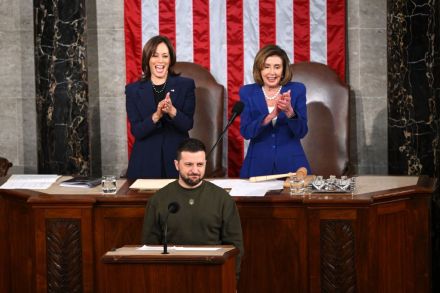
When Volodymyr Zelensky entered the chamber to address Congress, the applause and cheers took on a particularly emotional character. It was not the stilted, forced applause that the president receives at the State of the Union; it was an affectionate show of admiration for a man who has come to embody the twenty-first century struggle for freedom. Though delivered to Congress, the opening words of the Ukrainian president’s speech revealed his true audience: “Dear Americans... all those who value freedom and justice.” It was a speech for all of us. He pulled the dusty tarp off of America’s deepest identity as the shining light of liberty in a world of tyranny.

volodymyr zelensky

Freedom isn’t ‘white’

An op-ed in the Washington Post about the Canadian truckers’ protest tells us that the idea of freedom is “White” with a capital W and that the truckers’ belief in freedom is “a key component of White supremacy.” This is about as sensible as saying that the idea of gravity is “English” or that the Post reports the news. True, Newton’s apple fell in England and the Post looks like a newspaper, but gravity is universal. The same goes for stupidity, though that takes many forms, and for the impulse to be free, though that too takes many forms, some of them stupid. Taylor Dysart, the author of this insult to reason, is a white PhD student at private Ivy League university. Color me shocked.

white

A working-class liberty movement

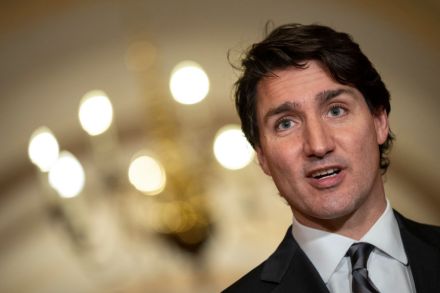
We begin today in the Canadian Parliament, which has its own version of prime minister's questions. And while it isn't as entertaining as the famously unruly UK Parliament or the gem that is the Australian Parliament ("the honorable membah is a grub, Mistah Speakah!"), it can still get pretty rowdy. So it was that last week, Candice Bergen, the interim leader of the Canadian Conservative Party, rose to ask a simple question of the ruling Liberals: would they work with the truckers who have been protesting Covid restrictions in Ottawa to resolve the impasse? She may as well have been talking to a Speak & Spell. The Liberal minister Chrystia Freeland chided and patronized. She condemned swastikas and Confederate flags. What she never did was to answer the question.

The end of Canadian liberty

This week, my home country of Canada implemented a slew of new travel restrictions in response to Omicron, the newest ideation of what will surely be endless Covid variants. Based on the reports, this variant is mild and nothing to panic about. But hey, why not panic, just to be safe? And by “safe,” I mean “sufficiently naive and fearful so as to ensure we continue to comply with ever-irrational regulations and restrictions, dutifully marching along dressed in useless and humiliating masks that restrict both breathing and communication, and maintaining religious devotion to vaccines that only work in that they reduce symptoms.” Some countries and states have responded to Covid humanely and rationally.

The West should rediscover Hayek and end the lockdowns

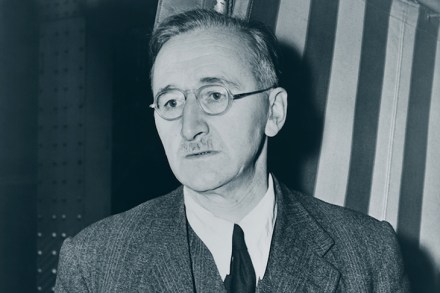
Friedrich Hayek’s The Road to Serfdom is famed as one of the most effective takedowns of the socialist planned economy. Although published in 1944, Hayek’s arguments have never been more relevant as citizens around the world forfeit their freedoms in exchange for security in the face of the COVID-19 pandemic. Hayek’s book, contrary to popular opinion, was addressed to the people of Britain rather than the socialist Soviet Union. Hayek worried the Brits would fall victim to a continued expansion of the strong federal powers enacted by the British government to fight World War Two, and hoped to wean them off their addiction to government control.

libertarians hayek