Liberation

Liberation is a witty, genuine snapshot of second-wave feminism

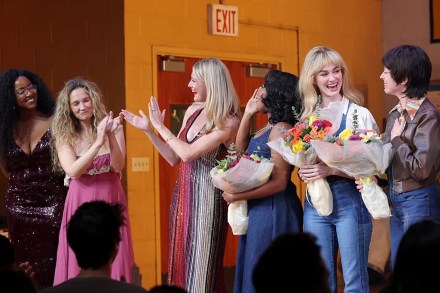
In the second act of Liberation the main cast quietly, and without fuss, starts to undress. By the time the lights go up, all six women are naked. In this masterful play by Bess Wohl, the moment does not feel shocking or gratuitous but somehow comforting. In 1970s Ohio, a group of women meet weekly to fight for equality through “consciousness-raising.” Mostly that consists of free-ranging conversation, of which the women have a lot and which is always smart, funny, vulnerable and eye-opening. But after reading an article about body positivity in Ms. magazine, they meet in the nude.
liberation

Visionary tales: Mrs Calder and the Hyena, by Marjorie Ann Watts, reviewed

From our UK edition

One of the pleasures of reading, often looked down on in literary circles, is when one warms to an author’s characters. Among the many delights of Mrs Calder and the Hyena, Marjorie Ann Watts’s second collection of short stories, was my feeling that here were people with whom I would get along. Ostensibly, they are undistinguished – from the hinterlands of society, whether by virtue of status, wealth or age; yet they reveal some irrepressible glint of antinomianism, a rejection of conventional judgments and standards, a certain anarchic glee. In the title story, elderly Mrs Calder insists she is being accompanied by a hyena – ‘always a little on the edge of my vision, but definitely getting closer’.

South Asia in a time of the breaking of nations

From our UK edition

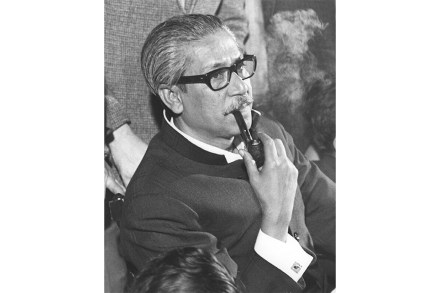
Early on Christmas morning in 1962, the Indian diplomat S.S. Banerjee heard a mysterious knock on his door in Dacca, East Pakistan. Standing outside in the darkness was a 14-year-old boy, who beckoned to him to follow, and minutes later Banerjee found himself opposite the firebrand politician Mujibur Rahman, a pipe-smoking Bengali activist who had recently transformed from a Pakistani nationalist into one of the country’s fiercest critics. For the next hour, the two men engaged in small talk, with Banerjee growing increasingly mystified as to why he had been summoned. Then, just as he was about to go home, he was handed a small envelope intended for the Indian prime minister Jawaharlal Nehru.

All about my mother: Édouard Louis’s latest family saga

From our UK edition

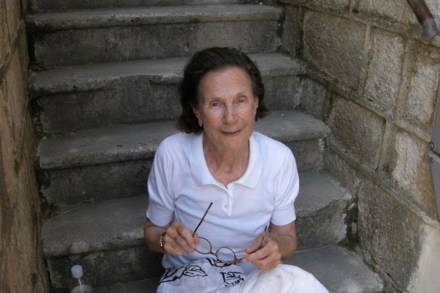
Shunned by his father and his peers because of his homosexuality, Édouard Louis (born Eddy Bellegueule in 1992) left his village in rural Normandy and moved to Paris, becoming the first member of his family to attend university. By his mid-twenties he had published three well-received autobiographical novels: about working-class machismo (The End of Eddy), his experience of sexual assault (A History of Violence) and the condition of the French welfare state (Who Killed My Father). In his latest book he turns the spotlight on his mother, revisiting ‘the succession of accidents that made up her life’. Monique Bellegueule had ambitions to train as a chef, but was derailed by teenage pregnancies and terrible relationships.

The marvellous humanity of Meg Wolitzer

It’s because it’s the land of the loner that the United States is so loved or loathed. Yet to me the most beguiling novels that have zipped across the Atlantic in the past half-century or so are mostly about groups, specifically groups on campus, usually a rather classy campus at that. Mary McCarthy’s Group were at Vassar; Donna Tartt’s The Secret History is set in an elite liberal arts college in Vermont. Even The Catcher in the Rye, though legendary as a portrait of moody adolescence, is also a brilliant picture of life at the sort of college Salinger himself went to. But no novelist I can think of has majored on the group portrait with quite such verve, wit and sympathy as Meg Wolitzer.