Liberal democrats

Gordon Brown announces his resignation

From our UK edition

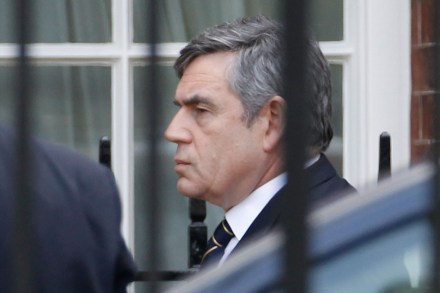
You're witnessing history, CoffeeHousers: Gordon Brown has just announced his departure from frontline politics.  In a statement outside Downing St, he confirmed that he would be stepping down as Labour leader by September – triggering a leadership contest in the process.  It's clear that he's using himself as a bargaining chip, making a Lib-Lab deal more palatable to Nick Clegg.  Indeed, he even said that formal talks between the parties are now commencing. This threatens not just to shake the kaleidoscope, but to smash it to pieces.  Until 17:05 this afternoon, most folk thought that a Lib-Con deal was imminent.  But surely Brown wouldn't have taken this step if there wasn't a chance – however slight – of sabotaging those efforts.

The return of David Davis

From our UK edition

The shadow Cabinet were gathering before their meeting at 2pm. One member told me ‘it is looking less like formal coalition now.’ But coalition remains the leadership’s preferred option. Talking to Tory MPs—old and new—this morning, there’s a sense that they would slightly prefer minority government. Though, no-one is planning to blow themselves up if the country does end up with a Tory-Lib Dem coalition. One other interesting development today is that there is a growing expectation that David Davis will be recalled to the colours. Certainly, his return would make Cameron’s top team more accurately reflect the ideological balance of the party.

Do the Lib-Lab talks alter the landscape?

From our UK edition

Isn't it all very cosy?  Turns out the Lib Dem negotiating team secretly met with a Labour delegation over the weekend: Ed Balls, Peter Mandelson, Ed Miliband and Andrew Adonis.  And it's thought that Nick Clegg has had more conversations with Gordon Brown, both on the phone and in person.  So the Tories aren't the only ones enjoying some quality LibTime. It doesn't really alter the cut of the situation, though.  Most folk around Westminster seem to expect a Lib-Con deal, of sorts, at some point today.  But Clegg and his team would weaken their hand if they didn't at least explore every option.  The Tory leadership will appreciate this – and, I'm sure, won't be all that perturbed by these latest developments.

Who’s using whom?

From our UK edition

Another day of live political theatre, staged live at College Green. Given that Cameron last night negotiated a confidence-and-supply deal - ie, enough to keep him in a minority government like Alex Salmond has in Scotland - why is he negotiating further? What's more to discuss? This is what we find out today. David Steel told Radio Four this morning that Nick Clegg had told him, before the election, that he would put a time cap on any Con-Lib Pact - ie, a shelf life of one or two years. This suggests that the Lib Dems would not fall for the obvious Tory ruse: the offer of a referendum on PR due in 2012, but with the sneaky expectation of a new election in May 2011 at the latest. But Cameron has much more to offer - and things that suit him rather well.

Who should get what?

From our UK edition

In February I pontificated about the composition of Cameron-Clegg government - to general ridicule. The blogpost looks increasingly prescient now that David Cameron seems to be favouring a formal deal with the Lib Dems. Assuming that Lib Dem MPs will sit around the Cabinet table, what ministries should they get? The assumption is that the Lib Dems want six Cabinet post and will probably end with no more than four. The Conservatives cannot give up the Chancellorship, Education or the FCO - departments that are important for the leadership, its worldview and its reform agenda . Nor is it easy to see a Lib Dem in Defence or someone like Liam Fox passed over (even if it was for Paddy Ashdown).

So now we know how Boris feels about coalition government

From our UK edition

Aside from a few quips about Walls sausages and Meccano, Boris has kept his views relatively private since the events of last Thursday.  But you can always count on the Mayor of London to open up for his Daily Telegraph column, and, today, he does exactly that.  Here's his take on a Lib-Con coaltion – which, to my eyes, seems more than just a little bit dismissive: "The Lib-Con negotiations are still going on, in a foretaste of the Belgian orgies of tedium and paralysis that proportional representation will inflict on the country. Everyone is trying politely to work out exactly how many Cabinet seats to give a party that came a resounding third and did worse than in 2005.

What A Carve-Up: The Glittering Prizes Awaiting Cameron and Clegg

From our UK edition

These are interesting times, aren't they? Interesting but scarcely simple. Nick Clegg may have suggested that a deal must be done by close of play, Monday if it is to be done at all and all the signs may still point to David Cameron coming to an arrangement with the Liberal Democrats but, clearly, difficulties remain. How could it be otherwise given the complexity of the situation and the stakes? Policy is the least of the problem. If one accepts that the old left-right labels are increasingly outmoded and that the defining divide today is between the centralisers and the localists, between the liberal and the statist then, theoretically at least, liberal Tories and true liberals in the Liberal Democrats can do a deal.

Confession Time: I Voted Labour

From our UK edition

I left the Labour Party in 1994 and re-joined on May 6th 2010. There, I've said it. I had always intended to vote Liberal Democrat in this election, but changed my mind in the polling station. It seems I wasn't alone.  I couldn't ever quite buy in to the New Labour project, but I would like to be involved in whatever it is that happens next.  Unlike others on the left, I would not be horrified by a Conservative/Liberal Democrat government, although I would be happier with a grand coalition/government of national unity. I voted Labour with a heavy heart. My local MP, Lynne Featherstone is exemplary and the local Labour council's handling of the Baby Peter scandal was woeful.

No Lib-Con deal for at least 24 hours

From our UK edition

William Hague has just emerged from the Cabinet Office and spoken of the 'positive, constructive and substantive talks' between the Conservatives and the Liberal Democrats. Discussion has encompassed political reform, reducing the deficit, banking reform, regulation of small businesses, environmental issues and civil liberties. Hague says that a further meeting will take place at some stage in the next 24 hours. 'That meeting,' he added. 'Will concentrate on deficit reduction and economic stability'. The language of the statement suggests that an informal pact is more likely than a formal coalition.

Don’t forget the Party, David

From our UK edition

Days, perhaps only hours away from the expected announcement of a Con-Lib deal, the Tory party rank-and-file is getting increasingly restive. Many MPs and party activists do not feel that Team Cameron has been sufficiently attentive to them and their concerns. They look longingly at the Lib Dems, whose democratic set-up enables MPs and party members to make their views known to Nick Clegg and the leadership. In a Tory party that has always favoured single-minded leadership, the options for representing rank-and-file views are few, particularly as the chairmanship of the 1922 committee remains vacant. As a result, many senior MPs have been reduced to calling hacks to find out what is actually going on.

Scotland Will Save England From PR

From our UK edition

That's right. There's a genial irony here. The very same Scottish MPs whose election helped prevent the Conservatives from winning a majority will be the men - and they are mostly men - who will prevent electoral reform. Those English voters who think it unfair that the great phalanx of Labour MPs returned from these chilly northern climes exercise an undue (in their eyes) influence upon the affairs of state might also pause to reflect that the people who will prevent electoral reform may well be those same Scottish Labour members. Not that this stops the deluded left from dreaming of some grand so-called progressive alliance. They're all at it and all utterly detached from reality. Exhibit A: Polly Toynbee. Exhibit B: Jackie Ashley. Exhibit C: The Observer's editorial. Wake up people.

A Liberty Government? Also: Clegg is Not Kingmaker

From our UK edition

No, not a libertarian government, but an alliance between liberal Tories and Orange Book Liberal Democrats is arguably the closest thing we can get to it. Peter Oborne has a splendid column in the Observer today which makes the key point: Indeed the prime minister and his supporters are wrong to argue today that the Liberal Democrats and Labour have far more in common than Lib Dems and Conservatives. Ideologically, the Conservatives and the Liberal Democrats share one massive idea. They are both doctrinally suspicious of central government. They favour localism, decentralisation, individual freedom and accountability. The want to destroy the big state and all of its paraphernalia: bureaucracy, secrecy and central control.

Let’s Talk About Tax

From our UK edition

We know that europe and perhaps electoral reform will be difficult for the Tories and Lib Dems to agree upon. So let's talk about something else: tax. Cameron's email to Tory members today strikes just the right tone and says most of the right things. It makes it clear that he thinks there's a deal to be done and, importantly, reminds the membership that the Tories will have to give some things up too if the partnership is to be stable enough to last at least two years. That's important because it's one way of building trust and convincing the other party that you're serious. So, on tax, I'd suggest this as one potential way forward: 1. The Tories should make it clear that they are postponing their planned changes to inheritance tax*.

Clegg laps it up

From our UK edition

Ooh, a touch of drama just now, as Nick Clegg addressed the 1,000 or so protestors calling for voting reform in Smith Square.  He said that the demonstration was "wonderful," and got big cheers for saying that PR is "in the national interest".  But there were no hints, either way, about how the Lib-Con talks are going, or whether PR was a dealbreaker – which may have left the people shouting "Don't sell out!" a little dissatisfied.  For all the banners and flags, this one will still come down to the decisions of men in suits, behind oak doors. UPDATE: The Beeb's Laura Kuenssberg tweets that the protestors are moving on to Tory HQ. Fun and games.

Where are Labour’s manners?

From our UK edition

For all the feverish political activity in Westiminster today – and beyond the occasional voting reform protest – there's a strange, impermeable calm to the situation.  Everything is going on behind closed doors, and everyone is remaining relatively tight-lipped.  Signs are, we may have to wait a couple of days before any light breaks through the fog of discussion and counter-discussion.   One thing, though, is already becoming increasingly clear: 13 years of tribalism haven't done Labour much good when it comes to cross-party negotiations.  There are, of course, the rumours that Gordon Brown had an – ahem – "unconstructive" meeting with Clegg last night.

Time for a National Government? (Revisited)

From our UK edition

If there is one lesson to be drawn from the television debates, it is that people have grown tired of politicians slagging each other off. David Cameron promised an end to "yah-boo" politics, but the institution of parliament makes this near-impossible in practice. However, while parliament is out of action, there just might be the possibility of creating something genuinely ground-breaking: a government of national unity. I first suggested this idea in the New Statesman during the 2008 Labour Party conference: "If the financial crisis is as serious as many in the government suggest, then extraordinary times require bold solutions.

It’s Time to Hug a Lib Dem

From our UK edition

Ben Brogan says that all the talk of the Tories offering three cabinet positions to the Liberal Democrats is premature. I dare say it is. Nevertheless this is a blog and speculation is good for blogging. I rather think we'd have a better* government if Nick Clegg was Home Secretary, David Laws put in charge of Welfare Reform and Lord Ashdown sent to the Ministry of Defence. This latter clearly won't happen but, whatever you think of his past, Ashdown is an asset who ought to be used by the new government - even if we end up with a minority Tory ministry. But the Tories ought not to be afraid of coalition. They have more experience of it than any other British party and have never been damaged by it.