Clegg speech live-blog
From our UK edition
Clegg conf speech.
From our UK edition
Clegg conf speech.
From our UK edition
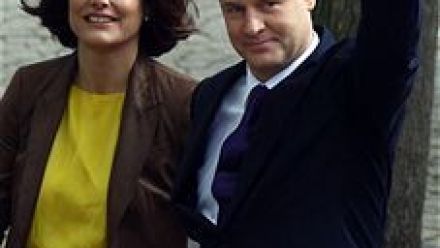
When Nick Clegg speaks today, he can - as usual - rely on a good deal of support from those in the hall. According to YouGov, current Lib Dem supporters support him by a 2-to-1 margin. That's stronger approval than Miliband gets from Labour voters, although nowhere near the popularity David Cameron enjoys with his own party: 93 per cent of Tories say the Prime Minister's doing a good job. Among the population as a whole, though, there's no doubt Clegg is unpopular. But he does at least appear to have stopped the rot - both in his personal ratings and his party's. As the graph below shows, the majority of the Lib Dems' poll decline - from the 24 per cent they won in May 2010 to their trough around 10 per cent - occured in the first few months after the election.
From our UK edition
The Lib Dems have just had a brief Q&A on foreign affairs. Paddy Ashdown and defence minister Nick Harvey gave staunch their support to the Afghan Mission, but confessed to having misgivings. Ashdown described the Bush administration's strategy as an "absolute model of how not to intervene, both militarily and politically". This failure, Ashdown said, ensured that a "victor's peace" is now beyond NATO's grasp. Harvey admitted that NATO's political progress in Afghanistan remained "very slow" despite ISAF's recent military success; this is scarcely surprising given the litany of bombings and assassinations over the course of the summer. The debate touched on the need to forge new trade relationships and Britain's role as an "aid super power".

From our UK edition
Nick Clegg will deliver his keynote speech to the Liberal Democrat conference later this afternoon. It has been substantially trailed this morning, despite competing for airtime with Nick Robinson's story about the injection of an extra £5 billion of capital spending into the economy. Similarly to Monday's Q&A with activists, Clegg is expected to defend the government's deficit reduction plan and insist that Britain can resist dire global economic trends. It remains to be seen whether Clegg will concentrate on the rest of the government's programme, especially its radical public service reforms. There is some concern in pro-government circles that he will not.
From our UK edition
Strange things are happening between Whitehall and Birmingham. After the IMF downgraded its growth forecast for Britain yesterday, the BBC reported that some government were considering spending an additional £5bn on capital projects: transport links, broadband, housing and so forth: as a stimulus to ward off possible recession. The implication was that the Liberal Democrats were in favour of changing Britain’s economic course and the Conservatives were not. Chris Huhne appeared on Newsnight and quashed the story (30 mins – 33 mins). He said he didn’t recognise the £5bn figure and said there was “no such plan”, but conceded that the government would have to be “imaginative and creative…to get growth going”.
From our UK edition
I’ve been away from Birmingham today but, even from a distance, it’s clear that Tim Farron has had a rather difficult day. It started with a story in The Times this morning about upset among his fellow MPs about his rhetoric on Sunday implying that the coalition partners would get divorced before 2015 and continued with him getting in a bit of a tangle about his leadership ambitions in interviews with Andrew Neil and Gary Gibbon. Farron’s problem is that he is an obvious candidate to run in any future leadership contest and so the leadership will constantly push him about his intentions.

From our UK edition
Chris Huhne can always be guaranteed to grate. Several Conservatives have cracked wry smiles at the energy secretary’s comments about the “Tory Tea Party tendency”. Mark Pritchard quipped that plenty of senior Lib Dems would soon be at leisure to throw their own tea parties and John Redwood dismissed Huhne’s cant as conference high-jinks. Redwood went on to challenge Huhne’s policies. Speaking to Sky News, he said he was “happy to hear ideas” about “promoting more competition”, pointing out that competition might reduce prices. Then he added that Huhne “has also got to understand it is his policies that are driving costs of electricity up in Britain because we are choosing to generate it in a very expensive way.
From our UK edition
Messy deals and fudged compromises: an inevitable feature of coalition politics. But that doesn't necessarily mean that the resulting policy will always be bad. As a result of grubby negotiations in Downing Street, it looks as if we might just end up with a change in direction of tax policy which should have been made years ago. The battle over the 50 pence tax rate seems to be settling into an uneasy compromise: the Chancellor gets to abolish it possibly in 2013 and in return the Lib Dems get some form of mansion tax, the levy proposed by Vince Cable on homes costing more than two million pounds. Ever the party of the land, many on the Conservative side are still bitterly objecting to any higher property tax. But they should grab the deal while they can.
From our UK edition
Chris Huhne's tough guy act aside, the major event in Birmingham today was the Lib Dems' NHS debate. When Andrew Lansley's contentious NHS reforms were derailed earlier this year, Liberal Democrats claimed the credit and senior party strategists believe the leadership must carry on broadcasting that message at any and every opportunity. The party seems to agree. Grande Dame Shirley Williams, eminent backbencher John Pugh and health minister Paul Burstow all crowed in unison that these reforms would look far worse but for the Liberal Democrats' intervention. Williams and Pugh commended Burstow's success in tempering reform while the absent Nick Clegg was also warmly applauded for his efforts.

From our UK edition
Peter Bone MP: send them off!

From our UK edition
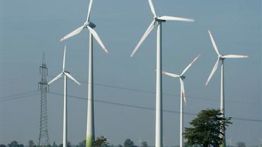
Today we got the black comedy follow up to Sarah Teather’s stand-up routine. Chris Huhne is going to drive down our energy bills! For those of us wondering how families and businesses can afford his expensive climate policies, it is a bit of a joke. The basic issue – as I set out in the new book Let them eat carbon – is that we need to invest an absolute fortune to meet the range of environmental targets that the government has put in place. Citigroup estimated last September that we need to invest about €229 billion (about £200 billion) in the energy sector this decade. That is far more than any other major European economy.
From our UK edition
If nothing else, this year's Liberal Democrat conference has shown that many party members are content to lurch towards electoral disaster. Broadly speaking, the members seem happier with the Farron-Huhne-Harris view of the coalition as, at best, a necessary if uncomfortable evil than they do with the Clegg-Alexander-Laws belief that it's a happy, virtuous thing. The desire to "distance" themselves from the Conservatives is as understandable as it is likely to be disastrous. It is an approach that cannot and will not work. Running away from your record is a ridiculous approach to take and one that invites scorn and mockery. Just ask Tavish Scott and his Scottish colleagues how well it works.
From our UK edition
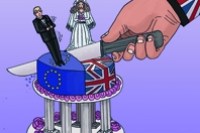
Today's Lib Dem attack on their coalition partners comes from Chris Huhne, who rails against a "Tea Party tendency" in Conservatives sceptical of the European Union. His premise is that those who are hostile to the EU are a minority. It's worth digging a little deeper here, because the opposite is true. If you believe that Britain has benefited from EU membership, you're in a smallish minority – 35 per cent to be precise. Huhne seems genuinely unaware of the depth of feeling out there. CoffeeHousers may be familiar with opinion polls commissioned by eurosceptic groups. But – as we say in the leading article of this week's Spectator – the European Commission can hardly be accused of an anti-EU bias.
From our UK edition
James wrote at the weekend, Nick Clegg's Orange Book allies fear Tim Farron, the Lib Dem President and standard bearer of the social democrat wing of the party. Yesterday, Farron said that the coalition would "end in divorce" in the months running up to the next general election. That provocative comment followed the barnstorming speech that Farron gave on Saturday, in which he labelled Nick Clegg as the "Leader of the Opposition". Quentin Letts has echoed the views of many party foot soldiers by saying that this was a leadership pitch for the future by the Party President. Unsurprisingly, the leadership has moved to quash Farron.
From our UK edition
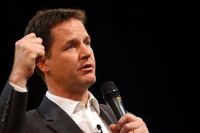
Communication, communication, communication: that appears to be Nick Clegg's new political mantra. Speaking to the Today programme earlier this morning, the Lib Dem leader said: "If there is a legitimate criticism to be made of our government, it is that we haven't articulated that there are things we can do". He made the same point repeatedly during yesterday's impressive Q&A with activists: 'We need to explain, over and over again, what we have managed to achieve in power: the increased the income tax threshold, the pupil premium, the triple lock guarantee for pensioners … Above all we need to say that there is nothing progressive about being bankrupt. Have we communicated that message successfully? No, clearly not.
From our UK edition
Some politician shouldn't try stand-up comedy. Sarah Teather is one of those politicians.
From our UK edition
One of the most striking things about Lib Dem conference has been how up for a scrap over Europe the party’s ministers are. Every single Lib Dem Cabinet minister has, over the past few days, ruled out any attempt to repatriate powers from Brussels. Given that the Conservative party wouldn’t forgive David Cameron not attempting to use any new treaty negotiation to try and regain control of various issues (see David’s blog from earlier), this puts the Prime Minister in quite a dilemma. Personally, I expect Cameron will go for the repatriation of powers. The AV referendum showed that when he has to choose between really angering his party or the Liberal Democrats, he crosses his coalition partners.
From our UK edition
"We’ve got to stop beating ourselves up," Clegg just told Lib Dem members in a Q&A session. As is traditional at these events, Clegg spent a lot of time trying to explain to his party why the coalition is doing what it is doing. The tone of the event was, perhaps, best summed up by the Deputy Prime Minster telling one hostile questioner to listen to his answer. Clegg, in head-masterly form, started by reminding the audience that if the coalition was not dealing with the defitict of its own volition, the bond markets would be forcing it to and "you can’t do anything good if you have no control over your own destiny.
From our UK edition
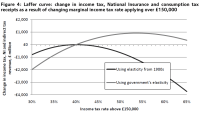
https://www.youtube.com/watch?v=qmHdqWPB_S8 Given that Vince Cable was once a lecturer in economics, it's odd to see him feign ignorance over its basic concepts. Listen to his speech today."There are politicians on both left and right who don’t [get it]. Some believe government is Father Christmas. They draw up lists of tax cuts and giveaways and assume that Santa will pop down the chimney and leave presents under the tree. This is childish fantasy. Some believe that if taxes on the wealthy are cut, new revenue will miraculously appear.” It’s perhaps worth quoting one such ‘childish’ politician who was articulating this long before Art Laffer doodled on a cocktail napkin.
From our UK edition
Hat-tip: The Daily Politics.