Language

How useful is precarity? 

From our UK edition

‘There’s no such word,’ said  my husband. Well, he has been wrong before.  For him precarity doesn’t exist; he admits precariousness. Yet precarity is now in vogue among campaigners. Precariousness is used by non-specialists. It is laughable to see how precarity has become grist for the academic mill. Among recent books on precarity are: Contesting Precarity in Japan (2020); Queer Precarities in and out of Higher Education (2020); In Pursuit of Revolutionary Love: Precarity, Power, Communities, (2022); Migrant Academics’ Narratives of Precarity and Resilience (2023); and last month Precarity in European Film. I like the niche appeal (‘in Japan’, ‘migrant academics’) combined with a universal application (‘in and out of higher education’).

Why foreigners can’t speak Thai

From our UK edition

For 12 years now I have been learning Thai from my maid, Pi Nong, who has been employed in our building for decades. It’s a much misunderstood relationship. Here the maid is an obligatory fixture, integrated into daily life for foreigners and Thais over the age of 45 and over a fairly modest income level. For foreigners the maid is a linguistic go-between, a bridge between two worlds, a portal into a new language. While she is making me dinner she gaily informs me that farangs cannot eat Thai food even though she is making it for me now and that, even more mysteriously, they cannot speak Thai – even though we are speaking it now. Her explanation is that our mouths are different and that we are malevolent.

Is this where world war three starts?

From our UK edition

Daugavpils You can tell quite a bit about a place by the number of national flags on display. One or two on public buildings here and there is a healthy genuflection to a moderate and comfortable patriotism. But groups of the same national flag every five paces, on every building and festooning the parks and boulevards – well, there’s something going on, isn’t there? You’re in a place where trouble is surely just around the corner, a place where the national authorities may not feel entirely secure. What sort of trouble? Well, one wouldn’t want to be over-dramatic, obvs, but in this particular case, world war three.

Is loitering really so bad? 

From our UK edition

E. Cobham Brewer seems, from his most famous work, the Dictionary of Phrase and Fable, published 1870, an agreeable old cove. But a biographical sketch by his grandson in the centenary edition praised his fearlessness in taking a stick to a ‘rough-looking man asleep in the stable’. He belaboured ‘the trespasser… exclaiming “Be off, you scoundrel!”’ This came to mind when I saw a sign prohibiting loitering. I wondered what exactly loitering was. The OED suggests as a meaning ‘to linger idly about a place’ and remarks that the verb appears ‘frequently in legal phrase to loiter with intent (to commit a felony)’. But now there are no felonies, only indictable offences.

Is it proper to ‘mull things’?

From our UK edition

‘Rollicking time,’ sang my husband to the tune of ‘Mull of Kintyre’. He had been amused to hear of this misapprehension of the lyrics and smugly enjoyed it not being his mistake for a change. That kind of mull is a Gaelic word meaning ‘bare headland’. I think it is related to the Welsh word for a bare hill, moel, which Gerard Manley Hopkins used, with initial mutation, as voel in ‘The Wreck of the Deutschland’. That is all very well, but I have been annoyed recently by people saying that they want to mull things. I don’t mean wine, but possibilities. I would say ‘mull things over’. Why can’t everyone else? But the history of mull is fearfully complicated and obscure for such a little word.

What does it mean to be in dire straits?

From our UK edition

A reader, Robert Andrews, heard Sir Ed Davey on Today say that the NHS was ‘in a dire strait’. Surely you can’t be in just one strait, dire or not, Mr Andrews suggested. Well, I know sorrows come not single spies but in battalions, but some straits are served one at a time. The Torres Strait is an example. In 2013, Australia found small boats crossing the 93 miles of its narrowest point, but detected only ten asylum-seekers. The deep water of the Lombok Strait off the coast of Bali separates two different systems of fauna: Bali has Asian creatures such as civets and woodpeckers; Lombok has Australian porcupines and white cockatoos. So it goes on: one strait at a time.

Why you can’t ‘treat’ yourself

From our UK edition

‘I hate sneak previews,’ said my husband. I think he was talking to the wireless, as he often does, not to me, since a broadcaster had just promised him a sneak preview. I agree that the terminology is annoying, as it is generally used as a ploy to pique interest in a subject, otherwise of no interest, by offering stolen pleasure. I am just as annoyed by an attempt to train our consumption as though we were pet dogs. On a train I was given a free shortbread biscuit, and on the wrapper it was labelled ‘Sweet treats’. Now, I regard shortbread as tolerable only if I am very hungry. But in the praxis of ‘healthy eating’, a treat is something you are allowed infrequently; otherwise, if it is a radish or some roasted chickpeas, it qualifies as a snack. Biscuits, crisps?

Why do we swipe left?

From our UK edition

Beau Brummell, denouncing the fashion for a vegetable diet, was asked if he had never tried it himself: ‘Oh yes, I remember I once ate a pea.’ His remark sounded funnier then, because the normal way of talking about the little green spheres was as a collective, pease, as in pease pudding. Brummell was not the first to talk of one pea. Robert Boyle, the natural philosopher, wrote in 1666 of a bud the size of a pea. Alternatively a single example was called a pease. I mention peas because their harvesting was done in the 18th century with two implements: a pix (shaped like a pickaxe, I suppose) to pull the pea vine towards the harvester, so that with the right hand it might be cut with a swipe.

How weighing in became wading in 

From our UK edition

The Sun reported that a woman sold a pair of rings which, if worn on two fingers, spelt out NTCU. Or they might be swapped round, with ruder consequences. When someone objected, the maker’s followers on TikTok apparently ‘flocked to the comments to weigh in on the situation’. In a report on some other matter, the BBC mentioned an Australian who ‘has form for wading into sporting rows’. So do people weigh in or wade in? Have they weighed in or waded in? The earliest citation given by the OED for wade in, meaning ‘intervene energetically’ is in a poem from 1863 called ‘How are you, Sanitary?’ The title is puzzling until one knows that, during the American Civil War, the wounded were cared for by the US Sanitary Commission.

The problem with ‘black market’

From our UK edition

The term black market should be replaced with illegal market because it could suggest racial bias or discrimination, according to UK Finance, a trade body for British banking and financial services. I suppose it is asking for the black never to be used with negative connotations. That will be a black day for the language. Who ever thought that black market had anything to do with black people? It’s not as if black people are stereotyped as illicit money-changers. It cannot be long before Penzance changes the name of its principal street, Market Jew Street. The name has nothing to do with Jews but derives from the Cornish Marghas Yow, meaning Thursday Market. By contrast, Black Friday has been promoted in Britain to chivvy people into buying goods as they do in America.

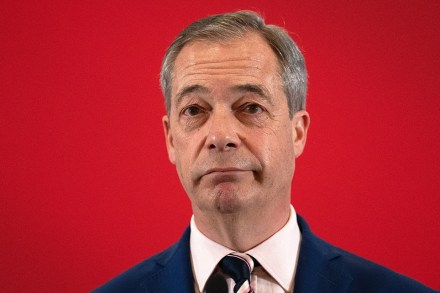
Is Nigel Farage really a grifter?

From our UK edition

That Coutts dossier on Nigel Farage said in passing: ‘He is considered by many to be a disingenuous grifter.’ I didn’t quite know what grifter here meant. According to the Telegraph, a podcast host at Spotify called the Duke and Duchess of Sussex ‘grifters’. That does not limit the semantic field. It feels to me like a synonym for chancer, which in an 1889 dictionary of slang was defined as ‘one who attempts anything and is incompetent’.  Stephen Frears’s film The Grifters (1990), not to be recommended to anyone of a nervous disposition, deals with fixing racecourse odds, running confidence tricks, and even faking one’s own death.

A condensed history of ‘vape’

From our UK edition

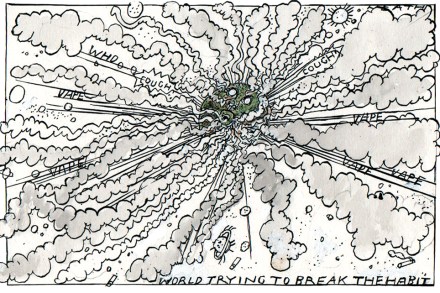
Last year, Oxford Languages’ word of the year was goblin mode. Apparently 300,000 voters decided upon it, but I haven’t heard anyone use it. It rocketed into view after someone posted online a fake headline about the break-up of Julia Fox and Kanye West after a month together. ‘He didn’t like when I went goblin mode,’ it read. Fox later made it clear she had said nothing of the kind. It means ‘self-indulgent, lazy, or greedy behaviour that rejects social norms’. I suspect goblin mode is a vogue term that will disperse like the morning mist. Talking of mist, vape has made another advance in establishing itself in the language. The Local Government Association has called for disposable vapes to be banned by next year.

What does Keir Starmer mean by ‘oracy’?

From our UK edition

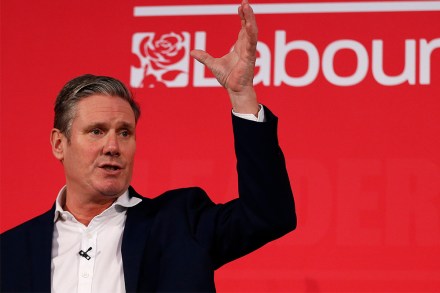
‘Is that something to do with oratory?’ asked my husband, looking up from the Guardian, which he only reads to annoy me, though it doesn’t. He was talking about the word oracy, which featured in Sir Keir Starmer’s speech last week about ‘smashing the class ceiling’. I think that, like my husband, most people assume it is a word that has been around from time immemorial, though not often used. In fact it was invented in 1965 by Andrew Wilkinson in a book called Spoken English: ‘The term we suggest for general ability in the oral skills is oracy; one who has those skills is orate, one without them inorate.’ The analogy was with literacy. The author explained a couple of years later that the term included listening.

Letters: How to reform the NHS

From our UK edition

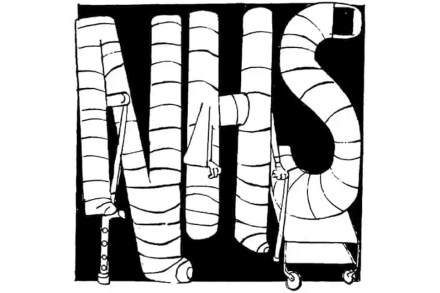
How to reform the NHS Sir: During the pandemic I and millions of others went out every week and clapped for the NHS (‘National health disservice’, 8 July). But if you’ve experienced it lately, it’s a dystopian nightmare. Appointments regularly cancelled, paperwork missing, 1950s administration. It appears the only thing being managed at the NHS is its decline. A working group of trusted business leaders should consider ‘best practice’ at excellent private and public hospitals in the UK and across Europe, and implement reform of the service immediately. The Tories don’t have the bottle or anyone with the talent to get this under way. All the reform talk is coming from Labour, and at the election this will cost the Tories dear.

Curiouser and curiouser: what does it mean to go ‘down the rabbit hole’?

From our UK edition

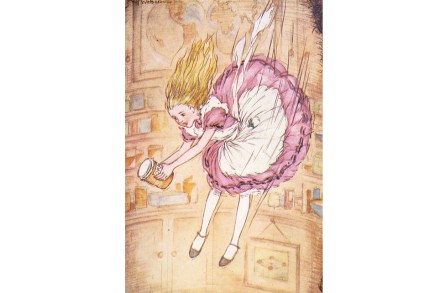
Radio 4 has just run a series of programmes called Marianna in Conspiracyland made by its disinformation correspondent Marianna Spring. Prefatory remarks for one episode asked: ‘Do you know someone who’s fallen down the rabbit hole?’ I think this phrase has changed its connotations recently. The reference to Alice in Wonderland is evident. The podcast reinforced it by quoting a phrase from the book, ‘curiouser and curiouser’. In Wonderland, Alice had mixed feelings: ‘I almost wish I hadn’t gone down that rabbit hole – and yet – and yet – it’s rather curious, you know, this sort of life!’ The OED, finding a first usage for it from 1938, defines a figurative rabbit hole as a ‘passage into a strange, surreal, or nonsensical situation or environment’.

What does it mean to be ‘2S’?

From our UK edition

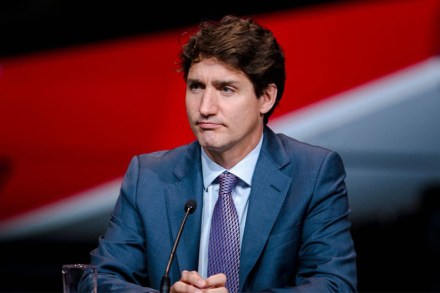
Justin Trudeau has attracted a certain amount of mockery by referring in a tweet to people who are 2SLGBTQQIA+. The Canadian Prime Minister was referring to people who are Two Spirit, lesbian, gay, bisexual, transgender, queer, questioning, intersex or asexual, plus anything else that might come to mind. The official website of the Canadian government only stretches to one Q and doesn’t bother with the A, but declares that ‘terminology is continuously evolving’. Continuous evolution means that yesterday’s approved term is today’s hate speech. The Canadian government website says that ‘the term homosexual has fallen out of favour, as it is associated with the historic medical understanding of same-sex attraction as a mental illness’.

How to spot a terf

From our UK edition

At dinner the other night I was wedged between two friends of my husband’s, with another facing me. They had made their living as university academics and were, frankly, old men. None of them, I was surprised to find, knew what a terf was, despite its frequent discussion in The Spectator. Feminists of my acquaintance believe that everyone in the world knows what a terf is. In the past five years, terf wars has turned from a joky headline into a standard reference to permanent hostilities. Since I wrote about terf here in 2018, the Oxford English Dictionary has given it an entry, and its earliest citation for the word is from 2008. This is its definition: ‘A feminist whose advocacy of women’s rights excludes (or is thought to exclude) the rights of transgender women.

Where was the original kangaroo court?

From our UK edition

‘Their purpose from the beginning has been to find me guilty, regardless of the facts. This is the very definition of a kangaroo court.’ So said Boris Johnson, in announcing his departure from parliament, with reference to the Commons Privileges Committee. What have kangaroos got to do with it? Perhaps a kangaroo court’s essence is not in fact that of finding the accused guilty. That is the work of a show trial: ‘A judicial trial held in public with the intention of influencing or satisfying public opinion, and typically having a predetermined verdict,’ as the Oxford English Dictionary defines it.

Is This Morning really ‘toxic’?

From our UK edition

‘I know the antidote to toxicity,’ my husband shouted, waving a copy of Pliny the Elder’s Natural History, even though there was nobody to shout down. Toxicity has become a fashionable word, particularly since the resignation of Boris Johnson as Prime Minister. Toxic is to poisonous what erotic is to sexual: an elevated term. Over the past fortnight it has been deployed in that storm in a television set: the fall of Phillip Schofield. Someone called Dr Ranj Singh declared that the culture at This Morning – the ITV programme that is generally on when one is waiting at an airport – had ‘become toxic’.

The Viking roots of ‘Thirlby’

From our UK edition

Last month hundreds of Westminster street signs were auctioned off. Their design with san-serif capital letters was the work of Sir Misha Black in 1967. One for Thirleby Road went for £240. It is not a famous street but my husband and I know people who live there, though they were not the lucky bidders. I had never got a satisfactory answer from our friends about how the street is pronounced. They do not know. I find this odd. How do they get home by taxi? The crux is whether it is two syllables or three. By chance, a trip with my husband to North Yorkshire last week resolved the question. Four miles or so from Thirsk is the village of Thirlby (with no E). ‘Why should Thirleby Road in Westminster be named after a Yorkshire village and be spelt in a different way?’ asked my husband.