Language

Lurch

From our UK edition

My husband made a little joke. ‘There’s no such thing as a free lurch,’ he said, looking up from his Sunday Telegraph. In it, David Cameron had declared: ‘The battle for Britain’s future will not be won in lurching to the right.’ Lurching is a nicely pejorative word. A lurch could only be welcome accidentally. The word suddenly popped up in the 19th century. No one is known to have used it earlier than Byron in 1819, in Don Juan, where he contrives a Byronic rhyme: ‘A mind diseased no remedy can physic/ (Here the ship gave a lurch, and he grew sea-sick).’ Its origins are mysterious but nautical. A clue may be found in the works of William Falconer, who is more or less a one-book man.

‘Ware’s Victorian Dictionary of Slang and Phrase’, by J. Redding Ware – review

From our UK edition

James Redding Ware, with his idiosyncratic treatment of slang, plunges the reader straight into the late 19th-century Bartholomew Fair of undeserving paupers, loafers, Ally Slopers, theatrical types and demi-mondaines. He drew on his own Grub Street life for this discursive lexicon, from A.D. (‘a drink’) to Zulu Express (the nickname for a Great Western service), published, days before his death in 1909, as Passing English of the Victorian Era: A Dictionary of Heterodox English, Slang and Phrase. The Bodder has faked it up nicely in smudgy facsimile, with burgundy end-papers, a new title and an introduction by John Simpson of the OED, who devours dictionaries with his morning porridge.

Letters | 28 February 2013

From our UK edition

Healing the world Sir: We most warmly commend the courage of Professor Meirion Thomas (‘The next NHS scandal’, 23 February) in lifting the lid on the appalling abuse of the NHS by foreign visitors. It has been going on for years but has been covered up by the culture of fear that has pervaded that organisation. We stand ready to support the professor in parliament if that should prove necessary. Regrettably, the present position is even worse than he described. The relevant quango (the Primary Care Commissioning group) issued instructions last July that GPs must accept an application for registration from any foreign visitor who is here for more than 24 hours as well as from all illegal immigrants.

Real life | 28 February 2013

From our UK edition

Two pedantic nerds should not be allowed to come together in a small space. In any case, the guy who runs quiz night at The Black Swan and I have a history of locking horns. On Halloween, we had a terrible row about Greek semantics. He asked, ‘What animal would you turn into if you were suffering from lycanthropy?’ I wrote down ‘wolf’ and assured my team that we were on firm ground as I happened to be an avid reader of period horror stories. But when it came to the marking, the pub quiz compère said the answer was ‘werewolf’ and that we couldn’t have a point for writing wolf. ‘Look here,’ I argued, ‘if you are suffering from the mythical disease of werewolfism you don’t change into a werewolf. You are a werewolf.

Contamination

From our UK edition

A shrouded skull flanked by serpents above a tureen inscribed with the words, ‘There is death in the pot’ (2 Kings 4:40), ornaments the title page of A Treatise on the Adulterations of Food by Frederick Accum (1820). Accum details hair-raising additions to food in the pursuit of profit, not just alum to bread but lead pigments to anchovy sauce and laurel berries to custard (which made three little children in Yorkshire fall insensible for ten hours, and lucky to survive). Alum is a mineral otherwise used as a styptic. Three decades on, Tennyson in Maud wrote: ‘Chalk and alum and plaster are sold to the poor for bread / And the spirit of murder works in the very means of life.

Discovering poetry: how the Psalms made the English

From our UK edition

Psalm 42, verses 1-8 Philip Sidney                                         Miles Coverdale Miles Coverdale’s translation of the psalms was among the first fruit of Henry VIII’s ambivalent reformation. The religion of Henry’s England was essentially Catholicism without the Pope; but he did permit the translation of scripture into English, and in 1535 Coverdale printed the first full English bible. His Psalms were later included in the Book of Common Prayer and are still used in Anglican services today.

Interview with a writer: John Ashbery

From our UK edition

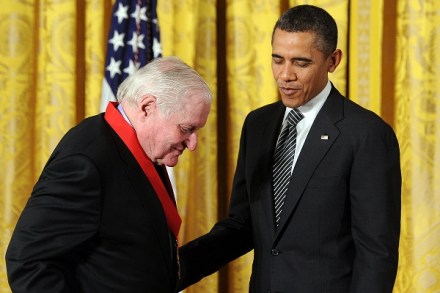
John Ashbery is recognized as one of the most eminent American poets of the twentieth-century. He also been called America’s greatest living poet today. Ashbery published his first book of poems Some Trees in 1956; it earned him the Yale Younger Poets Prize: a competition that was judged by W.H. Auden at the time. He has picked up many literary prizes, including the Pulitzer Prize for Poetry, the National Book Critics Circle Award and the National Book Award. At 85, he shows no signs of putting down his pen. He has recently published a collection of poems entitled Quick Question. Although the majority of critics have recognized his talent, many have also pointed to the fact that his poems don’t have — in the traditional sense — a specific subject matter.

Junot Diaz, the new Saul Bellow

From our UK edition

Every so often a writer renovates a whole literary landscape from underneath. Armed to the teeth with slang and learning, Saul Bellow reinvented American prose with The Adventures of Augie March in 1953, and it took thirty years for a Martin Amis, a disciple of Bellow, to bring English up to date with Money. But then the language became saturated with people who wanted to sound like Amis and we needed writers from the Commonwealth to infuse English with their idioms to make it new again. (Or was this the other way around?) New prose Messiahs are often announced but rarely stick around.

Historical directories: Street View for time-travellers – Spectator Blogs

From our UK edition

Fancy a walk into London's past? How about a stroll down Fleet Street in 1895? Or Oxford Street in 1899? It can be done. I can't promise pictures, but I can offer more detail on the residents of each building than Google would risk publishing today. The secret: from the mid-1830s, a man named Frederic Kelly employed agents to call at every address in London and to record the people or businesses within. Kelly was a postal official, and his agents, at least to begin with, were postmen. There was some scandal about that. Because this wasn't an official census, conducted every ten years and then locked away for a century; this was a commercial operation, conducted annually and sold in a big fat book, the Post Office London Directory.

Which words would you ban?

From our UK edition

Which words in current use would you ban? Lake Superior State University answers this question each year, with its famous ‘List of Words to be Banished from the Queen’s English for Misuse, Overuse and General Uselessness’. Words are recommended by members of the English speaking world, and then selected by the university. Top of the list is ‘fiscal cliff’: the catchall phrase for the various political (and cultural) difficulties that have arisen from America’s fiscal and economic crises. Opinion is split on which of ‘fiscal’ or ‘cliff’ is the greater offence. Other irate correspondents object to the vague metaphor: is America trying to scale the cliff or trying not to fall off it?

Do you wish you were far from the madding crowd?

From our UK edition

From ‘Elegy Written in a Country Churchyard’ 'The curfew tolls the knell of parting day, The lowing herd wind slowly o'er the lea, The ploughman homeward plods his weary way, And leaves the world to darkness and to me. Now fades the glimmering landscape on the sight, And all the air a solemn stillness holds, Save where the beetle wheels his droning flight, And drowsy tinklings lull the distant folds; Save that from yonder ivy-mantled tower The moping owl does to the moon complain Of such as, wandering near her secret bower, Molest her ancient solitary reign. Beneath those rugged elms, that yew-tree's shade, Where heaves the turf in many a mouldering heap, Each in his narrow cell for ever laid, The rude forefathers of the hamlet sleep.

Winning words

From our UK edition

If you want to see what an ambivalent attitude we have towards rhetoric, you have only to look at the speeches of Barack Obama. Before Obama became President, when he was out on the stump, there was no holding him back rhetorically: he soared, he swooped, he lifted his eyes to the hills and found all kinds of inspiring imagery there. But the moment he took office something strange happened. All that silver-tongued stuff dropped away and instead he started sounding as if two trucks had collided in his mouth. The message was plain: rhetoric is for the posters, for the promissory notes. When it comes to actually doing the job, there’s no place for it.

The language of criminals

From our UK edition

The English language is, as English would have it, an odd duck.  Its nuances are capricious — to the non-native, maliciously so — but its lyricism widely praised. My preoccupation with language possibly stems from my first profession, that of a stage actress (throughout the course of this esteemed career, I made literally hundreds of dollars). Trained to mimic accents from public school Brit to Dixieland Southern belle, I was continually delighted by regionalisms. When I ceased auditioning and commenced scribbling, my fascination with ripe local slang never left me.

A gallimaufry of new words

From our UK edition

Walk into a coffee shop on any high street today and you're confronted by an amazing array of caffeine-connected choices: flat white, red eye and doppio to name a few. We’ve become coffee connoisseurs with our own particular preferences for skinny or full fat, dry or wet. Yet the words we use to describe our favourite latte or cappuccino are fairly recent. We’ve only started to use them in the last five years or so as we’ve embraced the coffee culture of Australia and New Zealand (flat white), New York (red eye) and Italy (doppio). New trends demand new words and these global linguistic influences have quickly percolated into our daily routines. Like no other human activity, language holds up a mirror to our modern fascinations, insecurities and obsessions.

Butlins and the return of the apostrophe – Spectator Blogs

From our UK edition

When you begin in subediting - the odd little craft of preparing other people's journalism for publication - certain things, or pairs of things, are drummed into you. St James' Park is where Newcastle United play; St James's Park is where the band of the Grenadier Guards play. Lloyds is the bank; Lloyd's is the insurance market. Pontin's has an apostrophe; Butlins doesn't. Unfortunately for subeditors, times change. St James' Park is now the Sports Direct Arena, although a similar deal has yet to be done for St James's Park. Lloyds has acquired TSB and been acquired, in turn, by the government. Pontins has emerged from financial difficulties, but it has done so minus an apostrophe. And Butlins? Butlins is now a difficult case.

Interview: James Kelman

From our UK edition

Born in Glasgow in 1946, James Kelman left school at fifteen to begin an apprenticeship as a compositor. His first collection of short stories ‘An Old Pub Near the Angel’ was published in the United States in 1973. It was another nine years before his first novel 'The Busconductor Hines appeared. Kelman has received several prizes for his fiction including: the Cheltenham Prize for Greyhound for Breakfast and the James Tait Black Memorial Prize for ‘A Disaffection’. His fourth novel, ‘How Late it Was, How Late’, landed him the Booker Prize in 1994, amid a storm of controversy. To date he has published eight collections of short stories, eight novels, and two books of essays.

The language of left and right

From our UK edition

Stephan Shakespeare has a fascinating article on Con Home today, comparing which words voters associate with the terms ‘right-wing’ or ‘left-wing’. The results aren’t too surprising: the language of the left is, generally, softer than the language of the right. Shakespeare’s article is entitled ‘Fairness versus selfish’, which gives you an idea of how voters perceive the dichotomy. The upshot is that many voters still believe that the right is intrinsically ‘nasty’; ergo, the modernisation project has not gone far enough. This research, and the conclusions drawn from it, reminds me of Jonathan Haidt’s book The Righteous Mind (indeed, Shakespeare references an article by Haidt).

French with tears

From our UK edition

The civilised world has always needed a lingua franca, through which educated people of international outlook can communicate with each other. For centuries that language was Latin, first the language of theology, then of learning — Erasmus, Milton and Thomas More communicated with a wide community of scholars in Latin. Nowadays, the international language of commerce and culture is English, and from Peru to Shanghai the employees of multinationals talk in their barbarous English idiolects of blue-sky thinking and learning curves, just as their children chant along to the lyrics of West Coast rap. Between the age of Erasmus and that of Ricky Martin, there occurred the supremacy of the French language.

BOOKENDS: Hang the participle

From our UK edition

An awful lot of books are being published these days about the English language. David Crystal has a new one out every few weeks, and John Sutherland probably has half a dozen on the go. The Language Wars: (John Murray, £17.99) is Henry Hitchings’s third and unlikely to be his last. An awful lot of books are being published these days about the English language. David Crystal has a new one out every few weeks, and John Sutherland probably has half a dozen on the go. The Language Wars: (John Murray, £17.99) is Henry Hitchings’s third and unlikely to be his last.

An arena where words are dangerous

From our UK edition

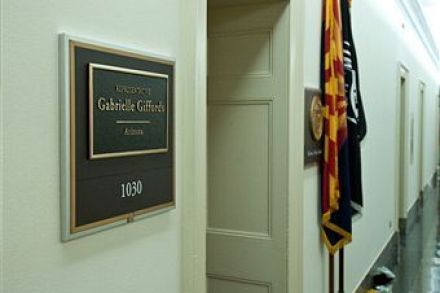
‘it was a deranged individual living in a time and place where anger and vitriol had reached such a fever pitch that we had dehumanized those in public life’ The words of Andrei Cherny on the shooting of Gabrielle Giffords are worth reflecting on. Political discourse has a tendency to hyperbole. But sometimes people need to think through the logic of their rage. For example, all those people who carried round signs saying ‘Bush=Hitler’ should have considered the implications of what they were saying—who of us would not have thought it right to assassinate Hitler if possible? Equally, those who talk about people being traitors should remember what the traditional punishment for treason is and whether treason is what they are really alleging.