Language

BOOKENDS: Hang the participle

An awful lot of books are being published these days about the English language. David Crystal has a new one out every few weeks, and John Sutherland probably has half a dozen on the go. The Language Wars: (John Murray, £17.99) is Henry Hitchings’s third and unlikely to be his last. An awful lot of books are being published these days about the English language. David Crystal has a new one out every few weeks, and John Sutherland probably has half a dozen on the go. The Language Wars: (John Murray, £17.99) is Henry Hitchings’s third and unlikely to be his last. Previous books have been described as ‘chewy and

An arena where words are dangerous

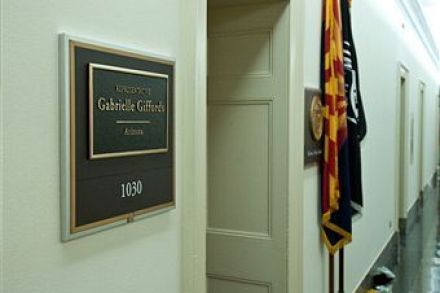
‘it was a deranged individual living in a time and place where anger and vitriol had reached such a fever pitch that we had dehumanized those in public life’ The words of Andrei Cherny on the shooting of Gabrielle Giffords are worth reflecting on. Political discourse has a tendency to hyperbole. But sometimes people need to think through the logic of their rage. For example, all those people who carried round signs saying ‘Bush=Hitler’ should have considered the implications of what they were saying—who of us would not have thought it right to assassinate Hitler if possible? Equally, those who talk about people being traitors should remember what the traditional

Mind your language | 27 November 2010

The big news screen at Victoria Station said, ‘Colin Farrell to play British bad boy.’ In 2004 the headlines were, ‘Colin Farrell to play bad boy in US TV drama.’ Earlier this year he was apparently ‘retiring his bad-boy ways’. The big news screen at Victoria Station said, ‘Colin Farrell to play British bad boy.’ In 2004 the headlines were, ‘Colin Farrell to play bad boy in US TV drama.’ Earlier this year he was apparently ‘retiring his bad-boy ways’. Why is a bad boy worth millions at the box office, when a bad father, a bad lover or a bad bet are as off-putting as cold burnt porridge? The

Sweeter than honey

The only thing I can remember about a Tesco advertisement on the television the other night is the line: ‘No rest for the wicked.’ It was meant ironically, of course. The only thing I can remember about a Tesco advertisement on the television the other night is the line: ‘No rest for the wicked.’ It was meant ironically, of course. The suggestion was not that wicked people alone shop at Tesco’s. Nor was the phrase intended as a pious invocation of the Bible, its source, Isaiah, 57:21. An anthropologist describing the clichés, or tropes, of Western cultures might form the idea that biblical religion played a lively part in daily

Fathoming the wine-dark sea

Gladstone found something very strange indeed in Homer, but the world was treating the future prime minister warily when he published his findings. It was 1858, the year he sailed off to the Ionian Islands as ruling commissioner, to address his puzzled Italian-speaking subjects in classical Greek. But even if Gladstone really was mad, as his political opponents said, he was undeniably right in noting that Homer’s use of colour was deeply odd. It wasn’t just the ‘wine-dark sea’. That epithet oinops, ‘wine-looking’ (the version ‘wine-dark’ came from Andrew Lang’s later translation) was applied both to the sea and to oxen, and it was accompanied by other colours just as