Language

Why ‘my’?

From our UK edition

It used to be ‘Your M&S’. That was presumptuous enough. Now, when you drive past Earls Court exhibition hall, pathetically covered in plastic sheeting while being demolished to make way for a high--quality, mixed-tenure residential neighbourhood, the hoarding tells you you’re going past ‘My Earls Court’. You can read all about it on myearlscourt.com. No, it is not my Earls Court. And nor will I like it more if you try to tell me it is mine. The same with Church Street, London NW8: there’s redevelopment here, too, and it’s being flaunted as ‘mychurchstreetnw8’. No it’s not. Stop trying to make me take psychological ownership of your so-called urban renaissance. This is what I call ‘the aggressive first person’.

Purifying the gymnasium

From our UK edition

When Friedrich Nietzsche was offered a professorship in classical philology at the university of Basel in 1869 he was so happy he burst into song. He was only 24 at the time — a year younger than Enoch Powell, who became a professor of Greek at the university of Sydney aged 25 — and looked forward to a brilliant academic career. Three years later, when he delivered the six lectures contained in this book, he was already showing signs of disillusionment. His teaching duties included six hours at the local gymnasium — the German equivalent of a secondary school — and he wasn’t impressed by what he found there.

Special status

From our UK edition

‘Special status?’ said my husband. ‘You mean like executioners, butchers and undertakers in Japan?’ I hadn’t suggested that, but had been thinking aloud about the phrase which, according to David Cameron, now describes Britain’s position in Europe: special status. My husband once went to Japan, which, he thinks, makes him an expert. He learnt about the ancient monkey performances given by people called Burakumin, a sort of untouchable. Apart from performing with monkeys, which was banned in the 20th century, they have been associated with unclean trades such as those he mentioned. Special, as I have remarked before, is slippery. The special relationship between Britain and America has at times been highly valued.

Creaky voice

From our UK edition

My husband, not surprisingly, finds it extremely annoying. It, in this instance, is the use by women of creaky voice. If you don’t recognise the trend immediately imagine a youngish woman (not me) finishing a sentence with the phrase ‘really shiny leather’ and creaking, like a door, as she says the vowels. The trait is also known as vocal fry, as if it were produced by a chip-fryer. It is a feminine characteristic by a proportion of two to one. Reese Witherspoon was heard doing it to the phrase ‘truly heinous angora sweater’ in the film Legally Blonde as long ago as 2001. Recently I’ve heard Emma Barnett on Woman’s Hour doing it. Why do we women do it? If it’s a fashion, is it smart or downmarket?

Beware

From our UK edition

My husband pointed with his stick, which he carries not to steady himself but to cudgel pedestrians out of his way, and said: ‘What am I supposed to do about that?’ His question was in response to a notice posted up on the wall by a platform at Vauxhall Underground station: ‘Due to our works. Beware of noise. Beware of smell.’ It is part of the current conflation of the meanings of be aware and beware. The confusion runs both ways. That Underground notice was intended to make passengers aware that there would be noise and smell (of burning perhaps), so that they would not flee in alarm. A flight response would have been the appropriate one if instead the notice had said: ‘Beware, Minotaur loose.

Not even a thing

From our UK edition

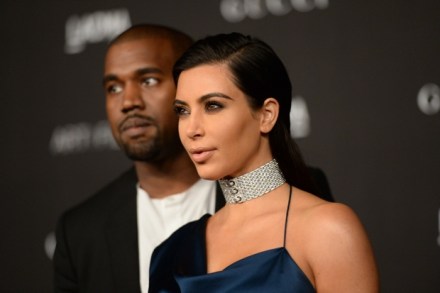
Last summer Kim Kardashian, who already had a daughter called North (surname West), announced that she was expecting a boy. She put a photograph on Twitter of herself pouting, captioning it: ‘Pregnancy lips’. Some Twitter-followers asked: ‘Pregnancy lips? Is that even a thing?’ The Cambridge Advanced Learner’s Dictionary has since adopted that example as the locus classicus of the phrase Is that even a thing?, and variants such as Is that a thing? or That’s not a thing. Professor Ben Yagoda of the University of Delaware has poked around on the internet and found, like other people, the phrase being used in 2001, in a television situation comedy called That ’70s Show.

Peak

From our UK edition

Near Victoria Station in London they began to build a tower-block advertised as ‘The Peak’. I expected it to resemble Mont Blanc. After a few floors, it was finished, and the top of the façade projected like the peak of a baseball cap. I felt cheated. Peak is a vogue word that itself has gone through peak usage. Earlier this month, Steve Howard, Ikea’s chief sustainability officer (yes, the chief one), said in a seminar: ‘In the West we have probably hit peak stuff. We talk about peak oil. I’d say we’ve hit peak red meat, peak sugar, peak stuff, peak home furnishings.’ It was an engaging observation, but poor Mr Howard was mocked as though he were Gerald Ratner.

Irony alert: ‘rabid feminists’ want themselves removed from the Oxford English Dictionary

From our UK edition

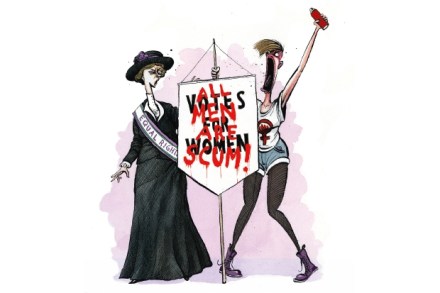
As if to make a massive display of their dearth of self-awareness, Twitter feminists have spent the past few days nagging the Oxford English Dictionary over its definition of the word ‘nagging’. They have also rabidly denounced its definition of ‘rabid’. And they have deployed shrill lingo to slam its definition of ‘shrill’. To nag a dictionary in a shrill and rabid way over its entries for ‘shrill’, ‘rabid’ and ‘nag’ suggests feminists’ irony deficiency has reached life-threatening levels. Or maybe they're having a cosmic laugh. Never have I been more tempted to view the new, media-led feminism as a Chris Morris-style send-up of buzz-killing liberals than I have while reading about Dictionarygate.

Corbynglish as a second language: a political dictionary of terms

From our UK edition

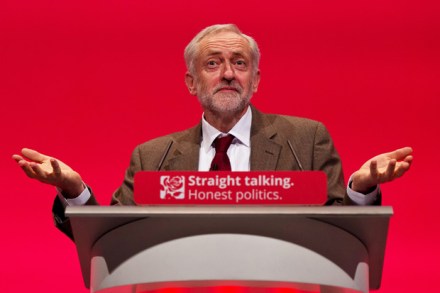
Corbynterpretation [n]: The inevitable process of debate, after Jeremy Corbyn is interviewed, over what he actually meant. Does the Labour leader believe the killing of Osama bin Laden was a tragedy, or not believe this? Would he like Britain to negotiate with Daesh or would he be opposed to that happening? Would he, or would he not, abandon the Falkland Islands? As in, ‘Well, that’s a matter of Corbynterpretation’ or, ‘No, no, those remarks have been totally misCorbynterpreted.’ In order to Corbynterpret [v] one must first consider 1. Whether the Labour leader brought up the disputed view himself (invariably not) 2. Whether the Labour leader clearly said ‘yes’ after somebody asked him whether he held this view (invariably not) and 3.

Chattering classes

From our UK edition

When the much missed Frank Johnson (1943–2006), once editor of The Spectator, wrote in 1980 that ‘the peculiar need for something to be frightened about only seems to affect those of us who are part of the chattering classes’, I think that ‘those of us’ meant himself, and me and you, dear reader. It is true that, as the Oxford English Dictionary remarks, the phrase was ‘freq. derogatory’ of ‘a social group freely given to the articulate, self-assured expression of (esp. liberal) opinions about society, culture, and current events’.

Why ‘safe’ is Dot Wordsworth’s word of the year

From our UK edition

‘Makes me feel sick,’ said my husband, referring not to the third mince pie of the morning (in Advent, supposedly a penitential time of preparation), nor to accepting a glass of champagne after having earlier accepted a glass of whisky at another house. No, what made him feel sick was the seasonal greeting: ‘God bless, and be safe.’ For once, I agreed with him. It was bad enough to be exhorted to drive safely or even stay safe during periods when terrorists had eased off a bit (after peak IRA, but before 2001). But now, with a fashion for shooting civilians in unexpected places, to be told to be safe makes no more sense than to be told to be rich. Yet safe is the word of 2015.

Mind your language . . . on commit

From our UK edition

My husband struck out with his stick at an advertisement in the street that said: ‘Commit to winter.’ He doesn’t need a stick to walk with, but he likes threatening to cudgel Christmas shoppers out of his way in this joyful season. I agree with his disapproval of commit used intransitively, not committing oneself or committing anything else. Yet stranger things have happened to the word in the past 600 years. It used to have a rival form commise, also meaning ‘entrust, perpetrate or commission’, which ran out of steam in the 17th century. We do still have commis chefs, but that was re-introduced in the 20th century from French, as indicated by its silent s.

The rise of the man bun, the Mancan and man boobs

From our UK edition

‘Ha, ha, ha,’ said my husband, as though he had learnt to laugh by reading Twitter. ‘Now they’ve got falsies.’ He was waving an article about clip-on man buns. A man bun is that top-knot that some young men began to sport, in proof that there is nothing too absurd for fashion. Now, it seems, false ones are on sale. The colours specified are black, brown and blond, which hardly promises a convincing match. This development reminds me of the chignon, a hump of hair worn over a pad, fashionable at a century’s interval in the 1770s and 1870s. Trollope quickly took against it.

‘They pull a gun, you pull a hashtag’ – the ridiculous debate over what to call Isil

From our UK edition

‘They pull a knife, you pull a gun. He shends one of yoursh to the hospital, you shend one of hish to the morgue.’ Thus Sean Connery in The Untouchables, explaining how you fight a war ‘Chicago-style’. How would you adapt that, do we think, for our collective response to the Paris attacks? ‘They pull a gun, you pull a hashtag. They send 132 of yours to the morgue, you start calling them a slightly rude name.’ As they say on the internet: srsly? Imagine you’re in Raqqa, having at last made hijrah from the family semi in Dudley. You’re chillaxing, maybe having a bit of a kickabout with the head of an apostate, when your friend calls you over to his laptop. ‘Look, brother.

Is ‘female’ still an insult?

From our UK edition

‘More deadly than the male,’ said my husband archly. He was knowingly quoting Kipling, though I don’t know why he should, since Kipling was not fashionable when he was young. His cue was a remark he overheard from an academic former colleague puzzled by the frequency of female in student essays, where woman might have been expected. This usage is said to be ‘now commonly avoided by good writers, except with contemptuous implication’, said the Oxford English Dictionary in 1895, when it got round to considering words beginning with F.

Lessons in jargon

From our UK edition

‘Excuse me, sir. Seeing as how the VP is such a VIP, shouldn’t we keep the PC on the QT? ’Cause if it leaks to the VC he could end up MIA, and then we’d all be put out in KP.’ How I cheered when Airman Adrian Cronauer mocked Lt Steven Hauk’s fondness for acronyms in Good Morning, Vietnam. Using jargon is an act of unconscionable self-indulgence. It is designed to make the user feel superior while saying not much, and Adrian, played by the late Robin Williams, spoke for millions of cheesed-off employees when he attacked it. Jargon, acronyms and corporate-speak — all too common in offices — should be banned from schools.

How we ended up ‘cisgender’

From our UK edition

‘That’s not how you spell “system”,’ said my husband triumphantly, pointing with his whisky glass at a placard inveighing against the ‘Cistem’, held up by a transgender protester on television. ‘No, darling,’ I said, not even assuming a patient tone. ‘It’s a play on words.’ Among people who like using the word gender outside its grammatical homeland, cis- as a prefix is tacked on, to make cisgender: ‘someone whose sense of personal identity corresponds to the sex and gender assigned to him or her at birth’, as the Oxford English Dictionary puts it carefully. Note that it is not held to be a question of being the same sex as you were born, but the sex and gender assigned to you.

Diary – 29 October 2015

From our UK edition

I’m counting ‘Wows!’ Suddenly everyone is using this irritating expletive expressing incredulity, amazement and nothing at all. I’ve heard it from the lips of daughters in law, professors of literature, rabbis and housewives. No doubt at least one priest has said it after a particularly lurid confession. It is spreading like leprosy over ordinary discourse and will, in time, die out like ‘Zounds’ or ‘Gee whizz’. I wonder if it will turn up as an anachronism in Downton Abbey? I saw on television the other night a superb production of Priestley’s An Inspector Calls with great performances from David Thewlis, Ken Stott and Miranda Richardson. The adaptation was impeccable and no one said ‘Wow!

Fulsome

From our UK edition

It’s funny that two much misused words end in —some: fulsome and noisome. Noisome is the less often used at all, and then usually as though it meant noisy. There is a word noisesome that does mean noisy, coined 80 years ago, but noisome has meant ‘unpleasant’ or ‘offensive’, especially ‘smelly’, for 400 years or more. Of the words ending some that were in use before the Conquest, only three remain: winsome, lovesome and longsome (meaning ‘slow’ or ‘tedious’) and I’m not sure that the last really is still used. The case is different with fulsome, which has been around since the 14th century. It is hardly ever used correctly. In which case, you may ask, has its meaning now changed?

Can politicians say ‘crusade’ again? David Cameron thinks so

From our UK edition

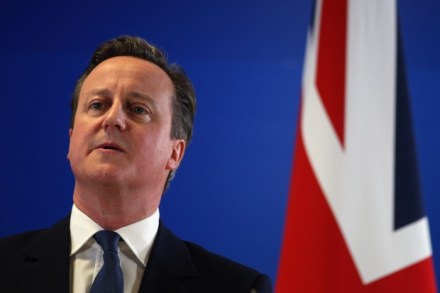
One thing grabbed my attention from David Cameron’s speech, long ago in the middle of last week. ‘We need a national crusade to get homes built.’ I’m as interested in housing as the next mother with a practically homeless grown-up daughter, but it was the word crusade that astonished me. I did not think a politician could use it now. Just after the atrocities of 11 September 2001, George Bush said: ‘This crusade, this war on terrorism, is going to take a while.’ Some listeners feared this was confirmation of a ‘clash of civilisations’. But, from the Muslim side, some objections were ill-founded historically. English-speaking warriors who set off in the 11th and 12th centuries to free the Holy Places did not call themselves crusaders.