Labour

Starmer’s problem? He cares too much about Labour

From our UK edition

There is a thought in some Westminster circles that Keir Starmer has lost the next general election already. Whether it be because of Brexit or Brexit and a bunch of other stuff, including leftover Corbyn baggage, Starmer is doomed as he stands. I believe this view is naïve and the smarter Tories I know don’t buy it for a second. Labour could still win the next election, particularly if the Conservatives get complacent. Yet if they do end up losing their fifth general election in a row, I already know why that will be. There was a moment in the 2015 Labour leadership contest that stands out for me, as it did for many at the time.
Keir Starmer’s shifting schools policy

From our UK edition

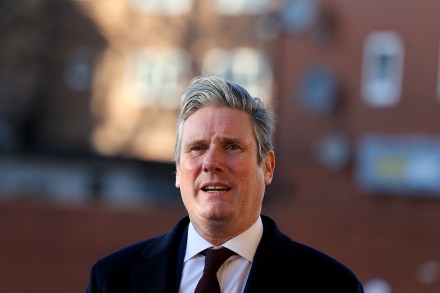
It shouldn’t have been a difficult task to hold the government to account today on schools and lockdown, as the Prime Minister currently weighs up shuttering the school gates till Covid cases decline. Labour leader Keir Starmer though seems to have managed to develop an even more confused policy today. This morning, Labour suggested that schools should remain open even if the country went into lockdown. This was followed by a hasty U-Turn this afternoon, with the party then calling for schools to be closed. After such a big change, Mr S had presumed that Labour would at least have a basic grasp of their new policy.

My fellow Rejoiners are living a fantasy

From our UK edition

On New Year’s Eve at 11 p.m., the United Kingdom departed both the single market and the customs union, making the end to the country’s former membership of the EU complete. It was a moment to celebrate for Brexiteers; the commemoration of sadness for some Remainers. Or should I say 'Rejoiners' — there is no remaining now, Great Britain having departed the European Union. Many Rejoiners have set out their stalls already. ‘When they tell you to "move on" DO move on — to the long, strong, campaign to rejoin,’ tweeted Simon Schama, the historian and noted fan of the UK’s membership of the EU, ‘However hard the road, however long it takes; it starts now.

Has Brexit already destroyed Labour’s chances?

From our UK edition

Part of the soap opera appeal of politics comes from the idea that it is a competitive sport based on fine margins – with a result that will be determined by the relative performances of the teams and their captains. Under the British first-past-the-post system two major parties slug it out in an epic tussle across hundreds of seats and then one of them wins. Sometimes things are so closely fought that neither party has an outright majority, in which case one or more of the minor parties gets to choose which should be propped up. From this point of view, every policy shift or zinger soundbite thrown by Boris Johnson or Keir Starmer changes the odds as to which of them will occupy 10 Downing Street after the next election.

Corbyn’s legacy is here to stay

From our UK edition

It’s been just over a year since the British people finally squashed a hard-left push for power under the dismal but unyieldingly dangerous leadership of Jeremy Corbyn. On 12 December 2019 we dodged a collective bullet. But Corbynism lasted almost half a decade; it reshaped the national conversation. As we enter 2021 it’s worth considering what it has taught us about our politics and what its legacy might be for Britain. First off, Corbynism provided something much-needed: a reminder that the left does not have a monopoly on virtue, or even on that vague but actually pretty important political quality – niceness. The dangers of an unfettered right are a staple of western politics.

Starmer is about to make a big mistake in backing Boris’s deal

From our UK edition

Keir Starmer has announced he is whipping his Labour MPs to vote for Boris’s Brexit deal in the House of Commons today. There are two likely reasons behind this decision: firstly, to make himself seem like a Labour leader who is a grown up, after Corbyn’s teenaged politics; secondly, to demonstrate that Labour accepts Brexit in order that it may win back Leave voters in red wall seats at the next general election. But there is a big problem with this calculation. While all of Starmer’s Brexit options are difficult ones, he may be about to enact the worst of the lot. A no-deal situation would have allowed Keir Starmer to claim that as prime minister he would be able to get the Brexit deal from the EU that Boris evidently could not.

What does Starmer stand for?

From our UK edition

Keir Starmer has been leader of the Labour party for just eight months. But that hasn’t stopped analysts defining what it is that ‘Starmerism’ represents. To some, it is an empty space where ideas should be: technocratic, electorally-driven but otherwise strategically rudderless. Others – most obviously implacable Corbynites – even detect elements of free-market individualism. So what does Starmer really stand for? Commentators seem addicted to attaching the suffix ‘-ism’ to leading politicians’ names to capture what they are ultimately all about. Too often however this ‘-ism’ gives leaders’ actions a fake coherence.

Smarmy Starmer is not making himself popular with anyone

From our UK edition

The verdict of the Twitter jury is in, articulated in a single, now viral tweet by broadcaster Matthew Stadlen:  'Keir Starmer would have been – and would be – a far better Prime Minister than Boris Johnson during this pandemic.' It is a theme that Starmer has naturally been keen to develop, leading him to make excoriating criticisms of Boris Johnson in a press conference at the weekend. The Starmer thesis is that Johnson is so anxious to be liked that he ducks out of taking tough decisions until it is too late.

No deal might be the best outcome for remainers

From our UK edition

Plenty of Labour figures who voted Remain are now urging the government to complete a trade agreement with the European Union before the end of the transition period. ‘There isn’t a choice between a fantasy deal and no deal,’ says Liam Byrne. ‘It’s this deal versus no deal, and we will not have a manufacturing industry left unless there is a deal.’ Although there is still a battle within the shadow cabinet on what to do should a UK-EU trade agreement come to parliament, the consensus seems to be that Keir Starmer would whip the party to vote for Johnson’s deal. This marks a big shift in Labour's Brexit strategy for two reasons – and might well come back to those Labour remainers cheering on Boris to do a deal.

New year, new Keir: how the Labour leader will change tack in 2021

From our UK edition

Sir Keir Starmer will start setting out his vision for the Labour party in the new year, Coffee House understands. The Labour leader will ‘move onto another level’, according to party sources, talking about what life under a Starmer government might look like, and encouraging his frontbenchers to make policy announcements. Up to this point, Starmer has had a strangely slow start as leader because he has been largely in reactive mode, responding to the government’s own response to the pandemic. This has made it easier for him to avoid awkward confrontations in his party over policy, with the stand-off over anti-Semitism being the only real ruction.

If Boris agrees a Brexit deal, Labour should vote it down

From our UK edition

It now seems more likely than ever that the UK will leave with no deal at the end of the year. But let’s imagine for a moment that I’m wrong and the UK and the EU manage to overcome their substantial differences. It would then have to be voted on in Parliament – and Labour should vote it down. Why? Because the deal put before the Commons would not be between Brexit and Remain. That ship has long since sailed. It would instead be between the thin deal Boris Johnson will have agreed with the EU and the choice of leaving with no deal whatsoever. Whichever way Parliament votes, we leave the transitional arrangements on 1 January in full.

When will Red Len learn?

From our UK edition

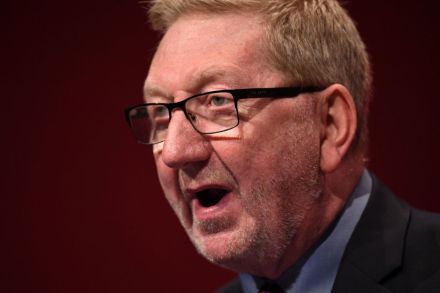
Few will be surprised that Unite has reportedly given no money to the Labour party since Keir Starmer took over as leader. Unite boss Len McCluskey and those around him were hardly thrilled at Starmer’s victory in the leadership contest. Why? Because they knew that it represented the end of the far left’s control over Labour. But if McCluskey is seeking to undermine Labour’s new leader, this will end badly and ultimately benefit only one person: Boris Johnson. It will also make the prospect of another thumping Tory win at the next election more likely. And, what’s worse for McCluskey, is that it could speed up the death of unions like his.

Labour’s abstentions show Keir Starmer at his worst

From our UK edition

A vote will be held in the House of Commons today, which will decide the freedoms Britons will have from this week, possibly until spring. Yet the official opposition is planning to abstain. There have also been rumours that if Boris Johnson does somehow get a Brexit deal with the EU this week, Labour will abstain on that vote as well. Two of the biggest Commons votes of our era – one built around the greatest health crisis of our times and what that means for individual freedoms in this country, the other about our future trade relationship with our immediate neighbours – and Labour appear to have decided not to decide on either. This demonstrates the worst of Keir Starmer’s leadership. Starmer has done a lot for Labour since taking charge.

Did Labour just fall into Rishi Sunak’s trap?

From our UK edition

Just what is the essential difference between our two main political parties? Certainly not their respective attitudes towards fiscal prudence; the thing which used to provide clear blue water between the two. Now we have two parties which don’t give a damn about public debt, who think that they can spend willy-nilly and that something, somehow will come round and save them in the end.  No, the message of today’s spending review is that the Conservatives and Labour are entrenching their respective positions as the representatives of two tribes: private sector workers and public sector ones. We all know there’s bad news on the horizon in the shape of tax rises and, inevitably at some point, spending cuts.

Laura Pidcock stages walkout of Labour NEC

From our UK edition

After a brief spell in the Labour hinterland after losing her Durham seat in 2019, the former MP and Corbynite Laura Pidcock returned to frontline politics this year, after being elected to the party’s National Executive Committee (NEC). Unfortunately though it didn’t take long for the former Durham MP to once again indulge in the Labour left’s favourite pastime: factional infighting. At an NEC ‘away day’ today, Pidcock and 12 of her colleagues decided to stage a digital walkout of the Zoom meeting, after the committee elected Margaret Beckett to be chair of the committee. The group appeared to be particularly aggrieved that Beckett had described herself as a 'moron' for nominating Jeremy Corbyn for the Labour leadership contest in 2015.

Keir Starmer should purge Labour of the far-left

From our UK edition

Sir Keir Starmer was having such a good year. He broke cover early on to attack the government’s handling of Covid-19 and did so by speaking explicitly to traditional Tory voters. He repeatedly bested Boris Johnson at Prime Minister’s Questions and gave a good first conference speech in the job. He brought his party’s poll numbers to within a hairsbreadth of the Conservatives, just as Number 10 descended into the dullest soap opera this side of The Archers. Even that cringe photo of him and Angela Rayner taking a knee in the Shadow Cabinet room — like your parents after listening to Stormzy for the first time — can be forgiven because, bless their hearts, they meant well. Then there was Jeremy Corbyn.

Does losing the Labour whip really matter to Corbyn?

From our UK edition

Jeremy Corbyn's fan club has reacted with predictable outrage to the decision not to hand him back the party whip. Starmer's refusal to do so was not 'the right thing to do,' said Labour MP Clive Lewis. 'At a time of national crisis, division in the Labour party serves nobody but the Tory Government,' said Richard Burgon. But Mr S wonders whether Corbyn will really be that bothered by the decision? During Labour's last stint in power, Corbyn voted against the whip 428 times. And if you go further back, to when Corbyn first became an MP in 1983, he has voted against the whip 617 times during his time in Parliament.

Starmer refuses to give Corbyn the Labour whip back

From our UK edition

Sir Keir Starmer has just announced he will not be restoring the Labour whip to Jeremy Corbyn following his comments about the extent of anti-Semitism in the Labour Party being exaggerated for political purposes. A panel of the party’s ruling National Executive Committee last night reinstated Corbyn as a member, but this morning Starmer said he would not do the same with the whip. You can read his full statement below. The reaction last night from Jewish groups to the NEC’s decision had made very clear that if Starmer accepted Corbyn back into the party on the basis of the non-apology he had issued, it would undo the new Labour leader’s work repairing relations with the Jewish community.

Jeremy Corbyn backtracks on Labour anti-Semitism

From our UK edition

At the end of October Jeremy Corbyn was suspended from the party he loved and led, after suggesting that concerns about Labour’s anti-Semitism problem during his tenure had been ‘dramatically overstated’ for political reasons. At the time of his suspension, the former Labour leader seemed to strike a defiant tone. In a broadcast interview, Corbyn suggested that the number of Labour’s anti-Semitism complaints had been ‘exaggerated’ and that he was ‘not part of the problem’. Mr S wonders though if Corbyn might be worried about being re-admitted to the party. Today, the former Labour leader released a statement on Facebook which he had given to the party on the day of his suspension.

Keir Starmer should welcome a Labour party split

From our UK edition

‘A split party will be doomed to defeat,’ says Len McCluskey, with a hint of threat. The left of Labour are sabre rattling behind the scenes and starting to go public; talk of them actually leaving the party is becoming louder. They are annoyed at Jeremy Corbyn’s ongoing suspension more than anything, but there are other gripes. They are irritated at Keir Starmer avoiding the culture wars as much as he can instead of taking their side without question. They are angered by the fact that Biden’s victory has robbed them of the ‘centrists can’t win’ narrative they were hoping to promote. But if the Labour party does split as a result, it could prove to be a blessing rather than a curse for Starmer in his bid to become prime minister.