Labour party

Why Labour deserves a crushing defeat in Stoke

From our UK edition

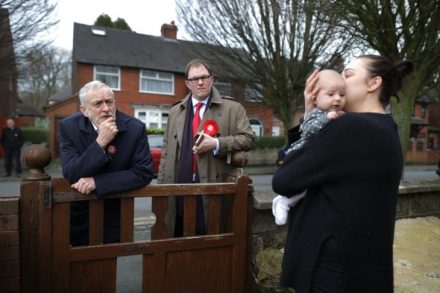
Never in recent years has a party deserved to lose an election, to be demolished by people’s ballots and fury, as much as Labour does in Stoke. The way Labour has treated this northern constituency is a microcosm of the metropolitan contempt it now feels for all the rough-handed, gruff-voiced non-Londoners who once made up its support base but who now irritate the hell out of it by doing stupid things like voting for Brexit and believing in democracy. Were Labour to receive a bloody nose from the people of Stoke it would be a wonderful day for British politics, and, who knows, possibly a wake-up call for a left made lazy by its misplaced virtue and self-satisfaction.

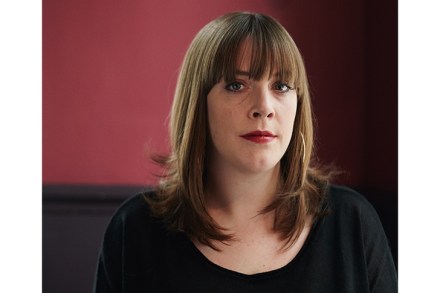
The plight of women in Labour

From our UK edition

We’re told not to judge books by their covers, but faced with these two it’s hard not to. Harman’s is one of those thick, expensive tomes which, understandably, politicians write when they’ve had enough earache and, unbelievably, publishers keep buying for vast sums, despite the fact that a fortnight after publication you can pick them up cheaper than an adult colouring book in a remainder bin. The old saw that ‘all political careers end in failure’ might now better be: ‘All political careers end with a book on Amazon going for less than the price of the postage.

The working-class vote is fed up with democracy

From our UK edition

We're told that the story of Stoke and other similar working-class constituencies is the advance of Ukip; yet more important is the advance of ‘none of the above’. Turnout in by-elections is notoriously low, and Thursday will be no exception, but even at the last general election fewer than half the electorate voted in Stoke. This was not always the case. Turnout in Stoke was barely six per cent below the national average in 1987, yet in 2015 it was 16 per cent lower. This is just a weak reflection of the growing divide in political participation among people in different social classes. While differences in turnout between rich and poor were fairly minimal 30 years ago, today the middle classes are much more likely to vote than the working class.

The one consolation for Labour? Ukip aren’t a slick fighting force

From our UK edition

Theresa May has been visiting Stoke-on-Trent today ahead of the ‘really important’ by-election in the city on Thursday. That the Prime Minister is bothering to pitch up to a campaign in a Labour heartland suggests that the Tories at least think they are in with a fighting chance of winning the seat - otherwise it would be not just a waste of May’s time but also a bit embarrassing if they were seen to have thrown not just the kitchen sink but also the PM at the fight. Labour, meanwhile, is throwing kitchen sinks wildly and at great expense in the two by-elections due this week, including buying the front page of the local newspaper in Copeland on a number of occasions to make stark warnings about the threats it claims the Tories pose to the local NHS in Cumbria.

Labour’s shadow cabinet fail

From our UK edition

Given the frequency of shadow cabinet reshuffles under Jeremy Corbyn, even the most eagle-eyed Westminster residents now have difficulty identifying who makes up Labour's frontbench. However, up until now Mr S had thought that the party at least knew. Alas not.

Britain under Corbyn? Just look at Venezuela

From our UK edition

Twenty years ago Venezuela was one of the richest countries in the world. Now it is one of the poorest. Venezualans are starving. The farms that President Hugo Chavez expropriated, boasting about the great increase in production that would follow, have failed. Inexperienced management and corruption under both Chavez and the current president, Nicolas Maduro, mean that there is less of each crop each year. Across the country, supermarkets are empty and most ordinary people queue for hours every day just for flour. Many of the animals in Caracas zoo have starved to death, but even those who survive aren’t safe — Venezuelans have taken to raiding the cages to butcher and eat whatever they can find: horses, sheep, pigs.

Labour has no alternative

From our UK edition

In normal times, by-elections are bad for governing parties and good for oppositions. But it is an indicator of how much trouble Labour is in, as I say in The Sun this morning, that they are the ones who are nervous ahead of Thursday’s by-elections. Some in the Labour machine seem almost resigned to losing Copeland to the Tories and are concentrating on trying to hold off Ukip in Stoke. Given that Labour is polling as low as 24% and Jeremy Corbyn’s ratings are worse than Michael Foot’s were at this point in his leadership, and the epic defeat Foot led Labour to in 1983 paved the way for 14 more years of Tory government, you might think that defeat in either contest would be the end of Corbyn’s leadership. But it won’t be.

For the sake of Britain’s constitution, will everyone please shut up?

From our UK edition

One of the striking features of Britain’s unwritten constitution is how it relies on various people keeping their opinions to themselves. The monarch, the Speaker of the House of Commons and senior judges must all avoid expressing political views in public – or even in what one might call semi-private. It’s not their right to remain silent; it’s their responsibility. The royal family is expected to stay out of politics from birth, the Speaker is an MP who puts aside partisanship when he or she is dragged to the chair, and judges must show that they are applying the law, not advancing their own agenda. Any appearance of partiality is toxic, calling into question either their own survival or that of the office they hold.

The Labour party has turned into a political bed-blocker

From our UK edition

Just as it seems that Labour has reached the bottom of the abyss, Jeremy Corbyn and his party somehow manage to find a new low. The latest nationwide poll puts them at 24 per cent, trailing the Tories by 16 points. No wonder Labour MPs look so boot-faced around Parliament, and an increasing number are hunting for jobs elsewhere. If a general election were called now, the Conservatives would win a huge majority. Labour would be further than ever from power, arguably even finished as a major parliamentary force. Polls are not rock-solid indicators of future electoral success or failure, but Labour’s ratings are so abysmal as to suggest a party facing an existential crisis.

Labour’s love lost

From our UK edition

Just as it seems that Labour has reached the bottom of the abyss, Jeremy Corbyn and his party somehow manage to find a new low. The latest nationwide poll puts them at 24 per cent, trailing the Tories by 16 points. No wonder Labour MPs look so boot-faced around Parliament, and an increasing number are hunting for jobs elsewhere. If a general election were called now, the Conservatives would win a huge majority. Labour would be further than ever from power, arguably even finished as a major parliamentary force. Polls are not rock-solid indicators of future electoral success or failure, but Labour’s ratings are so abysmal as to suggest a party facing an existential crisis.

Ken Loach discovers how the other half live

From our UK edition

Ken Loach has carved out a name as something of a Corbynista luvvie. The director put together a droning, hour-long promotional film for the Labour leader last year. And Corbyn returned in kind by offering a glowing review of his pal’s recent I, Daniel Blake movie, which he urged people to go and see. This week, Loach stepped up his campaign against the Tories by criticising the Government in a speech at the Baftas, saying the Conservatives ‘must be removed’ from office.

The left are the Tories’ best friends

From our UK edition

Modern British history is largely a history of Tory rule and misrule. The Tories governed Britain from 1886 until 1905 with only the Gladstone/Rosebery minority administration of 1892 to 1895 breaking their dominance. They were in power every year from 1916 until 1945, either on their own or in coalition, except for 11 months in 1924 and from 1929 to 1931, when minority Labour governments clung to office. The Tories governed on their own from 1951 to 1964, and from 1979 to 1997. They governed first in coalition and then on their own from 2010 until…Well, think of a number then double it. Opponents who know that the Conservatives are not only a party of privilege but are perfectly capable of betraying the best interests of every class in the nation ought to fear them.

Labour’s Stoke candidate gives his verdict on today’s female politicians

From our UK edition

Oh dear. It's safe to say that Labour's candidate for the Stoke-on-Central by-election has not had a good day. After Guido published tweets in which Gareth Snell called a variety of women 'sour-faced' and 'annoying', the Sun revealed that he had said Deirdre from Coronation Street deserved a slap. Meanwhile, Mr S notes that Snell also found time to tweet an expletive-laden message telling Stephenie Meyer, the author of the Twilight book series, 'f--- you very much'. So, what does Snell make of today's female politicians and his potential colleagues?

Paul Nuttall tries to manage expectations in Stoke

From our UK edition

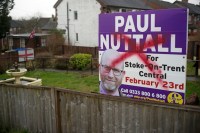
Ukip are in the midst of an expectation management exercise in Stoke-on-Trent Central. As Paul Nuttall battles to take Tristram Hunt's old seat from Labour in this month's by-election, the Ukip leader has said a loss wouldn't be 'terminal' as the constituency is not even in the party's top 50 target seats. There's reason for Ukip to get their excuses in early. Despite facing a lacklustre Labour candidate in arch-remainer Gareth Snell (not helped by an over-active Twitter account), Nuttall has hardly been welcomed to the area. The party had hoped for a Brexit boost in the Leave constituency, but the Ukip leader's decision to list an address he had never been to as 'home' on his nomination form has upset locals.

Tom Watson tells Marr that Labour will ‘make this country great again’

From our UK edition

With the latest polling on voting intentions from ICM putting Labour on 27 and the Conservatives storming ahead on 42 points (the Lib Dems and Ukip are on 10 and 12 respectively), it’s no surprise that, as James Forsyth writes in this week’s magazine, the Tories are hugely confident of winning the next general election. But Labour’s Deputy Leader Tom Watson, speaking on Marr this morning, wasn’t about to give up on his party’s hopes anytime soon, stating that ‘we can certainly win a general election.’ ‘We’ve had a tough eighteen months. We had a damaging second leadership election, so we’ve got an uphill struggle ahead. The polls aren’t great for us.

Why the Lords won’t block Brexit

From our UK edition

The government has no majority in the House of Lords and a majority of peers were pro-Remain. But despite this, the Article 50 Bill will get through the Lords I argue in The Sun this morning. Why, because the reason that we still have an unelected chamber in the 21st century is that the House of Lords has a strong self-preservation instinct: it knows its limits. If the Lords were to try and block something that had been backed in a referendum and had passed the Commons with a majority of 372, then it would be endangering its very existence. Indeed, I understand that the Labour front bench have already made clear through the usual channels that they won’t try and block the bill. There will, of course, be attempts to amend it.

What the papers say: Jeremy Corbyn’s road to nowhere

From our UK edition

Jeremy Corbyn has called reports of his departure ‘fake news’. This despite the Labour leader having a net approval rating of minus 40 per cent and polling suggesting that only 15 per cent of voters think Corbyn stands any chance at all of triumphing in 2020. It seems that, at any cost, the Labour leader is determined to stumble on. Yesterday, he announced a reshuffle - shaking up the cast of nobodies in his shadow cabinet. Whatever Corbyn does, though, if he stays put it's clear that these next few years are going to be a ‘miserable experience’ for him, says the Daily Telegraph. It’s inevitable that whether the Labour leader has a date in mind for when he would go, the question about his future is going to continually pop up.

Motion of no confidence in Bercow tabled

From our UK edition

The Tory backbencher James Duddridge has formally tabled a motion of no confidence in the Speaker John Bercow. Duddridge’s attempt to remove the Speaker follows Bercow’s outburst against Donald Trump from the chair on Monday, which further called into question his impartiality and his judgement. Duddridge’s motion is unlikely to succeed. The SNP and nearly all Labour MPs will back Bercow while the government has no appetite for getting drawn into this fight. The vote, though, will be an embarrassment to the Speaker. There’ll be a sizeable number of Tories who vote for it, 150 is the number being talked about tonight, and it will show how Bercow has lost the confidence of a section of the House. But Bercow is not the type to be embarrassed into standing down.

The House of Commons votes for Brexit

From our UK edition

The drink will be flowing in the government whips’ office tonight. For the Brexit Bill has passed through the Commons unamended and with an absolutely thumping majority at third reading of 372. This means that a clean bill will go to the House of Lords. This will strengthen the government’s hand there as peers will be more reluctant to make changes to a clean bill and one that has passed the Commons with such a large majority. Despite all the talk of knife-edge votes, the government’s majorities tonight were pretty comfortable—30 or above on all the amendments.

Tory MP does Labour’s bidding on the economy

From our UK edition

It's not been a great few days for Daniel Kawczynski. First the Tory MP had to cancel a controversial Commons reception featuring Putin’s Kremlin spin doctor Maria Zakharova. Now he is struggling to stay on-message when it comes to his party's position on the economy. Over the weekend Kawczynski took to social media to warn of the danger a Labour government presents to the economy. His proof? A graph that charted what happened to national debt under Labour's 'massive borrowing': Alas, there was a snag. The graph actually shows that it's his own party that are behind a big increase in national debt. Mysteriously, the tweet has now disappeared.