Labour party

The Staggers backs Ed Miliband

The New Statesman has backed Ed Miliband in the battle of the brothers. Press endorsements don’t count for what they used to, but the country’s leading left-wing magazine remains significant in this context. Below is tomorrow’s New Statesman lead article; it rejects the charge that Ed Miliband is ‘comfort zone Labour’ and portrays him as a thoughtful dissenter from New Labour’s orthodoxy. (On the counter, there are rumours that Jon Cruddas is to back David Miliband. Support from such an independent and left-minded source would be worth its weight in gold for David Miliband.) ‘The Labour leadership contest began in earnest with the New Statesman debate at Church House in

What do you need to know ahead of the Spending Review – Welfare

This is the fourth of our posts with Reform looking ahead to the Spending Review. The first three posts were on health, education, and the first hundred days. What is the budget? The welfare budget must be at the heart of the debate on how to restore the public finances. The Government spends more on welfare than anything else. In 2009 the bill for social protection was around £199 billion. This has almost doubled in real terms over the last 20 years from £104 billion in 1989. Social protection now represents 32.5 percent of all government expenditure or 14.2 per cent of GDP. Some welfare spending varies with economic conditions,

Today’s GCSE results prove that academies work

Today’s GCSE results demonstrate the tremendous success of City Academies, a hugely heartening trend given that this formula – which was so slowly rolled out under the Labour legislation which introduced them – can now be rapidly implemented under the new Academies Act. It’s always been a con to look at the absolute results of Academies, as under Labour the only schools given such status were schools that were doing poorly. What matters is improvement. Let’s take the three Academies groups and look at the ratio of  pupils winning five good GCSEs (i.e. A-C including English and Maths). In the The Harris Federation, which now runs nine schools, there was

A very British diarist

The extracts from Chris Mullin’s diaries that ran in the Mail on Sunday this weekend suggest that the second volume will be as good as the first. It contains things that you just couldn’t make up. Tom Watson, for example, told Mullin that he was pushed into rebellion by the knowledge that Cherie Blair had had the Prime Minster’s section of the nuclear bunker redecorated.   But, perhaps, the most telling  story is what happened when Gordon Brown went to the Chinese embassy to sign the book of condolence for victims of the earthquake there: “While Gordon and his party were inside, word reached them that David Cameron was waiting

How the coalition can develop its case for fairness

The coverage in today’s FT is a reminder that one question will pursue the coalition more doggedly than any other: are the cuts fair and “progressive”? This isn’t an issue that Osborne & Co should duck, and not just because they’ve set it as a measure of their own success. There is, to my mind, a moral and economic necessity for measures that benefit the least well-off – and, what’s more, this is terrain which the coalition should feel quite comfortable traversing. Benefit reform, schools reform, lifting low-income earners out of tax: these policies provide a solid foundation for an argument about fairness. If the coalition wants to develop that

Andy Burnham’s faltering campaign

Andy Burnham’s leadership campaign is going the way of all flesh. According to Left Foot Forward’s model, Burnham is set to come fourth behind Ed Balls. A You Gov poll predicted a similarly poor showing for Burnham. I’m surprised by this. Burnham is presentable against a field of gawky rivals. Also, after a faltering start, he has tuned a clear anti-establishment message, crafted to politicise the north south divide and New Labour’s soulless metropolitanism. He reiterates it for today’s Independent, arguing that the party has been run for too long in ‘an elitist, London-centric and controlling way’ and that New Labour was ‘born of a distrust of its members.’ He

Ed Balls’ contract with the Labour Party

Ed Balls has produced a contract with the Labour party. Three things strike me about it. First, he emphasizes broader consultation and promises a greater role for activists and local representatives. These political impulses are championed by the coalition – an indication that Cameron and Clegg’s partnership is beginning to change Britain party political landscape. Second, Balls is a proud friend of the trade unions and wants to restore the link between Labour and the unions, perhaps to redress Labour’s chronic financial position. Third, like Ed Miliband, he has adopted Harriet Harman’s goal of having women as 50 percent of the shadow cabinet. Here are his pledges:    ‘These are my pledges to every

David Miliband looks odds-on

Crack out the nibbles, David: looks like you’re going to win the Labour leadership. An extensive You Gov poll of Labour members and trade unionists puts David Miliband 8 points clear of his brother in the final run-off. This is the first statistical analysis that supports the general feeling in Westminster that Ed Miliband’s charge has calmed. Courtesy of John Rentoul, the results are diluted in this table. UPDATE: Mike Smithson points out that the fieldwork for this poll was carried out between 27-29 July. So I stand corrected: Ed Miliband’s charge has been on the wane for a month.

Clegg’s alternative view on the alternative vote

Nick Clegg’s fortnight in the sun continues with a big interview in today’s Telegraph. What struck me most were not his comments on a graduate tax (which David has blogged about) but those on AV. If the AV referendum is lost, then Clegg will have a very difficult time keeping his party united and in the coalition. But if Clegg makes clear how much AV means to his party, then the chances of it being defeated increases as Labour voters and those dissatisfied with the coalition see it as a chance to bring it down. (Remember we can expect most Tory voters to back first past the post, making the

The Balls equation

One of the few things that could briefly enliven the Labour leadership contest is if Ed Balls stood down and gave his backing to another candidate. True, it didn’t happen when it probably should have – that is, when all the big unions gave their backing to Ed Miliband. But as the summer advances without any slip in the Mili-lead, then maybe – just maybe – Balls might start reconsidering his options. In which case, this insight from Philip Collins’ latest article in the Times (£) is worth noting down: “In 1999 Mr Balls and David Miliband used to meet regularly in Churchill’s, a café opposite the Treasury on Whitehall,

Party time | 19 August 2010

Utterly incredible. Over at ConHome, Alex Deane has highlighted something that is just utterly incredible – Team David Miliband’s guide to hosting a “house meeting” in his honour. You really have to read the 6-page pdf to take in the full, fastidious horror of it all. But this tip for, erm, “building accountability” into the guest-list deserves pulling out: “Remind your guests the day before – try and build accountability into the relationship. If someone confirms then they should be there and you need to let people know you are disappointed if they don’t turn up… even if it’s just your mates!” What fun. UPDATE: By way of a hat-tip,

Ed Miliband’s backhanded offer to the Lib Dems

As Channel 4 reminds us, there have been two major trends in recent opinion polls. First, the precipitous decline in the Lib Dem vote share. And, second, a solidification of the Labour position, such that some polls even have them as the biggest party in a hung parliament. Predictably, this has stirred the omnipresent Simon Hughes, and some other folk around Westminster, into talking about a LibLab coalition. Which is why Ed Miliband’s comments in the New Statesman today are so eyecatching. He tells Jason Cowley and Mehdi Hasan that he couldn’t go into the coalition with the Lib Dems if they were led by Nick Clegg. He’s got problems

This Parliament’s key dividing line?

They may have faded from the front pages, but middle class benefits are still one of the most important stories in town. What we are witnessing here could be the birth of this Parliament’s defining dividing line – a cuts vs investment for the new decade. In truth, the birthing process began before the election, with this Ed Miliband interview in the Guardian. In it, he made a distinction between a “residual welfare state that is just for the poor, which is the Tory position,” and a “more inclusive welfare state” that encompasses the middle classes. His point was that the former goes against “all the evidence of maintaining public

Exclusive: Gordon Brown launches his public speaking career

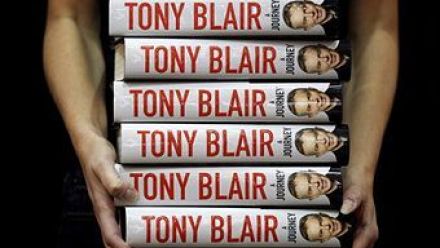
While Tony Blair has been pledging a slice of his massive post-PM earnings to The Royal Legion, a tale reaches me – from an impeccable source – about what Gordon Brown is up to. He once indicated he’d devote his post-PM life to modest good works, but it appears he is also trying to build up a large nest egg of his own: in the world of public speaking, with six-figure fees. He’s asked a London speaking agency to tout for speaking engagements for him in the Middle East and Asia. And the price? He’s been offered at $100,000 a pop and is promising to speak on areas covered by

The Tories Need A Good Labour Party. And Vice-Versa.

A terrific Five Books discussion about conservatism, liberalism and libertarianism with Cato’s Brink Lindsey in which BL quotes a few essential lines from JS Mill: ‘In politics, again, it is almost a commonplace, that a party of order or stability, and a party of progress or reform, are both necessary elements of a healthy state of political life; until the one or the other shall have so enlarged its mental grasp as to be a party equally of order and of progress, knowing and distinguishing what is fit to be preserved from what ought to be swept away. Each of these modes of thinking derives its utility from the deficiencies

Darling’s Revenge on Brown and Balls

Not many Labour minister enhanced their reputations during the Last Days but, at least as far as the non-payroll vote was concerned, Alistair Darling was a rare exception. He seems to think so too, if today’s Donald Dewar Lecture at the Edinburgh Book Festival is any indication. Some extracts from his address: “Labour lost because we failed to persuade the country that we had a plan for the future. What is important now for our party is we take stock and be honest about what went wrong. “We rather lost our way. Rather than recognising that the public were rightly concerned about the level of borrowing, we got sidetracked into

Osborne emerges from the shadows

George Osborne has been quiet these past few weeks, tussling with ministers desperate to preserve some of their budget from his spending review. Today though, Osborne will emerge from the Treasury’s recesses to launch a political attack on the ‘deficit denying’ opposition. Come on, Osborne will ask Darling et al, where are these £44bn of cuts you planned?   And answer comes there none, not even an incredible one. Labour’s refusal to countenance a spending review in government means it has very little to offer the spending debate in opposition. There is also a suggestion that ‘investment versus cuts’ dividing line that paralysed the Brown premiership has yet to be resolved: Ed

Simon Hughes and the deputy leader’s pulpit

My, what a busy character Simon Hughes is at the moment. Seems like hardly a day goes by without some fresh observations from the Lib Dem deputy leader – and he doesn’t even rest on a Sunday. Today, there are two Hughesbites worth noting down, both from an interview with Sky. The first: “We should have no preference at the next election between the Tories and Labour and other parties. We are going to stand on our own.” And the second: “Our party is committed constitutionally to standing in every seat. We will be standing in every seat at the next election. There will be no deals, there will be

Readying the bombardment

Westminster might be in holiday mode, but behind the scenes the coalition is preparing to take on the new Labour leader. As I say in the Mail on Sunday, the coalition is determined to hit whichever Miliband wins early and hard. The Cameroons believe that Tony Blair’s decision not to attack Cameron straight away in 2005 was crucial in allowing him to present himself to the public on his own terms. By contrast, both Hague and Duncan Smith were made to look like losers by the Labour attack machine within months of becoming leader of the opposition. The result of the Labour leadership election will be announced on the 25th

The return of Alan Milburn

Frank Field, John Hutton and now Alan Milburn – the red tinges to the coalition mix are like a Who’s Who of reforming Labour politicians. Milburn, we learn today, is to return to government as an adviser to David Cameron on social mobility. It’s a role he should be accumstomed to, as he was tasked with writing a report on the issue under Brown. That time, his suggestions were buried by a government which didn’t want to face up to the sorry facts. This time, you hope they meet with a more constructive response. But why wasn’t a Conservative (or conservative) appointed? That’s the question which Iain Dale asks over