Labour party

David Miliband hurtles back into orbit

From our UK edition

Ah, there it is, in the final sentence of the fourth paragraph: a flattering reference to Ed Miliband. Phew. Good job David Miliband squeezed his brother's name into his article on Labour's future (£) for the Times today, otherwise it might have been July 2008 all over again. As it is, MiliD's third newspaper article in as many days is enough to suggest that he's keen to remain a prominent figure, if not yet an actual rival for his brother's crown. In some respects, though, the recommendations made by MiliD are a challenge to his brother's Way of Doing Things. His suggestion that the left be "an ally of wealth creation," for instance, reads something like: "enough with the banker bashing, already.

Pickles on the offensive against ‘propaganda sheets’

From our UK edition

Eric Pickles is no longer a genial giant. His speech to the Conservative Spring Forum was the rallying cry that many Conservatives in local government, some of whom will be scrapping for survival in May’s elections, have waited to hear.   ‘Ed Miliband,’ Pickles said, ‘is weaker than Neil Kinnock.’ The Labour leader could not take on his unions and militant councils, the Communities Secretaries said before turning an example: ‘Take Labour-run Camden. Ed Miliband’s local council. His councillors are cutting the Surma Community Centre, coincidentally visited by Samantha Cameron. Yet the council has spent twice as much on its town hall newspaper.

Khan comes to Ken Clarke’s support (kinda)

From our UK edition

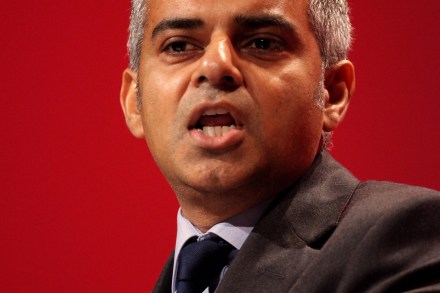
When it comes to the overall sway of British politics, Sadiq Khan's article for the Guardian is probably the most important of the day. We've heard Ed Miliband say before that, "when Ken Clarke says we need to look at short sentences in prison because of high re-offending rates, I'm not going to say he's soft on crime." But Khan's article, a summary of a speech he is giving later today, actually puts that sentiment into practice – and then some. His central argument is straight from the Hush Puppied One's playbook, particularly in its emphasis on the limitations of New Labour's policy: "Some claim crime fell because of the rise in the numbers imprisoned. But the relationship between crime rates and prison population is more complex than that.

A grim morning for the coalition – as Lib Dems finish sixth in Barnsley

From our UK edition

    You may notice that the Liberal Democrats don't feature in the first two graphs of the by-election result in Barnsley Central last night. Or, rather, they do – they're just subsumed under the 'Others' category, having finished in sixth place. Second in the general election, sixth last night. The 1,012 votes for the Lib Dems put them behind Labour, UKIP, the Tories, the BNP and an independent candidate called Tony Devoy. Their share of the vote has fallen by 13.1 points on last May's result. This was an unequivocal, almost ritualistic, beating. Blood everywhere. And the other half of the coalition hasn't escaped unbruised either. The Tories finished third in the general election, third now – so what's changed?

A rotten basket of apples in Nottingham

From our UK edition

The Nottingham Post has a great scoop about Labour-led Nottingham City Council’s abuse of taxpayer funds. The story can be distilled into one sentence: ‘City council leader Jon Collins has used a consultant paid £870-a-day by the taxpayer for advice on Labour's campaign in the run-up to the May election.’ Nottingham is one of England's most profligate and rapacious councils. Examples of its needless largesse include stripping conkers from trees and spending £185,000 on signs to improve local morale. One probable reason for the residents’ black mood is the steep rate of council tax. In 2010-11, occupants of band A properties paid £1041.39; whilst those in Wandsworth attracted a maximum of £470.44.

Labour shuns aid choices

From our UK edition

Government is about choices. In opposition you can like anything, support any measure, back any proposal. But when in office you either make choices or invite dismissal. So when International Development Secretary Andrew Mitchell looked at Britain's development spending he was determined to make choices. Now that he has, some people don't like it. Not one bit. They like choices in general, much as they accept a theoretical form of cuts; but they recoil from real ones. Former Europe Minister Denis MacShane is one of the choice-avoiders. Writing in the New Statesman, he rails about cutting funds to the International Labour Organisation, seeing a Tory plot to undermine trade unionism.

May’s change of emphasis

From our UK edition

Theresa May has a new soundbite: police pay or police jobs. May has been asked to find cuts of 20 percent in the police budget. May insists that the frontline must and will be protected and that therefore these ‘extraordinary circumstances’ mean that the government will have to rewrite the terms and conditions of police employment. The former rail regulator, Tim Windsor, is already conducting a review into police pay and working conditions. In addition to his recommendations, May is scrutinising overtime payments, housing and travel allowances and so forth. Estimates vary but these perks are thought to cost the taxpayer more than £500million a year. She is also overseeing a deluge of bureaucratic reforms, which she hopes will save 800,000 man hours a year.

Osborne goes on the offensive

From our UK edition

Attack, attack, attack. That's the temper of George Osborne's article for the Guardian this morning, which sets about Labour's economic credibility with a ferocious sort of glee. Perhaps the best passage is where he asks how many times Labour can spend their ubiquitous "bank tax," but this is more pertinent to the recent debate: "Where does all this leave Ed Miliband's newfound enthusiasm for the "squeezed middle"? Let's pass over his failure in every interview to define it – his last effort included around 90% of taxpayers. Where we can all agree is that these are difficult times for family incomes. There are two root causes. One is global: rises in food and commodity prices.

The need to address National Pay Bargaining

From our UK edition

National Pay Bargaining is one of the major impediments to rebalancing the national economy and improving the quality of public services. But as Julian Astle, the head of the Liberal think tank Centre Forum, notes the coalition is doing little about it. It knows that the public sector unions will go to the wall for national pay bargaining and so are holding off. Gordon Brown flirted with doing something about national pay bargaining, announcing a review of it in the 2003 Budget. But he then backed away from the issue. One area where the coalition is chipping away at national pay bargaining is schools. Academies and free schools have the right to set their own pay and conditions. But, interestingly, academies tend not to use these freedoms.

Miliband’s latest break with the past

From our UK edition

As an independent creature, the Resolution Foundation's new Commission on Living Standards isn't doing Ed Miliband's work for him. But, boy, must the Labour leader be glad that they exist. At their launch event this morning, the "squeezed middle" – aka low-to-middle earners – suddenly took shape. There were graphs, such as those in James Plunkett's post for us earlier, setting out the very real problems facing a segment of British society. And there were even definitions explaining what that segment is: 11 million adults, by the Resolution Foundation's count, too rich to benefit from measures for the least well-off, and too poor to be entirely comfortable. This was a decent platform for Miliband's speech, and he used it to make a fairly important leap forward.

Will Cameron have a Brown moment over petrol?

From our UK edition

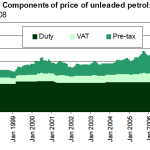
Remember when Gordon Brown came up against Fern Britton in a TV interview? I've pasted the video above to remind CoffeeHousers of two persistent truths: how tricky a subject petrol costs can be for a serving Prime Minister (watch on from around the 0:50 mark), and how Labour are hardly blameless when it comes to the current cost of fuel. As Britton asks in the interview, "How much tax do you put on the fuel?" And the answer that Brown mumbled to avoid, from a House of Commons briefing note at the time, was this: In other words, for a huge portion of the New Labour years, fuel duty accounted for over half of the petrol price at the pumps. For a typical litre of fuel, duty was 36.86 pence when Labour came to power, and 57.19 pence when they left.

Labour sets about warning of a “cost of living crisis”

From our UK edition

Ed Balls has been warming up to this one for a while, and now it has finally come: an all-out attack over rising prices. In an interview with the Sunday Times (£), the shadow chancellor warns of Britain's "cost of living crisis," and demands that George Osborne reverse the VAT increase. Much of his pleading is made on behalf of motorists, who – as I pointed out a couple of days ago – face punishment at the petrol pumps. He doesn't even mention spending cuts once, especially not where his own party's are concerned. Rising costs, clearly, are the new weapon of choice. And it's not just Balls.

Why Ed Balls shouldn’t brag if the OBR downgrades its growth forecasts

From our UK edition

Some speculation (£) today that the Office for Budget Responsibility will shortly downgrade its 2011 growth forecast – and hence the growth forecast in next month's Budget. If so, then you can expect Ed Balls to crow on and on about it. He did, after all, prime the attack in his recent clash with George Osborne across the dispatch box: "With consumer confidence falling, with inflation rising, with no bank lending agreement, no plan for jobs, no plan for growth, no plan B - does he really expect us to believe he can meet this forecast for economic growth this year or will he have to stand here at the Budget in six weeks' time and downgrade his very first growth forecast?

Mandelson casts doubt on Miliband’s vision

From our UK edition

The Kindly Pussycat has returned to the fray with a revised version of his memoirs. The FT's Jim Pickard has highlighted an arresting passage about Ed Miliband’s decision to execute New Labour. 'When Ed pronounced New Labour ‘dead’, he was not only being more categorical than was wise, but quite possibly more than he really intended. (xxi) …Even allowing for the tactical choices he had made in his bid to become leader, however, I was struck by the fact that he had given no strong clue during the campaign as to what alternative to New Labour he envisaged. He was quick to say what he was against: essentially, Tory policies and Tony’s policies.

It’s the Q1 2011 growth figures that matter now

From our UK edition

The Office for National Statistics' preliminary figures for Q4 growth, released a few weeks ago, were a curious beast. They they were, suggesting that because of a snow-laden December our economy had started shrinking again, to the tune of -0.5 per cent. And yet so many other indicators were doing rather nicely: from activity in the services sector to the Exchequer's tax take. Many people, myself included, suspected it was only a matter of time before the ONS revised that -0.5 figure into more positive territory. Now time has passed, and the ONS has just revised the Q4 figure downwards, not upwards. Their preliminary figure wasn't quite right, they say. It should have been -0.6 per cent. Given that the snow was thought to reduce GDP growth by 0.

A fraternal fix

From our UK edition

"Now he and his leader know what it’s like to be people’s second choice," trilled George Osborne during his recent encounter with Ed Balls over the dispatch box. But might Balls actually have been Miliband's third choice for the shadow chancellorship? That's the implication of a delicious little story in today's Sun, which claims that Miliband first "tapped up" his brother, aka MiliD, when trying to replace Alan Johnson: "A Labour insider revealed: 'Ed's people were desperate not to give the job to Balls.' However, Ed stopped short of offering his brother the job when David made it clear he wanted to stay on the backbenches." If true, then it's revealing on two counts.

Coffee House Exclusive: McBride joins CAFOD

From our UK edition

                  The penance of Damian McBride continues. After being ejected from No10, and disowned by his mentor Ed Balls, I can reveal that our antihero now has a new job – head of media at the Catholic overseas aid charity CAFOD. He will be doubtless be brilliantly effective at briefing against its enemies (in CAFOD's case, hunger and the devil). I imagine the pay is several leagues below what he'd get from cashing in on his notoriety and publishing a hit man's confessions. The weird thing is that McBride could have done so well, had he steered clear of Balls. He was a Treasury civil servant, specialising in VAT, before Balls trained him up in the art of character assassination.

Libya catch-up: Gaddafi on the precipice

From our UK edition

Aside from official – and provocative – proclamations from Saif al-Islam Gaddafi, the news from Libya is still arriving piecemeal. The latest reports are that the protestors have prevailed in Zawia, in the west of the country, to add to their "liberation" of Benghazi last night. And there is some speculation that Gaddafi Senior has fled the country, which would certainly reinforce the sense that his power is being whittled down, potentially to naught. As for Britain, the questions about our prior relationship with Libya still hover awkwardly over proceedings, and over the heads of the last government in particular. There was the al-Megrahi deal, of course, as well as all those meetings in Gaddafi's tent.

Cameron’s back is against the wall – now he must fight

From our UK edition

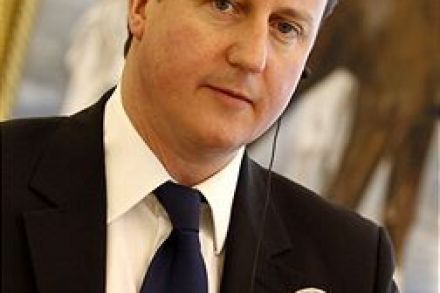
Given that David Cameron will have a tougher fight than perhaps any postwar Prime Minister other than Thatcher, it’s a bit unfortunate that his team doesn’t like political combat. Losing to Rachel Johnson over forests last week exposed major weaknesses, and sent a message to the government’s enemies: that these guys have pretty poor political combat skills. Now word is out, the cuts protests in Liverpool today will be the first in a series of challenges. Cameron, too, is stung by the avoidable mistakes of the last few weeks – and is reshaping No.10 to account for them. Some changes are great, some less so, others downright worrying. Here's my overview: 1. The Big Society. Cameron has started from first principles.

IDS vows to tackle Britain’s welfare addiction

From our UK edition

IDS and David Cameron have been evangelising. An insistent newspaper article and pugnacious speeches herald the latest welfare reform drive. There has been one significant u-turn: the threat to decimate housing benefit for those who have been unemployed for more than a year has been dropped. There is debate about the origins of this sudden decision, but Nick Clegg has been apportioned some credit. He is understood to have expressed private concerns about ‘hammering the poor’ and also argued that private sector landlords in areas of high unemployment would be reluctant to rent to claimants, which would impede reform. IDS agrees with Nick, confiding to the Today programme that the proposal would be hamper the wider aim of breaking the benefits trap.