Labour party

Uncontrolled immigration

From our UK edition

So the 2011 census results for England and Wales are out. And sure enough it turns out that the last decade has seen the largest population increase in any decade since records began. Twice that of the previous decade. Woe betide anybody who does not welcome this with a punch in the air and a few ‘Woohoos’. Despite having no democratic mandate for this societal transformation — indeed acting against public opinion on the matter — the last Labour government oversaw an immigration system which either by accident or design went demonstrably out of control. Naturally, some people will welcome this. They will say that another city the size of Manchester springing up every year is exactly what this country needs. In which case I hope they live there.

The danger for Labour in the G4S shambles

From our UK edition

The row over G4S' failure to provide sufficient security cover for the Olympics is starting to feel a little awkward for Labour. This afternoon in the Commons, Yvette Cooper managed to rouse a sardonic chuckle from not just the benches opposite but also the hacks perched in the press gallery when she said that everyone wanted the Olympics to be a success. Why the laughs? Well, the danger for Labour is that in slamming the government's handling of G4S, the party gets too carried away and appears to be branding the Olympics a shambles too.

Rejecting the idea of coalition

From our UK edition

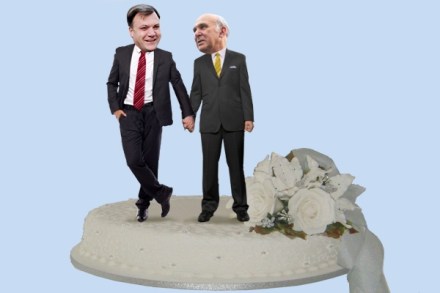
Perhaps what most depressed the Liberal Democrats this week was the sense that the two main parties were rejecting the idea of coalition. One described to me how depressing he found it during the Lords reform debate to watch the Labour front bench revelling in every Tory intervention on Nick Clegg. At the top of the Lib Dems, there’s now a real worry that both Labour and the Tories would try and govern as a minority government after the next election if there’s another hung parliament rather than form a coalition. This would lock the Liberal Democrats out of power.  All of this makes Andrew Adonis’ comments in The Times today particularly striking.

What Labour did next on banking

From our UK edition

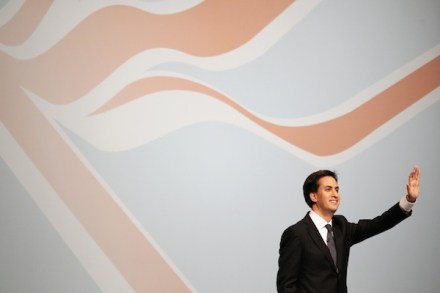
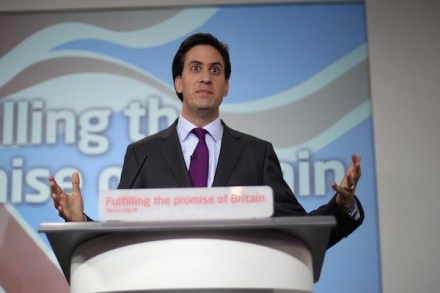
When Ed Miliband gave his speech to Labour's autumn conference last year, he rather tied himself in knots about how to end predatory capitalism. The Labour leader was trying to make it clear that he would stand up to vested interests, but the message was lost under a row about whether he was pro- or anti-business. Today Miliband managed to put that speech into context a little more, by announcing Labour's plans to change the culture of banking in this country. Instead of predator banks, he wants 'stewardship banking', which builds 'a long-term, trusted relationship with their customer' and serves the real economy as well as the industry itself.

Tucker denies Labour leant on Bank over Libor

From our UK edition

So Labour ministers did not 'lean on' the Bank of England to encourage lowballing of Libor rates, according to Paul Tucker. The Deputy Governor of the Bank told the Treasury Select Committee this afternoon that he had held conversations with officials about how able Barclays was to fund its operations. This is the exchange between Pat McFadden and Mr Tucker. McFadden asked whether any minister had tried to 'lean on' him over Libor: 'Absolutely not.' Asked whether Shriti Vadera had leant on him: 'I don't think that I spoke to Shriti Vadera throughout this whole process.' Ed Balls? 'No' Other ministers?

Bookbenchers: Douglas Alexander MP | 7 July 2012

From our UK edition

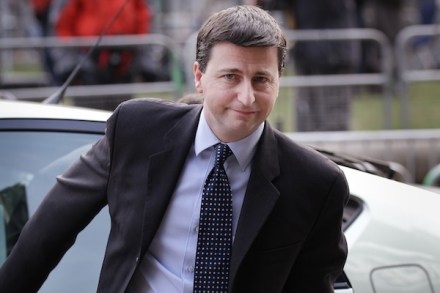
After a brief hiatus, the Spectator’s Bookbencher interview returns. First up is Douglas Alexander, the Labour MP for Paisley and Renfrewshire South and shadow foreign secretary. He tells which books he’ll be reading this summer.  1) Which book's on your bedside table at the moment? Leaving Alexandria by Richard Holloway — the recently published memoir of one of Scotland's most controversial and colourful churchman on his life's journey from faith to doubt. 2) Which book would you read to your children? As a family we have read and loved all the Katy Morag adventures set on the fictionalised Isle of Struay based on the actual Isle of Coll in the Hebrides. Right now I am reading with my daughter ‘Katy Morag Delivers the Mail’.

Bookbenchers: Douglas Alexander MP

From our UK edition

After a brief hiatus, the Spectator’s Bookbenchers interview recommences this week. Over at the books blog, Douglas Alexander MP, the shadow foreign secretary, tells us what he plans to read his children over the summer, as well what he hopes to read for himself. He says: ‘My mother, who herself was born in China — the daughter of Scottish medical missionaries — just leant me a book called Through Earth Wind and Fire which is a history of the Scottish missionaries in China which I hope will help fill in some of the gaps in my family history.’ You can read his answers in full.

Crony Conservatism

From our UK edition

The fundamental division in modern politics is between corporatists and believers in free markets. So what, you might say, that has been a fundamental division for quite a while. This time it is different, however. As a general rule, the more right wing a politician or commentator is seen to be, the more likely he or she is to support the propping up of lame ducks and the requisitioning of public money to subsidise grasping workers. Meanwhile those who support breaking up the banks so that they are no longer too big to fail are variously described as lefties, the enemies of wealth creation, banker bashers and the like. The fact that the trust-busting we desire would allow the separated high street and investment banks to succeed or fail on their own merits is everywhere ignored.

Deeper Libor trouble

From our UK edition

The more we learn about the Libor scandal, the more serious it becomes. Robert Peston’s suggestion that during the financial crisis, Barclays traders thought they were manipulating Libor under instruction from the Bank of England takes matters to another level.   It should be stressed that the Bank is indicating that it offered no such instruction. But the fact that Barclays traders, at least at one point, believed their behaviour was sanctioned does show that these abuses were not simply the work of a few bad apples.   Politically, the parties are battling to show which is best placed to drain the financial swamp. As I say in the Mail on Sunday, those close to Ed Miliband feel that this could be a defining moment for him.

Miliband calls for a banking inquiry

From our UK edition

The momentum for a public inquiry into banking is growing. The Daily Mail front page demands ‘Put Bankers In the Dock’. While Ed Miliband has given an interview (£) to The Times in which he calls for an inquiry into the ‘institutional corruption in the City’. Miliband thinks that this inquiry should be tasked with drawing up a code of conduct for investment bankers equivalent to the one governing solicitors. Bankers who breached this code would be struck off.   Now, many will say that Labour have a cheek lecturing on banking regulation given the total failure of the new system they introduced.

Miliband speaks to the common people

From our UK edition

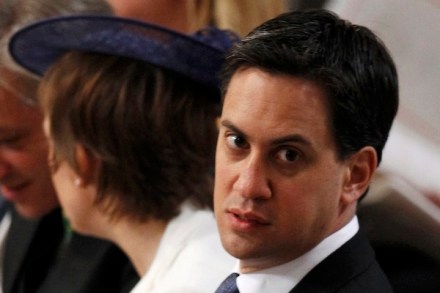
Ed Miliband stands accused of many faults, but he rarely slips an opportunity to be opportunistic. James has said that the error and arrogance of the banking establishment, epitomised by the LIBOR and mis-selling scandals, allows Miliband to pose as a ‘tribune of the people’. And so it has come to pass. Miliband has today addressed the Fabian Society – a generous audience for him to be sure, but a suitably humble platform for him nonetheless.  He received a sort of reverse show trial: a lot of predictable questions to which he gave answers of breath-taking predictability. But that is their strength. Tony Parsons has a piece in today’s Mirror in which he argues that Miliband is beginning to sound prime ministerial.

Blair’s bid for elder statesmanship

From our UK edition

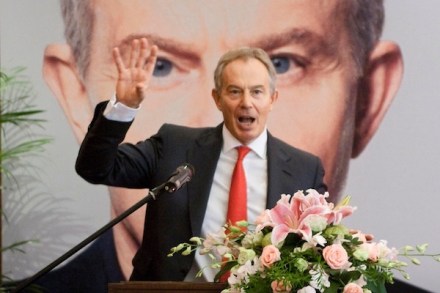
Tony Blair has chosen this summer to launch his re-entry mission into British politics. He hired a UK communications director in May, guest-edited the Evening Standard yesterday and agreed to a rather intriguing interview in same paper, stating he would like to return to office, while accepting it was not likely. So what is the aim of Mr Blair's new campaign? Blair had little choice than to take a back seat during the Brown premiership. But the dismal failure of his successor, followed by Miliband's growing authority and strong Labour polling, makes now the perfect time for the former prime minister to start rehabilitating his image. Until now, he has yet to take up a peerage, as many former Prime Ministers have done.

Miliband’s notes still lack gusto

From our UK edition

Ed Miliband was spoilt for choice at today’s PMQs. Scarcely a week goes by without the government reneging on some budget promise, so Labour’s  leader had a whole fistful of blunders to consider. Wisely, he took the simplest option and quoted an apologia made by David Cameron on April 11th. ‘I will defend every part of the budget,’ the prime minister told some interviewer somewhere. ‘I worked on it very closely with the Chancellor. Line by line.’ That was pure gold for Miliband. And pure poison for the prime minister. ‘What went wrong?’ asked the Labour leader casually.   Cameron flipped into full denial mode. ‘I cannot be a U-turn!’ he shouted fierily.

Fuel for a duel

From our UK edition

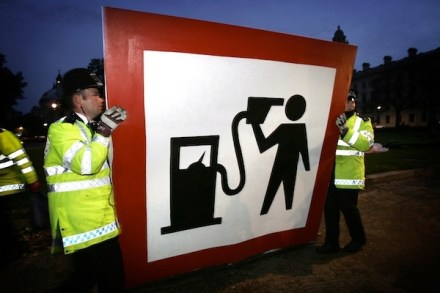
Dear commuter, how’s your journey panning out after you were woken by the sound of Ed Balls politicking about fuel duty? The shadow chancellor was a ubiquitous presence on the airwaves earlier (to say nothing of the tabloid press), laying out his opposition to the planned 3.02p fuel duty rise. He was on fine form, playing the caring shadow chancellor with the ease that Andrea Pirlo takes penalties. The rise would be, he said, ‘a real own goal’. Families are struggling. We’re in a recession. The price of oil has fallen by 20 per cent since Christmas but that has not been passed on to the consumer at the pumps. ‘The government should be pressuring oil companies to get the pump price down,’ he said.

Low marks for Labour’s Gove debate

From our UK edition

Labour's Opposition day debate tomorrow on Gove-levels might not reveal as much as the party hopes about where Liberal Democrat MPs stand on the Education Secretary's planned reforms. True, you won't see a Lib Dem lift so much as a finger in outright support of what Nick Clegg dubbed 'a two-tier system' created by scrapping GCSEs and replacing them with two sets of exams, but this might not be the forum for them to launch a rebellion. One key figure on the left of the party points out that 'it's not where the decision will be made', while another MP says Labour's motions are often so 'over-the-top' that they are unsupportable.

Miliband’s gutless speech

From our UK edition

Here we go again. Ed Miliband gave another speech about immigration this morning proving yet again that this is a subject about which no-one is ever permitted to talk. Any time a Labour politicians talks about immigration and the party's record in government I am reminded of Evelyn Waugh's acid observation on hearing the news that Randolph Churchill had successfully endured an operation to remove a benign tumour. This, Waugh wrote in his diary, represented  "A typical triumph of modern science to find the only part of Randolph that was not malignant and remove it." Comparably, it seems a typical triumph of modern politics that Labour should disown one of the more reputable parts of its record in office.

Why are the unions frightened?

From our UK edition

Labour has only ever won a general election from the autumn of 1974 onwards when its leader has been called &"Tony Blair”. Four other leaders tried, but they were not called &"Tony Blair,” and Labour paid the price. I find it hard to credit the left’s failure myself sometimes, and, equally, find it easy to understand how Labour supporters became riddled with self-hatred and self-doubt as they saw ‘their’ Blairite government in action. But it is going a bit far for Paul Kenny of the GMB to deal with the compromises of the past by calling on Labour to declare the Blairte think tank Progress an anti-party organisation and ban it     I won’t detain you for long with the obvious objections.

Another voice: It is time for new trade unions

From our UK edition

The attack on Progress by the GMB union at its annual conference is odd and reflects the uncertainty of trade unions as they try and work out their role and status in a 21st century which is proving very unfriendly to trade unions across the world. In the United States, only 7 per cent of the private sector workforce is unionized. The figures in France are similarly low. In Britain, TUC membership has shrunk for the fourth year in succession.   Union bashers may rejoice, and certainly there are Tory MPs who think the last great bit of Thatcherite unfinished business is the extirpation of organized labour.

The language of left and right

From our UK edition

Stephan Shakespeare has a fascinating article on Con Home today, comparing which words voters associate with the terms ‘right-wing’ or ‘left-wing’. The results aren’t too surprising: the language of the left is, generally, softer than the language of the right. Shakespeare’s article is entitled ‘Fairness versus selfish’, which gives you an idea of how voters perceive the dichotomy. The upshot is that many voters still believe that the right is intrinsically ‘nasty’; ergo, the modernisation project has not gone far enough. This research, and the conclusions drawn from it, reminds me of Jonathan Haidt’s book The Righteous Mind (indeed, Shakespeare references an article by Haidt).

Miliband plays the national identity game

From our UK edition

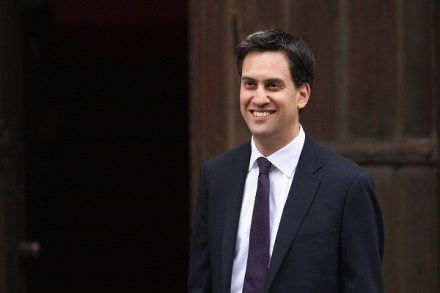
Ed Miliband's speech last week, in which he grappled with questions of Britishness, identity and Unionism, was a worthy effort. By which you will grasp that it was also, in the end, not quite good enough. The Labour leader spoke as though he had only recently appreciated — or had brought to his attention — that national identity on these islands is often a matter of choice and that — insert obligatory Whitman reference here, please — many people have multiple, layered identities that may, at times, even seem to contradict one another. Gosh, you think?   And, alas, he foundered in the Q&A when he told one inquisitor: ‘People can be Scottish and British, it's OK. And if they feel primarily Scottish that's fine too.