Labour party

David Cameron reverses Ed Miliband’s conference bounce

From our UK edition

Just as Ed Miliband seemed to get a poll bounce from his conference speech last week, so David Cameron seems to have got one from his on Wednesday. On YouGov's question of who would make the best Prime Minister, Cameron has extended his lead to 14 points. That more than reverses the bump Miliband got on that question from his conference (he had closed the gap from 12 points before the conferences to just four last week). In fact, it's the best result for Cameron on that crucial question since the Budget in March. On voting intention, the Tories' conference does seem to have helped them close the gap to Labour a little. YouGov's latest poll has Labour's lead at seven points (42-35), down from 14 points (45-31) last week.

British politics returns to normal: Blue vs Red with Yellow on the touchline – Spectator Blogs

From our UK edition

British politics is returning to normal. The two-party system is back. That, it seems to me, is the chief conclusion to be drawn from this year's conference season*. The opposition have been supplanted by Labour and we're back to the familiar sight of watching the Conservatives and Labour knock lumps out of one another. It is not just that the Lib Dem conference seems to have taken place months ago (though it's partly that) but that the guest list for the next general election has been agreed and Nick Clegg's party isn't on it. The Liberal Democrats? Who they? For a long time now, the government has been weakened by the failure to resolve the tensions at the heart of the coalition.

Conservative conference: Iain Duncan Smith rips into Labour’s welfare legacy

From our UK edition

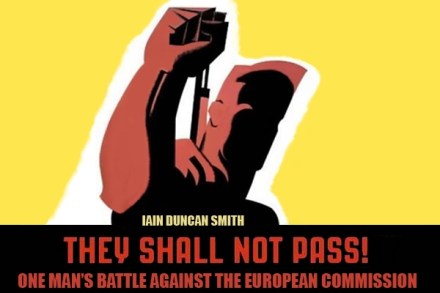
Iain Duncan Smith has just delivered the most political speech of what has been a highly partisan conference. He tore into Labour’s record on welfare, accusing them of having fostered welfare dependency and increased inequality. He said that they had created two nations: one who worked and one who was trapped on welfare. Having done that, he then denounced Labour for having opposed all of his changes to the welfare system, attacking them in moral terms for this. Labour ‘don’t know anything about work do they’ he told the audience to cheers. The flip side of this attack on Labour was an attempt to claim the mantle of ‘social reform’ for the Tory party.

Conservative conference: the Tory attack on Labour

From our UK edition

If the next election is simply a referendum on the government’s performance, I doubt that the Tories will win. But if it is a choice about which party you want to govern Britain, then they are in with a chance. So, today we’ve seen a determined attempt to draw contrasts with Labour. Notice how quick David Cameron was to turn to the question of what Labour would do on Marr. The most detailed attempted takedown, though, came in William Hague’s speech. He ran through his holy trinity of coalition reforms—economic, education and welfare.

Labour to launch a deficit clock for Tory conference

From our UK edition

Things have come to a pretty pass when the Labour Party is launching a campaign with a deficit clock to expose George Osborne’s shortcomings. But they are about to do today, I understand, highlighting how much extra the government is borrowing over the four days of the Tory conference compared to last year: £277 million, they say. I’ll post the link when it becomes live. Significantly, Labour is shifting from being in a position of deficit denial towards a position where they will (I suspect) sign up to Osborne’s spending plans. As Balls has found out, Osborne’s game is to dress up only-slightly-modified Labour spending plans with Tory language. But Osborne, and David Cameron, have overdone it with the rhetoric.

The real story of the 2007 ‘election that never was’

From our UK edition

‘The election that never was’ is one of the most important events, or non-events, in recent British political history; if it had gone ahead, David Cameron might never have become Prime Minister and there might not have been a coalition at all. Equally, Gordon Brown could have seen Labour’s majority slashed and had to quit long before the financial crisis hit. The story of what happened that day has been told several times. But I don’t think I’ve read a more gripping account than Damian McBride’s. McBride did disgrace himself but he can sure as hell write. If you like the political game, you really sure read it.

Five lessons from the Labour party conference

From our UK edition

Believe it or not, Labour's party conference has finally ground to a halt. Here are the key lessons from the past six days in Manchester: 1. Ed Miliband is no longer a joke leader of the opposition. The Labour leader's speech showed that he can now talk a good game, and even though much of that performance was no more than a good game, Miliband gave his party and voters a glimpse of the more authoritative figure that he has grown into over the past two years. It's worth watching his speech to the 2010 autumn conference where he appeared completely floored by bursts of applause to see quite how far he has come. 2.

Labour conference: Ed Miliband’s speech boosts his ratings

From our UK edition

Labour leave Manchester today with a 14-point poll lead over the Conservatives, according to YouGov. That's their biggest lead in a YouGov poll since June, although one last week showed them 13 points ahead, so we shouldn't rush into declaring a big conference bounce for them. It does seem, though, that Ed Miliband himself did get a decent boost out of his hour-long speech on Tuesday. 10 per cent of people say they watched or listened to the whole thing, and a further 49 per cent say they've seen or heard reports about it. And it seems Ed did manage to change at least a few of their minds about him. 31 per cent now say he 'would be up to the job of Prime Minister' — still not a great number, but an improvement on the 25 per cent who said so last week.

Gove kicks back at school bullies

From our UK edition

A Labour conference delegate was heckled from the floor when she mentioned her school. Joanne, an immigrant who came to this country seeking political asylum and is about to read law, came face to face with the vested interests that blight education reform: the hall did not like the fact that she went to an Academy school. A delegate started shouting about comprehensive schooling, much to the horror of those around her. Michael Gove has come down on the girl's side, he has just told me: ‘Heckling a schoolgirl because she goes to an academy is disgraceful. But it also shows the real face of Labour – a party where aspiration and achievement gets booed. Stephen Twigg needs to condemn this and the culprit must be expelled from the party.

He’s behind you! Michael Gove is the pantomime villain who inspires Labour

From our UK edition

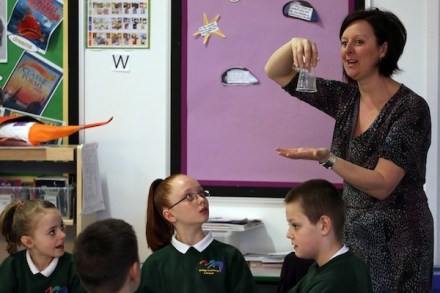
There was plenty of panto on the conference floor this week in Manchester. Ed Miliband encouraged delegates to boo several villains in his speech, and one of them was Michael Gove. In fact, Michael Gove popped up as the villain on Tuesday and in the Labour leader's question-and-answer session yesterday, too, and again when Stephen Twigg spoke just before the close of the conference today. This is odd: of all the reforms that the coalition government has introduced so far, Gove's have been the least surprising to Labour members given he's pushing ahead with what Tony Blair and Andrew Adonis started. There was one baffling moment when a delegate started heckling a year 11 academy pupil who was delivering quite a lovely speech about her own schooling.

Labour conference: Stephen Twigg to launch New Deal for teachers

From our UK edition

It doesn't seem entirely fair that Stephen Twigg's speech has been left to the final day of the Labour conference, when many have packed up and left Manchester already. But today Labour's Shadow Education Secretary is to announce more reforms to education as part of the party's new One Nation project. The idea is to make teaching an 'elite profession for top graduates', and Twigg plans to achieve that by offering incentives for high-flyers to work in tough schools such as paying off some of their student debt, funding for teachers to do master's degrees and a National College for Teaching Excellence to develop new teaching standards. The centrepiece of this New Deal for teachers is a doubling in size of the popular and successful Teach First programme to 2,000 placements.

Ed Miliband’s next big test as Labour leader

From our UK edition

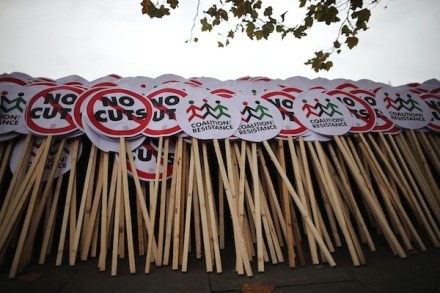
The good thing for Labour about Ed Miliband's speech yesterday was that he didn't talk about the deficit, or welfare or other thorny issues which make certain sections of the party very grumpy indeed. The Labour leader made only fleeting references to cuts to public services, too. So there was little to disagree on. It is when he comes to tackle issues such as these that Miliband will see his party mood sour considerably from its cheery response yesterday. The problem is that on these issues, the party is still struggling to work out how far it should go to meet voters' demands without betraying what it sees as its core values.

The coalition take on Ed Miliband’s speech

From our UK edition

Talking to senior Liberal Democrats and Conservatives about Ed Miliband’s speech, it is striking how similar their analyses of it are. Despite coalition, we’re entering into a period of stark government, opposition dividing lines. Pretty much everyone admits that Miliband has put to bed the question of his leadership of the Labour party and moved himself out of the IDS category. But they argue that he’s not dealt with Labour’s biggest weakness, the public’s belief that it spent and borrowed too much. One influential Liberal Democrat accused Miliband of ducking the generational challenge that is the deficit likening his speech to one in 1942 that didn't mention there was a war on.

Yvette Cooper fails her Peel history lesson

From our UK edition

The Labour party’s love-in with great Tory statesmen continues. Yesterday Miliband went all Disraelian; today Yvette Cooper, the shadow home secretary, has raised the spectre of Robert Peel in an attempt to paint modern Tories as out of touch with the police service in the wake of the Andrew Mitchell ‘pleb’ scandal. However, it seems that Yvette has not done her homework. Peel’s view of the average copper was closer to Andrew Mitchell’s alleged words. Writing to the Lord Lieutenant of Ireland in December 1829, Peel mused on the formation of the police: ‘for subordinate duties connected with the Police, Persons who have not the Rank, Station, and habits of Gentlemen, are much better qualified than those who have them’.

The View from 22 – Labour conference special

From our UK edition

Ed Miliband's speech to the Labour conference this afternoon was undoubtably his best speech yet and has revitalised the Labour cause.The Spectator team have gathered this evening in Manchester for a special podcast to discuss both Miliband's speech and the Labour conference overall: The View from 22 - 2 October 2012.

Will Philip Blond be back for more fun?

From our UK edition

Ed Miliband's ‘One Nation’ conference speech will have put the populist cat amongst Downing Street’s toffee-nosed pigeons. Now young Dave's people will have to work out how to respond to this inspired piece of political cross-dressing, even if it is essentially diaphanous. One (alleged) Tory, though, is very happy with the direction in which the national debate seems to be travelling. Mr Steerpike found Phillip Blond, the 'Red Tory' and founder of the Respublica think-tank, cock-a-hoop after the speech: 'Ed Miliband has thrown down a blue Labour challenge to the Conservatives. No. 10 needs a Red Tory response unless they want to see Ed's One Nation politics win the next election.

Labour conference: Miliband and Balls talk inheritances

From our UK edition

One of the more sombre passages in Ed Miliband's barnstorming speech this afternoon was when he tackled the thorny issue of what a Labour government would actually do about the cuts. While both the Labour leader and Ed Balls are keen to regain the trust of the British public on the economy, they are also trying to introduce a counter-narrative to the 'are you ready to trust Labour with your money again?' line that Nick Clegg produced last week. Just as George Osborne and colleagues have spent the first two and a half years selling the line that they are 'clearing up the mess' of the last Labour government, Miliband and Balls are now increasingly talking about the economic inheritance that a Labour government might receive in 2015.

Ed Miliband Makes a Pitch for One Nation Progressivism – Spectator Blogs

From our UK edition

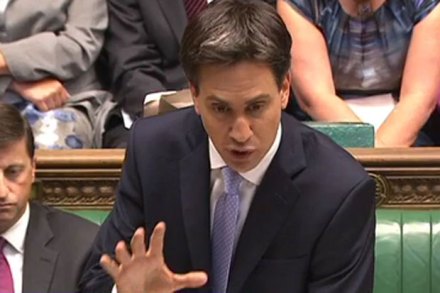
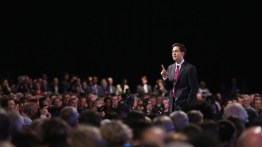
The first thing to remember about Ed Miliband's speech to the Labour conference today is that it's not about you, it's about us. That is, it was designed to persuade the media to give Miliband a fresh look more than it was an attempt to impress the general public, far less the Labour members gathered in Manchester. Initial impressions are that he succeeded in this aim. See Tim Shipman and Fraser Nelson, neither of whom are normally considered much of a Milibander, for good examples of this reappraisal. (John Rentoul is, of course, an exception.) Indeed, I can't recall when the British half of my twitter timeline was last quite so impressed by any speech given by any British politician, far less any intervention made by Edward Miliband Esq.