Labour party

I’m scared to admit to being a Tory in today’s C of E

From our UK edition

[audioplayer src="http://traffic.libsyn.com/spectator/TheViewFrom22_27_February_2014_v4.mp3" title="Ed West discusses political bias in the church" startat=640] Listen [/audioplayer]I am training for ordained ministry at a Church of England theological college. I am a trainee vicar, if you will. I am also a Conservative, which puts me in an extremely small minority and quite a tricky position. At my college, there are approximately 60 ordinands in full-time residential training. Of those 60, there are no more than three or four who would describe themselves as Conservative and the overwhelming majority would call themselves (proudly) socialist. There is also a sizable minority of Marxists.

Harriet Harman’s messy war with the Mail

From our UK edition

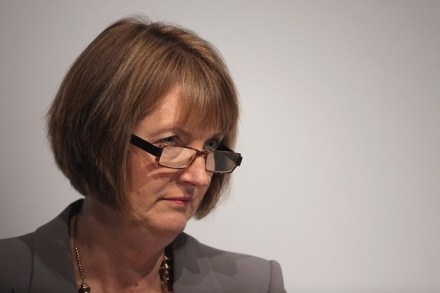
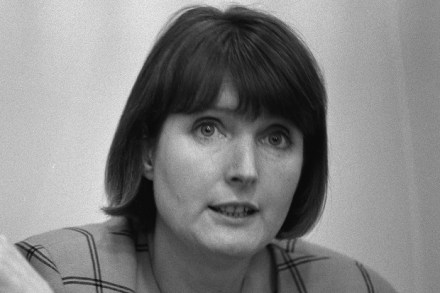
Go to war with the Daily Mail at your peril: Ed Miliband did it over its 'the man who hated Britain' column and now perhaps the Labour party is seeing the revenge for that with the paper's ongoing insistence that Harriet Harman apologise for the National Council for Civil Liberties' links to the Paedophile Information Exchange in the 1970s. Harman, though, is going to war with the Mail again, and her supporters in the press are arguing that the paper is on thin moral ground here. Harman's messy handling of the story has kept it going as much as anything else. She gave a forceful interview to Newsnight yesterday in which she insisted that she had nothing to apologise for, then 12 hours later suggested that the links between NCCL and PIE were 'regrettable'.

When is a scandal not a scandal?

From our UK edition

When it involves metropolitan left-wingers, says the Daily Mail. For a week, it has been exposing how Harriet Harman and Patricia Hewitt – or “Hat and Pat” as the London left of the early 1980s knew them – committed the National Council for Civil Liberties to the cause of helping the Paedophile Information Exchange. The Mail showed that while at the NCCL (now Liberty) * Hewitt described PIE in glowing terms as ‘a campaigning/counselling group for adults attracted to children’; * The NCCL lobbied Parliament for the age of sexual consent to be cut to ten – if the child consented and ‘understood the nature of the act’.

Ed Miliband: Children behave better than MPs at PMQs

From our UK edition

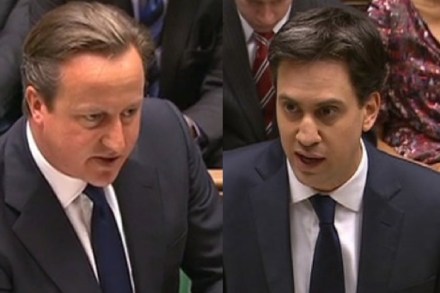
A rite of passage for any Opposition leader these days is to promise to make politics more decent and connected to people's lives. One recent Opposition leader said this, for example: 'And we need to change, and we will change, the way we behave. I'm fed up with the Punch and Judy politics of Westminster, the name calling, backbiting, point scoring, finger pointing.' David Cameron, who said this in his leadership acceptance speech in 2005, now has a team of MPs who help heckle Labour in the Commons during Prime Minister's Questions. This was mainly in response to Labour being much better at heckling, with Ed Balls gesticulating and sledging away on the front bench, and Michael Dugher and Sadiq Khan doing similar dirty work on the steps on the Labour side of the house.

Food banks: What would Labour do?

From our UK edition

Was the church right to intervene in the debate about food banks and benefit cuts? I argue in my Telegraph column today that it was - but that the way the 27 bishops (more have since spoken out to support the letter to the Mirror - and Justin Welby has agreed with their argument that benefit cuts are pushing up food bank demand) intervened says a number of interesting things about the Church of England today. But there is another interesting question worth asking, which is not what would Jesus do but what would Labour do? As I explained earlier in the week, the party finds these attacks from church leaders very useful at the moment as it feeds into the Opposition narrative about government failure. But how will Labour deal with food banks if it is elected into government in 2015?

The church is better at the welfare business than the state

From our UK edition

Today I have a piece in the Times (£ obviously, you know that) about the power of the Christian Left, following the Anglican bishops’ letter in the Daily Mirror; the Spectator’s Isabel Hardman goes into detail in the Telegraph about how her congregation did a better job of caring for the poor than the state did. That is what’s at the heart of the argument for Christian conservatism. State spending is effective when there is acute, widespread poverty, but once a country rises above a certain income there are diminishing returns, because the causes are less likely to be wider social and environmental forces. This is a good, or at any rate conservative, argument for spending on overseas aid, where the money really can make a huge difference.

I’m a Liberal Democrat… get me out of here!

From our UK edition

It seems the launch of the new Liberal Democrat website is not going very well. Apparently the party of tuition fees and Nick Clegg is 'untrusted'. 'What should you do?', it asks. Lib Dem HQ will be hoping most people do not click 'Get me out of here!' come 2015. With their recent overtures to Labour, those that do vote yellow should certainly 'understand the risks'.

The Coalition mating game

From our UK edition

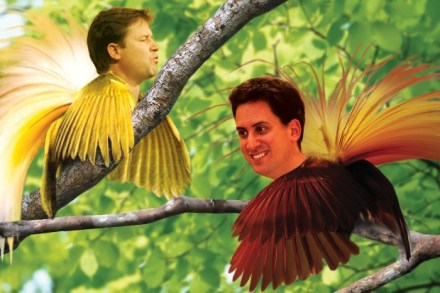
There are ornately-feathered birds in New Guinea that have less bizarre mating rituals than Labour and the Lib Dems. The two parties need to show that it isn't impossible to work with one another in a future coalition while also keeping their own supporters reassured that they're not desperately keen to jump into a bed with another party that activists find themselves embroiled in dirty by-election and local fights with. Hence the weird back-and-forth dances and plenty of displays of aggression that we've seen over the past couple of months. So Ed Balls in January suggested Nick Clegg's head would not be the price of a Coalition after all with the Lib Dems and was immediately slapped down by Clegg.

Where would Ed Miliband’s first New Town go?

From our UK edition

Ed Miliband has been singing the praises of New Towns in tonight's Standard, saying a Labour government would use these developments to help solve London's housing crisis. He writes: 'A key plank will be creating new towns in sustainable locations where people want to live, just like earlier generations did in places such as Stevenage and Milton Keynes. Labour will kick-start the next generation of new towns and garden cities around the capital to ease the pressure on London.' Although he doesn't say it, it's a reasonably safe bet that the Labour leader is thinking of Ebbsfleet when he talks about a sustainable location where people want to live. That's where Lord Adonis, who is leading Labour's growth review, has set his sights for a new development.

Ed Miliband and the state

From our UK edition

Ed Miliband is delivering the Hugo Young lecture tonight, and will focus on 'people-powered public services'. All the briefing so far sets it out to be one of those 'intellectual underpinnings' speeches, rather than something that sets the world on fire (although Miliband does, to his credit, have a habit of pulling impressive speeches out of the bag when we're not expecting it, or boring us all to tears when we've been told to expect something major). The central premise of it is set out in his Guardian article (and for more background, do read Rafael Behr's piece on this): it's about people having more power over their lives. He writes: 'Indeed, it is about much more than the individual acting as a consumer.

Labour’s internal reforms will have consequences

From our UK edition

[audioplayer src="http://traffic.libsyn.com/spectator/TheViewFrom22_6_February_2014_v4.mp3" title="James Forsyth and Marcus Roberts discuss Labour's election strategy" startat=702] Listen [/audioplayer]At the end of last year, there was an expectation that Labour’s internal reforms would be one of the big themes of the first quarter of the year. But this week, Labour’s National Executive Committee voted through the changes by the comfortable margin of 28 to 2 and with remarkably little dissent. The absence of a public row over the issue makes it tempting to think that the changes don’t amount to much. But this would be wrong. Labour is going to scrap its current electoral-college split between MPs, the Unions and members and replace it with a one member one vote system.

With friends like these the Union has no need for enemies

From our UK edition

[audioplayer src='http://traffic.libsyn.com/spectator/TheViewFrom22_6_February_2014_v4.mp3' title='Alex Massie and Matthew Parris discuss why the Union is in peril' startat=55] Listen[/audioplayer]In the cover story for this week's edition of the magazine (subscribe, by the way!) I write that "The battle for Britain is being conducted on a wavelength which unionist politicians in London struggle to pick up." As if to prove my point, consider this story from today's Financial Times in which it is revealed that government ministers in London have been pressuring defence companies to "highlight potential job losses and disruption if Scotland splits from the UK".

The Tories haven’t been installing their people in quangos – but they should have

From our UK edition

The accusation that the Tories have been installing their people in public appointments should evoke only a hollow laugh. They have been comatose on the subject. One of the greatest skills of New Labour was putting its allies in positions of control across the public sector. A great many are still there, and yet the Tories wonder why their efforts at reform are frustrated. Maggie Atkinson, for example, was imposed by Ed Balls, when in office, as Children’s Commissioner, against the recommendation of the relevant selection committee. She lingers on in her useless post. Lord Smith, the former Labour cabinet minister who has been flooding the Somerset levels, is still at the Environment Agency.

The quango state: how the left still runs Britain

From our UK edition

[audioplayer src="http://traffic.libsyn.com/spectator/TheViewFrom22_6_February_2014_v4.mp3" title="Fraser Nelson discusses David Cameron's quango problems" startat=1350] Listen [/audioplayer]Last week Sally Morgan reverted to type. After almost three years as a model of cross-party co-operation, instinctive Labour tribalism finally won out as she accused Downing Street of purging Labour supporters from high offices. Of the many Labour types appointed by the coalition into quangos, she was probably the last person the government expected to go hostile. Not only had she done a fine job chairing Ofsted, the schools inspector, but she was a proven reformer who certainly shares Michael Gove’s passion for new schools. Like many Blairites, she is something of a Goveite at heart.

Labour’s NEC backs ‘historic’ union link reforms

From our UK edition

The Labour party's National Executive Committee has backed Ed Miliband's plans to change the party's trade union links by 28 votes to two, which marks a resounding victory for the Labour leader. There was little doubt that the NEC would endorse the reforms, which will still take five years to be implemented, and in the end the two members who opposed the proposals (another member abstained) were vocal leftwing backbencher Dennis Skinner and Christine Shawcroft. The next step is for the party to vote on the reforms at a special conference on 1 March. Miliband said this afternoon: 'Some people will find change difficult to accept. Others are worried about the consequences.

Where’s Wally?

From our UK edition

There were lots of sniggers at the back when Ed Miliband failed to make the list of the Most Connected Men in Britain, drawn up by Editorial Intelligence for GQ. Plenty of Labour stooges did make the list, so we can reject claims of bias. Ed’s grumpy spinmeister Tom Baldwin is on it, as is Shadow Education Secretary the Hon. Tristram Hunt. Even David Miliband, who has left these shores, made the cut. Now, call Mr S an old cynic but it seems that more column inches have been devoted to Ed not being on this list, than would ever be given over had he scraped on. If only Labour were this good at this spin malarkey.

David Higgins warns politicians of the costs of dithering on HS2

From our UK edition

Sir David Higgins is making the most of the first few weeks in his job as chief of HS2 Ltd to fight the new line's corner. In an interview in today’s Daily Telegraph, Higgins makes a strong case (arguably better than anyone from the government) for the line, explaining why there is no alternative. He warns that the existing rail lines risk becoming similar to the ‘Piccadilly line at rush hour’: ‘There are no new train paths. We’d love to put more trains on the west coast. It performs at 85 per cent. It’s a very tired, old, smartly refurbished railway line that is right at capacity. It’s the busiest mixed use railway line in Europe and it’s showing. We can’t get more trains on it.

Tories and Labour both losing 8% of their female MPs

From our UK edition

Another day, another female MP decides to quit politics. Ann Clwyd has announced that, after 30 years in the Commons, she will not be standing in 2015. Female MPs have been in the news of late – either because they are retiring or fighting de-selection. On yesterday’s edition of the Andrew Marr Show, Harriet Harman said: ‘My concern is that we're having a sort of cull of senior, authoritative women and they're all being replaced by men’. She then went on to use this as evidence that the Tories have a ‘women problem’. The numbers, though, tell a slightly different story. There were 48 female Tory MPs in 2010. Lorraine Fulbrook, Jessica Lee and Laura Sandys have announced that they will not be seeking re-election.

Why Ed Balls doesn’t care about criticisms of his tax plan

From our UK edition

There were a million people who voted Labour in the 2005 general election but not in 2010, when the party fell from a 66 majority to 48 seats behind the Tories. Thanks to the Lib Dems’ spiteful rejection of boundary changes that would have helped their coalition partners, the 2015 poll is already rigged in Labour’s favour by about 30 seats, so the number of floaters who have to be won over to give Miliband and Balls a working majority is likely to be well down in six digits rather than seven. No doubt Labour’s pollsters know how many to the nearest thousand, and have them segmented and profiled to the last housing estate. Not many are likely to be business leaders, wealth creators, tax economists,Today listeners or Spectator readers.

Breaking: Labour to vote against Raab amendment

From our UK edition

In another twist of this Raab rebellion, Labour have just announced that they're voting against the amendment on deportation of foreign prisoners. There had been a moment where they would abstain, but now the party has decided that as the government itself as said it is illegal and would be counterproductive, it cannot do anything other than vote it down. The party says it will come forward with proposals in the progress of the bill to facilitate and not hinder the removal of foreign prisoners. A Labour source tells me: 'Weak and chaotic from the Prime Minister and Home Secretary on this so-called flagship bill.' But this is interesting, because former Home Secretary David Blunkett was a co-signatory of the motion (he has since removed it because he is out of London today).