Labour party

No one wants to fight a national campaign. This will be the least general election in years

From our UK edition

[audioplayer src="http://rss.acast.com/viewfrom22/the-snp-threat-to-westminster/media.mp3" title="James Forsyth and Isabel Hardman discuss the not-very-general election" startat=780] Listen [/audioplayer]There’s normally an easy way to tell which party is losing a general election campaign. Whenever one side starts telling you to ignore the national polls and look at what is happening in certain key seats, it is a sure sign that they are in deep trouble. In this election, however, all the parties are arguing that what’s going on in their target seats matters more than the national polls. No one is keener to dispute the relevance of the national polls than the Liberal Democrats.

Labour unsure about health policy its own councils support

From our UK edition

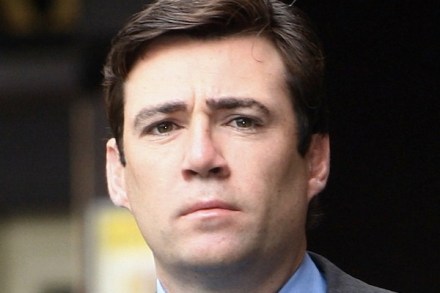
The announcement today that Greater Manchester will receive full control of health spending - worth £6bn - has left Labour in a rather interesting position. On the one hand, it is easy for Andy Burnham to say that this sounds ‘like yet another NHS reorganisation’. But on the other, Greater Manchester includes a number of Labour councils who appear pretty happy to sign up to the provisional deal. Indeed, one of those councils is Wigan, which covers Burnham’s own constituency. Now one of the reasons that spending has been devolved to this area is that councils in Greater Manchester are keen, forward-looking and ambitious.

Ed Miliband attempts to build bridges with the arts world, but where will the money come from?

From our UK edition

After Labour confirmed that they would not reverse Tory art cuts, the luvvies turned on Ed. During a spending plans onslaught from the Tories earlier in the year, the party spin machine proudly boasted: p.44 of Tory dossier says Labour will cancel cuts to the arts budget. We won't. — Labour Press Team (@labourpress) January 5, 2015 Leading to a thorough pasting from all sorts of media darlings: This is not something to brag about. RT @labourpress: p.44 of Tory dossier says Labour will cancel cuts to the arts budget. We won't. — Neil Gaiman (@neilhimself) January 6, 2015 @labourpress And you're proud of that? Jesus. — Simon Blackwell (@simonblackwell) January 6, 2015 .@labourpress why are you proud of this?

Only a matter of free time: Labour candidate blasts ‘invisible’ MP Sir Malcolm Rifkind

From our UK edition

Sir Malcolm Rifkind claimed to an undercover reporter during a Telegraph sting operation that they would be surprised by how 'much free time' he has, despite being the MP for Kensington. One person who would not appear to be surprised by Rifkind's admission is his Labour rival Dr Rod Abouharb. Rifkind flaunting his free time, more evidence of him being the invisible MP for Kensington. Isn't being an MP http://t.co/MO2iavJRYR — Dr Rod Abouharb (@kensingtonrod) February 23, 2015 Speaking ten days before the allegations broke, the Labour candidate claimed that only 17 people out of 100 surveyed in the Kensington constituency could successfully pick out their MP from a line-up of eight.

Tories and Labour to make pledges knowing they are bad policy

From our UK edition

This week, the two main parties plan to make iconic pledges that they hope will appeal to their core vote, but that are pretty poor policy. David Cameron will today pledge to keep ‘pensioner perks’ - universal benefits for older voters such as the free bus pass and the winter fuel payment - while Labour expects to announce its new tuition fees policy. The only thing that gives the Tories any sense of moral high ground in this is that they have at least worked out how to fund their pledge, while Labour is still scrapping over the money for and detail of its plan to cut tuition fees. Why are these bad policies?

Ed Miliband to Cameron: show us your EU renegotiation policy

From our UK edition

Ed Miliband has sent an angry letter to David Cameron this afternoon, demanding that he ‘set out in detail a reform agenda for the EU and a strategy for building the alliances needed to deliver it’. Now, David Cameron is quite used to receiving angry letters about Europe, but mostly they come from members of his own party rather than the leader of the Opposition. But because Ed Miliband has decided that his party’s best business policy is actually the responsibility of his Shadow Foreign Office team, he wants to get in on the angry letter-writing act too. This letter is supposed to highlight that pro-business policy, which is Labour’s opposition to an EU referendum, as well as needling Cameron a bit about whether he really holds enough influence in Europe.

Hunting may be banned, but the fight still goes on

From our UK edition

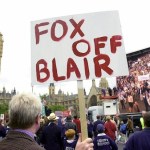
Ten years ago today, Tony Blair’s ban on hunting with dogs came into force. Rural communities had marched, Otis Ferry had stormed the Commons, but none of it made any difference, and anti-hunt campaigners rejoiced when hunting became a banned sport. But though the law has been in place for a decade, the fight for hunting still goes on. Many hunts, especially those based in more urban areas, are still plagued by hunt saboteurs, as was demonstrated just last month when Mike Lane, a Master of the Tedworth Hunt in Wiltshire, was attacked so savagely by saboteurs wielding iron bars that he was knocked out.

If this is a debate about animal welfare, we must repeal the Hunting Act and start again

From our UK edition

Today marks ten years of a ban on hunting a wild mammal with hounds in England and Wales, except under certain exemptions. To understand what a fundamentally bad law the Hunting Act is, and why it must be repealed, it is best to start at the beginning with the original purpose of the ban. For all the talk of animal welfare the long battle over hunting legislation was not predominantly about foxes or other mammal species it was about class, politics and a gratuitous misrepresentation of hunting and the people who do it. This is not my interpretation, but the reality as admitted by many of those who promoted the ban.

Record employment figures create more problems for Labour

From our UK edition

Britain has reached its highest ever level of employment. According to new figures from the ONS, the employment rate has risen to 73.2 per cent — or close to 31 million people in work. This stands as the joint highest rate since records began in 1971. Unemployment is down to 1.86 million. The short-term jobless rate is also at its lowest rate since 1992. Pay is also increasing, with private sector earnings (excluding bonuses) up 2.1 per cent year-on-year at the end of 2014. Youth unemployment has increased slightly, something Esther McVey has described as a 'tiny blip.' But never in British history have there been so many job vacancies. Never have there been so many workers. These are just two facts from today's job figures, loaded with good news for David Cameron.

Former NEC chair dumps Labour for Ukip

From our UK edition

Labour’s decision to shy away from an EU referendum has cost it a senior figure. The Telegraph reveals that Harriet Yeo, the former chairman of Labour’s National Executive Committee between 2012 and 2013, has quit the party over Ed Miliband’s refusal to offer a referendum. Although she hasn’t joined Ukip, she will be lending her support to the party at the next election. Nigel Farage is naturally pleased with the news. In a statement this afternoon, he said: ‘A life long Trade Unionist and Labour Party member who served as Chair of Ed Miliband's NEC she is yet another voice calling for Britain to have a choice about its future. We are welcoming support from across the board and Harriet's support is evidence of this.

Labour tries to resuscitate tax row

From our UK edition

Presumably as a way of getting out of an endless debate about receipts, Ed Balls has issued a letter with some detailed questions about tax evasion and HSBC (as opposed to tax avoidance and window cleaners). The letter asks three questions: 1. Why has there only been one prosecution out of 1,100 names? Was the “selective prosecution policy” a decision made by Ministers? 2. When were you first made aware of these files, what action did you take and did you discuss it with the Prime Minister? 3. Why did you and David Cameron appoint Lord Green as a Conservative peer and Minister months after the government received these files? 4. Did you and David Cameron discuss tax evasion at HSBC with Lord Green, or did you turn a blind eye?

Labour’s tax fight turns scrappy

From our UK edition

Well, those tax attacks worked out well, didn’t they? Tax avoidance is on the front pages of the newspapers, but not in a way that benefits either main political party. Even though George Osborne’s guide to minimising your tax bill has gone viral, Labour isn’t benefitting because it has ended up talking about receipts for hedge trimmers, not the activities of hedge funds. It was a wrong turn easily taken by Labour but one that makes week three of its tax avoidance row messy. Week one was messy partly down to Balls, too, after his ‘Bill Somebody’ interview, which fed the narrative that Labour was ‘anti-business’.

Watch: Ed Miliband mucks up his lines

From our UK edition

Ed Miliband appears to have found some safe ground for his party this week, attacking the Tories whenever he can over tax avoidance claims. If he plans to continue on this note, Mr S suggests that he picks his words with more care in the future. Speaking at the Welsh Labour conference on Saturday about his plan to launch an HMRC review, Miliband went off message rather badly. The Labour leader promised to ‘stand up for all those who stand in the way of the success of working families'. That couldn't be what he means, could it?

Has Labour finally found its campaign message?

From our UK edition

As well as keeping the tax avoidance row going for as long as possible (something that is worrying Tories, who think their party needs to find a way of moving the conversation on from a toxic issue as quickly as possible), Ed Miliband also unveiled a potential new campaign message at his speech today. He talked about ‘a better plan for working people, a better plan for Britain’. The 79-page document that launched alongside it was entitled ‘Better Plan for Britain’s Prosperity’.

Seven times Labour has previously launched a plan for the economy

From our UK edition

The Labour vs. Conservative battle of economic plans is heating up. Ed Miliband is launching a 79-page Better Plan for Britain’s Prosperity today, which appears to be his latest alternative on the Conservatives’ robotic chants of a ‘long-term economic plan’ for ‘hardworking families’. But this isn’t the first time they have launched their plan for the economy. Here are seven previous occasions where Labour has made a fuss about some new plans, pledges or promises about the economy: 1. December 2014 – five election pledges. At the end of last year, Miliband announced that Labour would go into the election with five election pledges that constituted ‘a long-term plan to make the country work for working people again’.

Will Labour’s efforts to paint the Conservatives as a party of the rich backfire?

From our UK edition

Quite naturally, the latest foray by Labour into pointing fingers at Tory tax avoiders has led to two scraps, firstly about Labour’s own donors and their tax affairs (as James predicted on Thursday) and secondly about whether or not paying your builder in cash is illegal. The last time the second row blew about Westminster, it was after Tory minister and tax personality of the year David Gauke made some rather clumsy comments about paying your cleaner. Chuka Umunna had a rather tough section of his Today programme interview in which he was repeatedly asked whether Labour would hand back money donated to it by someone who turned out to have been involved in aggressive tax avoidance.

The danger for Miliband in his tax triumph

From our UK edition

Last week was Labour’s best of the campaign so far and the Tories’ worst. The row over tax avoidance and Lord Fink’s comments reinforced the damaging perception that the Tories are the party of the rich. It also raised Labour morale, frontbenchers who used to be pessimistic about the party’s electoral prospects are now bullish. But there is a danger that this tactical victory could turn into a strategic defeat. For Miliband by denouncing tax avoidance—which is legal—and setting himself up as a moral arbiter on the issue, has made his tax affairs and those of his shadow Cabinet, MPs and donors a legitimate subject of public interest. They no longer just have to be legal and fully declared, they also have to pass the higher Miliband bar.

Will Labour rule out a deal with the SNP?

From our UK edition

Who ends up governing Britain after the election may well be determined by what happens in the Scottish seats. If the SNP take a slew of seats from Labour, it becomes far more likely that the Tories will be the largest party nationally. Add to that the fact that Cameron is the incumbent Prime Minister and he would, in these circumstances, probably be able to put together a deal that sees him carry on as Prime Minister. Labour is acutely aware of this and is busy warning Scots ‘Vote SNP, Get Tory.’ But in this anti-politics era, these squeeze messages don’t work as well as they used to—as the Tories are finding out with their ‘Vote Ukip, Get Miliband’ warnings.

Three reasons why Labour probably (just about) ‘won’ this week

From our UK edition

Ed Miliband’s party has ended up having a reasonably good week, even though it’s been a pretty tough battle. Today’s front pages have not been good at all, something the party leader’s supporters are obviously disappointed by, but given the story about a comparison between the row about Lord Fink’s tax affairs and the hacking of Milly Dowler’s phone was made by an aide, not Miliband, and then reported in a way that was initially misinterpreted, the focus of the row is not Miliband himself. The line about Miliband's own tax affairs was inevitable, too. But it depends whether anyone can find anything to continue the story.

Immigration, not money, will improve Scotland’s most deprived schools

From our UK edition

I suppose we should be thankful that Nicola Sturgeon has acknowledged there’s a problem with Scotland’s public education system, even if she’s hit upon the wrong solution. Earlier this week, the First Minister announced that the Scottish -government would be trying out its version of ‘the London challenge’, a programme carried out by the last government, to address the chronic underachievement of Scotland’s most deprived children. In the past, the SNP has deflected criticisms of its education record by pointing out that Scottish 15-year-olds did marginally better than their English counterparts in the 2012 Pisa tests. But the difference between the two groups is minuscule and both have declined dramatically since Pisa first started testing in 2000.