Labour party

Coffee Shots: Jeremy Corbyn goes corporate

From our UK edition

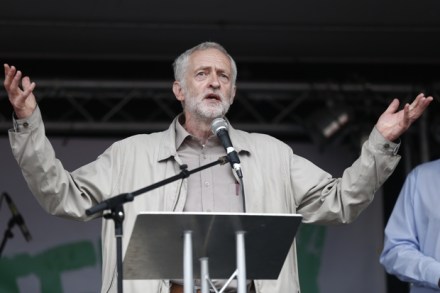
Never let it be said that Jeremy Corbyn is the most anti-business of the four Labour leadership candidates. The left-wing politician appeared to endorse BT today on Twitter: So, is this corporate sponsorship for his campaign, a tech-savvy leadership pledge or simply the result of a Twitter hack? Given that he has since deleted the tweet, Mr S suspects the latter.

Labour’s leadership contest turns sour (again)

From our UK edition

It seems 'Taliban New Labour' have returned, or at least that's what some party members would have you believe. Labour MP John Woodcock -- who is backing Liz Kendall -- has risked the wrath of his party with a blog post about the Labour leadership contest: 'If those who seek to take his place think the route to victory in the leadership contest is Continuity Miliband with a different accent or gender, or with a higher level of emotional connection, they will consign Labour to another defeat.' Are these 41 words in anyway controversial? Woodcock doesn't think so, but the blog post has upset the Labour leadership apple cart.

Labour’s response to #ToriesForCorbyn shows they really have lost the plot

From our UK edition

There’s a lot to admire about Jeremy Corbyn. For one, you can’t fault his conviction. While his entire party falls over itself to adopt as many Tory policies as possible, Corbyn remains a stalwart voice of the left. The ideological antithesis of Kendall and the Blairites, Corbyn appears to want to finish the job that Ed Miliband started: bringing Labour back to the left. It’s no wonder, then, that Toby Young and a cadre of other Conservatives want to see Corbyn win. After all, Miliband led Labour to its worst defeat since 1983; he achieved the seemingly insurmountable by appealing to the electorate less than Gordon Brown.

Alan Milburn finally confronts Labour with the hard truth about Tony Blair

From our UK edition

Alan Milburn has told Labour something it does not want to hear: Tony Blair was as great for the party as Margaret Thatcher was for the Tories. At a breakfast with the Centre for Social Justice this morning, the former health secretary argued that  Labour ‘could not have got it more wrong’ at the last election and urged the party to snap out of its ‘self-delusion’ that New Labour and Blair were all bad: ‘Great leaders always have a big purpose. For Churchill it was victory in war, for Thatcher victory against a stifling state. For Blair it was victory against old-fashioned attitudes and institutions that held our country back. Today, to be blunt, voters are no longer sure what Labour is for. They do not see a compelling core purpose.

Miliband welcomed back to Twitter

From our UK edition

Ed Miliband is clearly struggling to find his place in a post Ed Miliband world. Despite MPs from his own party suggesting the former Labour leader was 'hanging around like an awkward relative at a funeral', Miliband has not shied away from Westminster. Given the comprehensive thumping Ed took at the ballot box, he took a bold decision today to take to Twitter to slam the Prime Minister - remember that guy who beat him last month. A brave decision, if not a wise one. The response was quick and ruthless, and you'd have to have a heart of stone not to laugh: https://twitter.com/DJYems/status/612985229507198976 https://twitter.com/Chav68898982/status/612985260511526912 https://twitter.com/mephistofish/status/612982532448079872 https://twitter.

Cameron has created a socialist utopia for pensioners

From our UK edition

On the radio this morning, a campaigner from the Child Poverty Action Group had an 'emperor’s new clothes' moment. Why not, she said, treat the young like the old. If the Tories insisted on having a 'triple lock' on pension benefits for the elderly, which guaranteed that the state pension must increase every year by whatever target was the highest - inflation, average earnings or a minimum of 2.5 per cent - why not put a triple lock on the benefits of poor families. The state would then treat the young like the old, and subsidise the future as it subsidises the past. You will understand why she was speaking out of turn when you listen to David Cameron describe his plans to cut £12 billion today.

Labour’s Blair problem

From our UK edition

Ed Miliband believed that after the financial crisis, Britain had moved to the left. He argued that there was no need to adopt all the Blairite positions to win. The election result appears to have disproved that thesis. But, as Andy Grice argues in his column today, Blairite is still being chucked around as the insult of choice in this Labour leadership contest. As Grice points out, Labour particularly need the Blair agenda’s ability to connect with English swing voters now given what has happened in Scotland. In a world in which the swing required for Labour to win Midlothian is larger than to take Kensington, Labour will have to take most of the seats south of the border to gain a working majority. Now, Blair has not helped himself since leaving office.

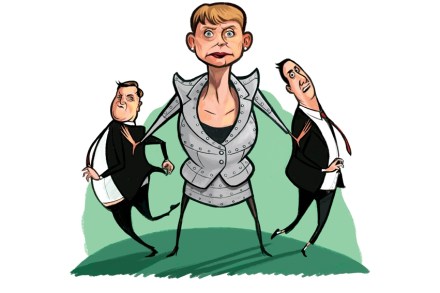
Does Yvette Cooper want to be Labour’s Iron Lady?

From our UK edition

On Wednesday night in the televised Labour leadership hustings, Yvette Cooper channeled Margaret Thatcher, saying: ‘I’m not standing because I want to be something, but because I want to do something.’ So is she trying to pose as Labour’s Iron Lady? After all, it was Thatcher who originally said that: 'It used to be about trying to do something. Now it's about trying to be someone.' Here's the conclusion that Melissa Kite came to in The Spectator, back in 2012: In Yvette Cooper’s home, an entire room is given over to memorabilia of her husband’s life in politics.

The ‘In’ and ‘Out’ EU referendum campaigns begin to take shape

From our UK edition

The campaigns to keep Britain ‘In’ or ‘Out’ of the EU are keen to begin their work. The Times today reveals details of a cross-party Eurosceptic group, which is expected to morph into the Brexit campaign. From the Conservatives, Owen Paterson, Steve Baker and Bernard Jenkin are part of this new group. Kate Hoey, Kelvin Hopkins and Graham Stringer represent Labour, while Douglas Carswell has been attending meetings on behalf of Ukip. Dominic Cummings, Michael Gove’s former adviser, has been brought on board to oversee the committee and Stuart Wheeler, a former Ukip donor, is one of the financial backers.

Speak human

From our UK edition

The next Labour leader will have to be able to speak human, said a piece in the Observer. This, it argued, is because Ed Miliband was taunted for always speaking like a policy wonk. What short memories members of the commentariat have. In 2010 Ed Miliband was being praised by supporters on the grounds that he did ‘speak human’, unlike his technocratic brother. ‘Let us be clear: Ed M is not JFK,’ wrote Mehdi Hasan in the New Statesman in that year. ‘But he does have the all-important ability to connect with ordinary people.’ He quoted Neil Kinnock, of all people to prove it. Lord Kinnock said Ed had the ‘X factor’. Sure enough he is now the X-leader. To speak human is a strange sort of virtue to claim.

The missing candidates in the Labour leadership contest

From our UK edition

This Labour leadership contest is almost as notable for who isn’t standing as for who is. First, there is the former paratrooper turned MP Dan Jarvis who declined to stand despite many on the Labour side’s belief that he is the answer to the party’s problems. Then, there is Chuka Umunna who initially did enter the race but then pulled out almost immediately, depriving the contest of the one current Labour politician with undoubted star power. But, perhaps, even more telling by their absence are those Labour figures who aren’t even in parliament now. The most discussed of these is David Miliband, who quit the Commons after losing to his brother in 2010.

It has to be Liz Kendall, doesn’t it?

From our UK edition

The most revealing moment in the Labour debate last night came when a questioner asked 'what qualities do you share with Nicola Sturgeon that could make you as successful as a party leader?' The unctuous manner in which the question was delivered suggested that being an English Sturgeon was a fine thing to be. No Labour member would think of asking 'what qualities do you share with David Cameron that could make you as successful as a party leader' — even though Cameron has just won a majority against the predictions of everyone —including himself.

Team Burnham: Liz Kendall’s ‘country should come first’ remark was a ‘cheap point’

From our UK edition

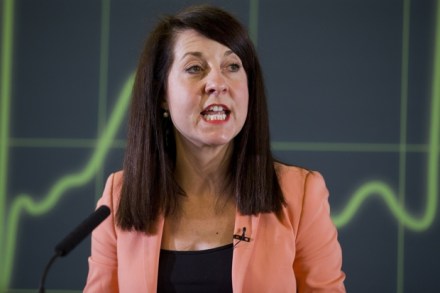
The one memorable moment from last night's Labour leadership debate was Liz Kendall's remark that ‘country should come first’, with regards to another leadership contest before 2020. It was a swipe at Andy Burnham, who had said that the ‘party should come first.' Team Kendall is understandably pleased at the Vines and clips of this exchange. It has given her campaign some crucial momentum and ensures that the contest remains a three-horse race. In a debate that was otherwise pretty uneventful, this exchange is likely to stick with both Burnham and Kendall. But a source on Burnham’s campaign suggests that the remark has been misinterpreted: ‘Andy clearly meant “party before individuals and candidates.

Labour’s ‘attack dog’ turns on Laura Kuenssberg over BBC debate

From our UK edition

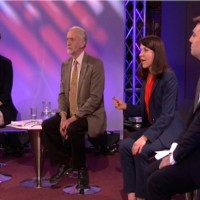
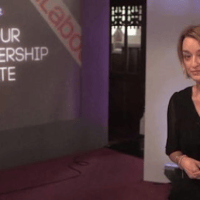
Last night's Newsnight Labour leadership debate proved to be a rather dull affair with all four hopefuls failing to make a strong impression. While many were quick to suggest that this was down to lacklustre leadership candidates, party members have come up with a different reason the broadcast failed to impress. Step forward Laura Kuenssberg: Labour's 'attack dog' Michael Dugher -- who is backing Andy Burnham for leader -- appeared to point the finger of blame at the Newsnight presenter for her chairing of the debate.

Does Labour still not get it?

From our UK edition

You wait ages for a Labour leadership contest, then five come along at once. In the past few days, nominations have closed for the contests to be leader and deputy leader of the UK and Scottish Labour parties respectively as well as on the party’s pick for London mayor. Who wins these races will determine how Labour defines itself in opposition and how quickly it can regain power. Labour is in the dire position of being out of office at UK level, at national level in Scotland and at city level in the capital. Labour should be taking a long, hard look at itself before deciding what to do next. Instead, it has a leadership contest in which sloganeering seems to be taking precedence over thought.

Imposter syndrome

From our UK edition

As graduates of the country’s best university, most former Cambridge students neither seek nor expect much in the way of public sympathy. Last weekend, however, the frontrunner in the Labour leadership contest, Andy Burnham, attempted to elicit a little. Describing his journey from a Merseyside comprehensive to Cambridge as the thing which ‘brought me into politics’, he told of his bewilderment when, as a prospective English student, he was asked at his interview, ‘Do you see a parallel between The Canterbury Tales and modern package holidays?’ He was, he said, ‘still pondering what the question meant when I arrived at Warrington station six hours later and when the rejection letter dropped through the door’.

The ‘anyone but Tom Watson’ campaign has its first success

From our UK edition

Five candidates have made it onto the ballot paper for deputy leader of the Labour party. Tom Watson and Caroline Flint have long had the 35 nominations required to make it into the contest, but until this morning, it was looking to be a two-horse race. But with just under an hour to go until the nominations closed, Rushanara Ali, the MP for Bethnal Green and Bow, withdrew her candidacy to help get others on the ballot paper. In the nick of time, her 24 backers flocked elsewhere to ensure Stella Creasy, Ben Bradshaw and Angela Eagle (who were all struggling to find 35 backers) had enough support. With a good variety candidates in the running, the deputy leadership contest has the potential to be more interesting than the leadership race.

Liz Kendall on safe ground for Newsnight debate

From our UK edition

Tonight's Newsnight debate will see the four Labour leadership hopefuls -- Liz Kendall, Andy Burnham, Yvette Cooper and Jeremy Corbyn -- head to Nuneaton in a bid to boost their campaigns. Given that this week, Kendall's supporters have been dubbed the 'New Labour Taliban' by a Labour source, relations are likely to be strained between the four. However, Kendall can at least take heart that she is on safe ground in Nuneaton, a seat which Labour failed to win the election. The party's candidate in the election, Vicky Fowler is backing Kendall.

When will the Labour leadership contenders realise it’s the 2020 election they’re fighting?

From our UK edition

Tonight’s Newsnight Labour leadership debate is a sink or swim moment for Liz Kendall. So far, there has been a lot of talk about Kendall's candidacy and her potential to be a reforming leader. But until now, there hasn’t been a lot of proof to back that up. Some have been whispering that she doesn’t perform well under sustained pressure; others have likened her supporters to the Taliban. Either way, tonight’s debate is her opportunity to show that she is credible — as well as hopefully answering the crucial question of what, if anything, she stands for. It’s a mistake to label Kendall as just the Blairite right-wing candidate. Again, she has the potential to have far broader appeal, what could be described as 'New with a touch of red.