Labour party

Starmer rival Wes Streeting finally resigns from cabinet

After days of deliberation, Wes Streeting has finally quit Keir Starmer’s government. At the stroke of 1 p.m. GMT, the Ilford MP resigned as Health Secretary in a two-page letter that laid out his differences with the UK Prime Minister. He details, at length, the results the pair have achieved in government and says they offer "good reasons for me to remain in post." But: As you know from our conversation earlier this week, having lost confidence in your leadership, I have concluded that it would be dishonorable and unprincipled to do so. It is the opening salvo of a merciless script that goes for Starmer’s jugular. Streeting pins blame for the "unprecedented" results of last week, which pose "an existential threat to the future integrity" of the UK on Starmer himself.

wes streeting

Keir Starmer has one card left to play

As calls for Sir Keir Starmer’s head grow ever louder among Labour MPs, the British Prime Minister is digging his heels in. He has one more card left to play: divide and conquer. While scores of backbenchers are desperate for change at the top, they are completely split on the question of who should take over. Those on the Labour right who have deserted Sir Keir are rallying behind Wes Streeting. The soft left are desperate for the return of Andy Burnham but, short of that, could support bids from Angela Rayner or Ed Miliband. This lack of any consensus works to Starmer’s advantage.

starmer

Is Britain ready for Chancellor Ed Miliband?

When Morgan McSweeney concluded his evidence to the Foreign Affairs Select Committee about the Peter Mandelson affair, a senior Labour figure remarked: “What really did we learn from all this? That Keir made a bad decision, wants someone else to blame and didn’t really know what was going on in his own government. Fancy that!” The fact that 14 Labour MPs voted to refer the Prime Minister to the Privileges Committee (the body which forced Boris Johnson from the political stage) – and a total of 53 recorded no vote in his defense – is far from a ringing endorsement of his leadership. But the significance of the Mandelson hearings has been misunderstood.

ed miliband

Is Keir Starmer really, truly sorry about Peter Mandelson?

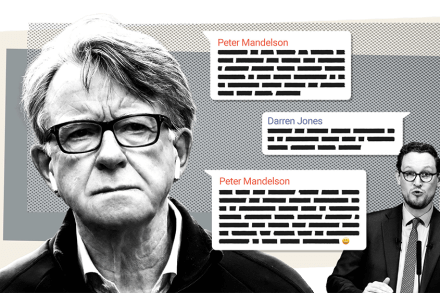
Sir Keir Starmer wants everyone to know how sorry, really sorry, he is for giving Lord Mandelson the job of Ambassador to the United States. On a visit to Belfast yesterday, the British Prime Minister issued his latest and perhaps most abject mea culpa so far. It came just hours after the publication of embarrassing government documents detailing the process (or more accurately, the lack of one) that existed when it came to appointing the now disgraced peer to the plum diplomatic role in Washington. Sir Keir told reporters:   The release of the information shows what was known. That led to further questions being asked…But that doesn’t take away from the fact that it was me that made a mistake, and it’s me that makes the apology to the victims of Epstein, and I do that.

mandelson

‘Whose side are you on?’: how Keir Starmer alienated Britain’s allies over Iran

The American-Israeli attacks on Iran were publicly called Epic Fury, but behind the scenes it is Britain’s handling of the war which provoked that reaction – not just from Donald Trump but from the UK’s allies in the Gulf. A Labour peer was in Washington when the first missiles slammed into Tehran on Friday evening and Keir Starmer refused to voice support. A member of the Trump administration told the peer: "Britain used to not contribute that much, but you were a good ally. Now you’re contributing nothing and you’re not even a good ally." A version of events has quickly become established: a Prime Minister with a near-religious belief in international law hid behind the advice of his Attorney General, Richard Hermer, that the attacks were illegal.

starmer

How the Special Relationship could be renewed after US-UK elections

A record number of countries will hold elections this, including Britain on July 4 and the United States on November 5. These two great powers — each with a veto at the UN — have enjoyed a bond that has survived for so long, is it known on both sides of the Atlantic as “the Special Relationship.” There have been stand-offs: Britain refused to join the war in Vietnam, and when Argentina seized the Falkland Islands in 1982, the US did not intervene. But Ronald Reagan and Margaret Thatcher worked in tandem to bring down the Berlin Wall. And if the view on Ukraine and Gaza is not always the same, there is a shared commitment to the sovereignty of Russia’s neighbors and to a peace in the Middle East that secures the rights of Jews and Palestinians alike.

special relationship