Labor

Russia is running out of workers

Vladimir Putin likes good statistics. At a government meeting on April 15, even as he acknowledged that growth was slowing, he pointed proudly to Russia's unemployment rate: 2.1 percent, a record low. Proof, he suggested, that the economy remains fundamentally sound despite everything the West has thrown at it. The Russian President would do better to worry. A record low unemployment rate is not, in normal circumstances, cause for alarm. In Russia's case it signals something closer to a slow-motion emergency. For the first time in its post-Soviet history, Russia has run out of workers.

workers

Inside the real jobs crisis

After much talk of an economic slowdown, February brought reassuring headlines. The official unemployment rate had fallen as another 130,000 jobs were added to the US economy, according to the Bureau of Labor Statistics. That is good news, but it is not the whole story. The official unemployment rate counts only people actively looking for work – it does not capture those who would like a job but have stopped searching. The official unemployment rate is so narrow that it hides long-term changes in the economy. In fact, things are far worse than the official figures suggest. This matters for more than just economists. We tend to treat employment statistics as dry indicators that exist in spreadsheets and quarterly results.

jobs labor

More DNC woes for Ken Martin

How could the Democrats be in any more disarray? Long-time, high-ranking Democratic National Committee members Randi Weingarten and Lee Saunders turned down offers to remain in their positions, citing dissatisfaction with the current DNC chair, Ken Martin. Their announcement to leave the DNC came a week after former vice chair David Hogg was booted from the committee. Hogg was pushed out over a complaint from Native American Kalyn Free, 61, that the election results "violated the DNC Charter and discriminated against three women-of-color candidates,” per Semafor. This procedural problem followed Martin's vocal disapproval of Hogg's $20 million plan to primary older incumbents in safe seats running for reelection.

DNC Ken Martin (Getty)

Trouble in paradise: thousands of Disneyland employees threaten strike

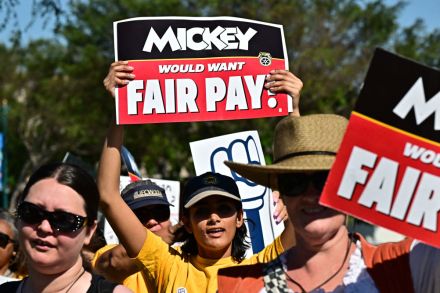
Some 14,000 cast members at Disneyland in California voted by an overwhelming 99 percent to authorize a strike on Monday; however, a coalition of union members reached a tentative agreement with Disneyland Tuesday, mainly revolving around wage increases. The coalition, titled Disney Workers Rising, will open a vote on the agreement at Disneyland for employees on July 29. According to Disney, there are more than 35,000 cast members (what they call their employees) who work at Disneyland in Orange County, California. The terms of the agreement have yet to be disclosed, but if Disney agreed to raise wages by twenty-five cents an hour — which certain employees have hypothesized could happen, though it will likely be by much more — that would cost them more than $18 million per year.

On the ground at the Washington Post journo strike

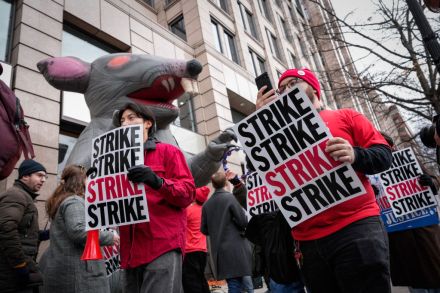
Around 750 employees for the Washington Post walked out on their jobs Thursday in the first labor strike against the newspaper in fifty years. A couple hundred of the actively striking employees gathered outside of the paper’s headquarters in Washington, DC, where they marched in tandem and noshed on coffee, pastries and pizza provided by local businesses. Coincidentally, that is about even with the number of jobs — 240 — the Post says it needs to cut amid negative profits and struggles to grow its subscriber base. So far 120 employees have accepted voluntary buyouts to leave their roles, meaning just as many will likely be laid off in the coming months. Nonetheless, the employees mostly seemed happy and excited to be on strike.

washington post

Why bad jobs are the root of America’s problems

Low wages are bad for everyone in the United States — not just for the working poor. Every major social crisis Americans face today — falling fertility, the loneliness epidemic, bitter conflicts over racial and gender identity, and growing partisan polarization in politics — is worsened if not caused by the proliferation of low wage jobs caused by the collapse of worker power. For centuries, children in the English-speaking countries have learned a proverb that has equivalents in other European languages (“want of” in this context means “lack of”): For want of a nail, the shoe was lost. For want of a shoe, the horse was lost. For want of a horse, the rider was lost. For want of a rider, the battle was lost. For want of a battle, the kingdom was lost.

west

More rail trouble could be on the horizon

Economic news over the last few months has been bleak. Whether it’s inflation, supply chain disruptions, or the threat of recession, worrying news abounds. But among the headlines, there was a topic that briefly bubbled to the surface before being all but forgotten: a potential strike by the country’s railroad workers. Amtrak, in anticipation, canceled all cross-country routes, but Labor Secretary Marty Walsh averted a strike at the eleventh hour by negotiating quite literally through the night to find an agreement with the workers. It’s easy to forget about rail. In a time when inflation and potential recession are dominating headlines, transportation issues just don’t seem as interesting.

Free markets deliver real American greatness

Since its postwar rise, the American conservative movement has staked its reputation on defending the free market as an abiding principle. Conservatives pointed to the liftoff in the American economy caused by the Reagan tax revolution and the deregulation of heavily controlled parts of the economy. Less government and less regulation were better for the American economy. The left disagreed with this fundamental axiom of conservative wisdom. Now, surprisingly, many on the right have joined them. Something obviously changed in the post-Cold War period. China’s entry to the World Trade Organization in 2001 resulted in the so-called China Shock, or the loss of 15 to 20 percent of manufacturing jobs in America.

free market

Incentives matter

Sometimes, just below the surface lie some very powerful connections among seemingly unrelated problems. That’s true for the seemingly unrelated problems of rising crime, the year-long closure of public schools, acute employee shortages, and parents’ outrage at kids being taught critical race theory. Substantively, these issues are vastly different. Conceptually, they are united by the crucial importance of incentives.  Bad incentives produce bad outcomes, and that’s exactly what is creating many of these problems.

incentives

What about flattening the unemployment curve?

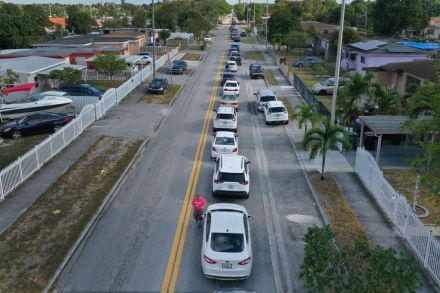
Over the last month, most of America has been shut down to reduce the spread of the coronavirus. For the most part, efforts to prevent our medical system from being overloaded have been successful. Now it’s important to focus on another important issue: the employment curve.  In the first week of April, over 6.6 million Americans claimed unemployment benefits, the highest amount in history. That figure nearly doubled from week-to-week. As businesses shutter to combat the virus, experts believe that unemployment has nowhere to go up but up. The St Louis Federal Reserve predicts that unemployment could ultimately peak at 32 percent: that amounts to 47 million Americans out of work.

unemployment

Will American workers see enough of the $58 billion airline bailout?

The recently passed coronavirus stimulus bill offers $58 billion in aid to the airline industry to survive the massive decrease in travel caused by the COVID-19 outbreak, but workers are already concerned that airlines are taking advantage of taxpayer money while failing to live up to promises to their employees and customers. The Treasury Department on Tuesday issued its guidelines for the $29 billion loan and $29 billion grant programs, reiterating that companies who apply for money must agree not to layoff or furlough their employees until after September 2020. Treasury also required recipients of grant money, which is earmarked for payroll assistance, to only use that money for American workers.

airline

The Fairness for High-Skilled Immigrants Act is unfair for American workers

Republicans claim they want to put Americans first when it comes to immigration. So why are they backing another giveaway to Big Tech and foreign workers at the expense of American citizens? Several Republican senators, including Mike Lee, Tom Cotton, and Kevin Cramer, have sponsored the Fairness for High-Skilled Immigrants Act. The bill is being for a vote in the Senate by Unanimous Consent, which means skipping all debates. The bill is anything but fair. It would be another special privilege for Silicon Valley — allowing giant corporations to hire more foreign nationals instead of STEM graduates. The bill would eliminate country caps on legal immigration, which prevent one nationality from monopolizing the allocation of Green Cards.

high-skilled immigrants