Kharkiv

Inside the Killhouse: where Ukraine’s revolutionary military robots are developed

The Ukrainian unmanned ground vehicle rolled up to a small bunker hidden in a thicket in Kharkiv oblast then stopped. Another remote-controlled vehicle had just detonated its 66lbs of explosives at the Russian bunker’s entrance, which was still smoldering. And before that a kamikaze drone had dived inside and exploded. The operator was about to detonate his explosives when two Russian soldiers pushed a sign through the bunker’s shattered roof saying they were surrendering. They were directed to Ukrainian lines by a drone and taken into custody as POWs. So ended the world’s first fully robotic assault on an enemy position. The remotely operated vehicle in this attack is called a Targan (“cockroach” in Ukrainian) and looks like a miniature flatbed without the cab.
killhouse

Drinking with soldiers in Ukraine

Getting into Ukraine can be tricky, especially if you don’t speak Ukrainian or have a national television network paying your way. I recommend the latter: it seems slightly easier and they have hair and wardrobe budgets. I cross into Chop on a short train carrying a mix of old couples and young kids. When I get off I’m directed to a booth manned by soldiers, who ask my business. Journalist, I say. The guard asks for press credentials. The best I can do is a copy of the magazine, but reading The Spectator is apparently something he’s unwilling to do and I’m waved through immediately. Russian spies, take note. I have two hours to kill before my train to Lviv, so I do what anyone would do — wander the blacked-out streets in search of a drink.

ukraine

Vladimir’s no good, very bad week

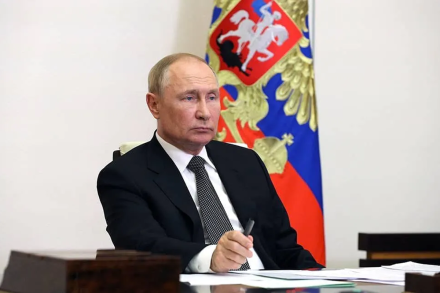
The Ukraine war’s first seven months have been a long slog, with high costs in both men and material. Then, over the last week of combat, that suddenly changed. While casualties undoubtedly remained high on both sides, the Ukrainian army’s surprise counteroffensive in the northeast shattered Russia’s defensive lines and culminated in the most humiliating Russian tactical defeat since its forces were pushed out of Kyiv in April. While Russian President Vladimir Putin was celebrating the opening of a new Ferris wheel in Moscow, his troops 534 miles to the south were dropping their weapons and retreating.

russia realities
kharkiv

Ukraine’s incredible success turns the tables on Russia

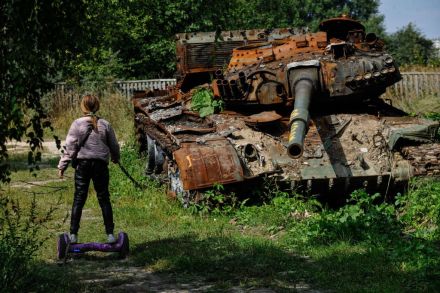
Ukraine’s swift counter-offensive has captured more territory in four days than Russia’s huge army did in six months. The victories go beyond the 3,000 kilometers of liberated land. The Ukrainians have managed to break and scatter the enemy army across city after city in Kharkiv (in the country’s northeast) and are now moving swiftly into Luhansk (in the north Donbas region). Russian commanders have abandoned major cities and supply hubs, forfeited their hard-won control of vital rail lines and highways, and fled eastward for their lives. Their soldiers have dropped their guns and abandoned vast stores of heavy weaponry, from tanks to anti-aircraft batteries. It has been a complete rout. How did Ukraine accomplish this swift and unexpected victory?

Ukraine and the art of viral war

The sky is dull and gray, the sun obscured by clouds. The camera pans down past some desolate Soviet housing blocks. Some wintry, apocalyptic trees line a road. It could be Kyiv, it could be Bucharest, it could be any city where the residents liberally pepper their words with the -sky suffix. Suddenly, a flash of metal across the sky, a fighter plane roars into shot, then out again. The caption proudly declares, “This is the Ghost of Kyiv, the bravest fighter pilot in the Ukrainian Air Force. He has downed six Russian planes just today.” You don’t know that much about Ukrainian fighter pilots, but placed among a million other viral clips of heroic Ukrainians fighting against Goliath, you think it seems believable enough. You retweet it. You send it down group texts.

What does Ukraine really mean for Taiwan?

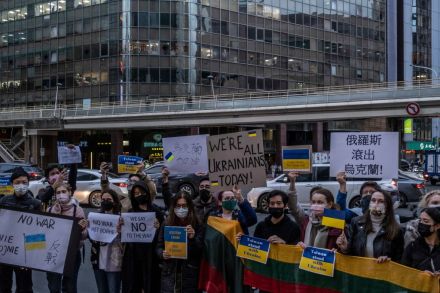
No one should think that Vladimir Putin’s invasion of Ukraine means that Xi Jinping will decide to use force against Taiwan anytime soon, if ever. China is not Russia, nor Taiwan Ukraine. Yet neither should policymakers presume that Beijing will not be influenced by what happens on the other end of Eurasia. Washington must consider whether and how Putin’s aggression has raised the stakes in defending Taiwan from the People’s Republic of China. At the least, US strategists will seriously have to assess whether a global environment in which norms of international behavior are regressing may serve to spur Beijing to military action that once seemed unlikely.

taiwan