Joseph stalin

Roman Polanski at ninety: what will be his legacy?

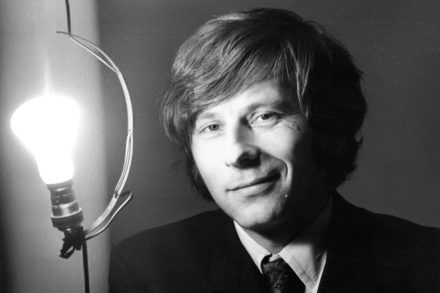
How should we assess the reputation of a late-career movie director? In the case of Roman Polanski, who turns ninety on August 18, we can clearly tick the box denoting a solid body of work. He’s responsible for half a dozen enduring films, and one — 2002’s The Pianist — that rightly won him an Academy Award. Readers may have their own candidate, but for me Polanski’s first full-length feature, 1962’s Knife in the Water, remains at the top of the list. It’s a beautifully crafted, if at times noticeably low-budget, thriller that offers the classic Polanskian brew of claustrophobia, latent menace, voyeurism, class antagonisms and sexual tension, in this case set aboard a small yacht.

roman polanski

The reporter who covered up the Ukrainian famine

Now would seem to be an excellent time for the Pulitzer Committee to withdraw the award it bestowed on Walter Duranty in 1932 for his reporting on events in the Soviet Union. I know I am far from the first to call on the Pulitzer Committee to withdraw the award. I know as well that the Pulitzer Committee responded to one such call in 2003 by declaring that it could find no “clear and convincing evidence of deliberate deception” in Duranty’s 1931 reports from the Soviet Union published in the New York Times in 1931. Those thirteen reports on which the original award was based, admits the Pulitzer statement, amount to work that “measured by today's standards for foreign reporting, falls seriously short.” And time has moved on, etc., etc.

walter duranty

Putin’s Stalinist playbook

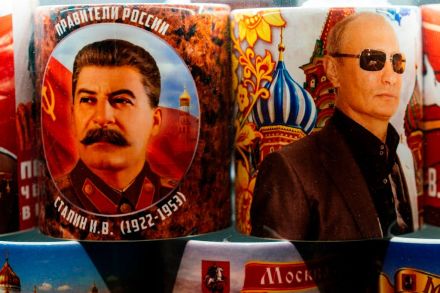
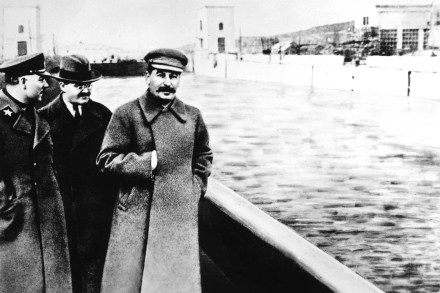
Vladimir Putin's actions have shocked many Western observers over the past few days. But his moves bear all the hallmarks of one of his predecessors: Joseph Stalin. Last Monday, the Russian Duma passed a direct appeal to Putin to recognize the Russian-controlled separatist states of Donetsk and Luhansk. The Russian president first said he would not immediately recognize the so-called republics. The reason for this was he wanted it to appear that when he finally did recognize them as independent republics, he was simply reacting to popular pressure from below. This is straight out of the Stalin playbook.

stalin

The techniques of totalitarianism are still fully in play today

How to Become a Tyrant (Netflix) is ideal history TV for Generation No Attention Span. Presented in six bite-sized chunks by Peter Dinklage, aka the ‘Imp’ Tyrion Lannister from Game of Thrones, it tells you most of the things you need to know about Hitler, Stalin, Mao, Gaddafi, Kim Il-Sung, Idi Amin and Saddam Hussein, without obliging you to think or grapple with any tedious detail. Instead of examining the dictators individually, it explores their careers thematically, looking for the ingredients they have in common. It’s split into half-hour episodes — ‘Seize Power’, ‘Crush Your Rivals’, ‘Reign Through Terror’, ‘Control the Truth’, ‘Create a New Society’, ‘Rule Forever’ — which mix contemporary film footage with attractive animation.

tyrant

Georgians on my mind

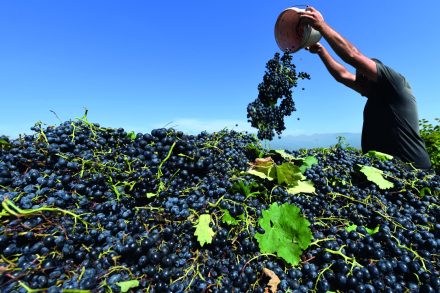
Long before Achilles chased Hector around Troy and Homer wrote about the οἶνοψ πόντος, the ‘wine-dark sea’, people living in what is today the republic of Georgia were making wine. Archaeologists have found evidence of wine making there dating from 8000 BC: an impressive statement to the inventiveness to which necessity gives birth. Stretching from the Black Sea to the Caucasus Mountains, Georgia is home to a wide variety of climates, types of soil and geographical physiognomies. Today it is home to some 500 varietals, few of which are familiar to westerners (even though many if not most western grapes probably have precursors in Georgia and the Black Sea ‘cradle of wine’).

georgian wine

The Kondo effect in politics

The decluttering crusade of home-organizing guru Marie Kondo has taken on a life of its own. Kondo’s effort to shame us into tidying up our drawers, closets and desk spaces began as a harmless inanity. But it’s now intruding nefariously into every realm of existence. First, we were told that folding our underwear would spark joy in our lives. Now, we face a proliferation of magazine articles advising us to declutter ourselves of ‘unnecessary’ or ‘toxic’ friends. Clearly, not all friendships are healthy. But these assessments appear driven by market forces: they focus on what you can gain from a friend in terms of efficiencies and profit. Where does it stop?

kondo