Johns Hopkins

The battle to stop US universities aiding Chinese repression

It goes by an innocuous name – “Integrated Joint Operations Platform” (IJOP) – but it’s one of the most sinister components of China’s surveillance state, managing what has been described as a genocide against the Uighurs. The IJOP combines multiple systems of repression – location, messages, contacts, social media and other data from phones, together with information from checkpoints, cameras and biometric records. It then flags “suspicious” individuals for detention and forced labor. Now leading US universities have been accused of extensive collaboration with Chinese laboratories which develop technology that may be deployed or adapted for use in this system.

End of the road for malicious lockdowns

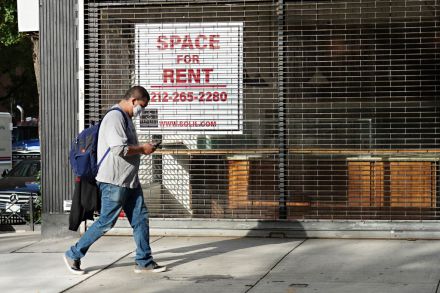
Is a modicum of sanity about to reassert itself regarding the Wuhan Flu? Are the people finally exhausted by their panic over the Fauci-altered coronavirus? Remember those little bulletins that Mike Pence carried around, enjoining us all to to take “fifteen days to stop the spread”? I think we’re at about day 750 now. New York restaurants and many cultural emporia demand that you produce your papiers (it sounds better in German) — identification plus an image attesting to your “vaccination status” — in order to enter. Some are even requiring proof that you’ve had a “booster” jab. Pfizer likes that.

The research is in and lockdowns don’t work

A new Johns Hopkins systematic review cuts in two the narrative that government-imposed mandates meaningfully prevent coronavirus deaths. The review looked at 34 different studies analyzing business and school closings, shelter-in-place orders, and international travel bans. It included data from US and European Covid mitigation efforts, along with endeavors in India, South Africa and China. Almost two dozen of these studies were peer-reviewed, while the other 12 were working papers. The results of this meta-analysis are striking. Lockdowns reduced Covid mortality by an average of only .02 percent. Shelter-in-place orders were slightly better at a 2.9 percent average, but nothing worth crowing about.