John Singer Sargent

The contingent talent of Emily Sargent

When your brother is one of the most successful artists of his time, you might feel reluctant to pick up a paintbrush. Yet, the works of Emily Sargent, in the Metropolitan Museum of Art’s Portrait of a Family, prove that she was an artist in her own right. Sargent (1857-1936) was not in her brother’s shadow, although she was undoubtedly in his debt. John, Emily and their sister Violet were the children of FitzWilliam Sargent, a successful Philadelphia physician, and the artist Mary Newbold Sargent. By the 1850s, the Sargent family were living a nomadic existence in Europe – John and Emily were both born in Florence. Encouraged by their spirited mother, the Sargent children were instructed that no matter how many sketches were begun in a day, at least one must be finished.

An American in Paris

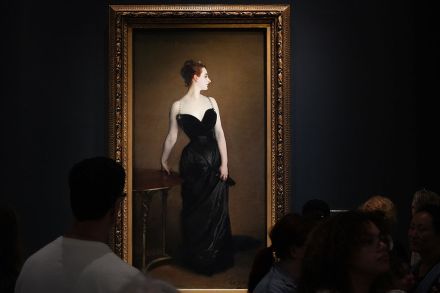
Oh, to be a 19th-century Parisienne! A creature like no other, she arose “like Venus from the waters of the Seine,” as one fanciful journalist put it, “the supreme fruit of civilization.” An elegant arbiter of taste, she could be seen attending plays, concerts and exhibitions, or walking along Haussmann’s airy boulevards. By the time of the Third Republic, she did not need blue blood, so long as she had thoughts on paintings, poetry and music. To a city recovering from the horrors of the Franco-Prussian War and the Paris Commune, which left thousands dead and monuments ravaged, she was a symbol of a brighter future. Artists flocked to paint the Parisienne (and expat wannabes), who in turn welcomed the opportunity to commission status-boosting likenesses.

Madame X

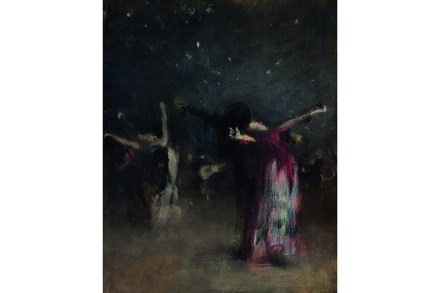
John Singer Sargent comes to Spain

One of the great achievements of Spanish art is in its use of black. No other national school harnessed the dark arts to such effect. In Spanish painting, the color black might convey shadow, or the mystery of the unseen, while at the same time presenting a brooding presence, a dark mass right there on the surface. Just look at “Las Meninas,” Diego Velázquez’s masterpiece of 1656. Now consider the subject. Is it the five-year-old infanta? Her ladies in waiting, the “Meninas” of the title? The painter portrayed at his easel? The infanta’s royal parents in the reflection of a mirror? Some unseen viewer interrupting this tableau?

sergent