John ruskin

Me, myself and the i

Misuse of myself "should be a capital offence," suggests Oliver Duff, the editor of the i Paper. "As reflexive pronouns, myself and yourself require a prior subject (I, you)," he says. I applaud the prospect of a general massacre of abusers of the English language, but by Mr. Duff’s criterion, Shakespeare and Richardson, Ruskin and the great lexicographer Samuel Johnson himself should have been slaughtered. Historically, myself began not as a reflexive pronoun but as an emphatic, and as an emphatic it is often still used. Other constructions allow it too. In a letter in 1782, Johnson wrote that "both Williams, and Desmoulins and myself are very sickly." There it is used as part of a compound subject.

myself

The notorious feud between John Ruskin and James Whistler

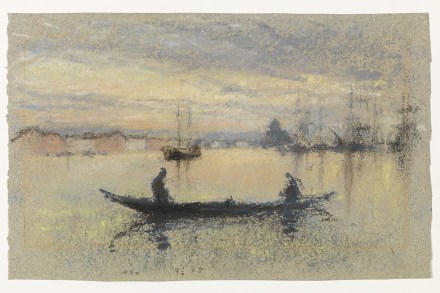
It was too dark to see, and the painting was upside down. In 1877 John Ruskin, the leading art critic of Victorian England, attended an exhibition that included paintings by the American-born artist James Abbott McNeill Whistler. He hated them — and said so. In print. “I have seen, and heard, much of Cockney impudence before now; but never expected to hear a coxcomb ask two hundred guineas for flinging a pot of paint in the public’s face.” Whistler sued. The following year the argument came to court, on a dark day in a gloomy and gaslit courtroom. The canvases that Ruskin had so disliked were propped up against a wall and barely visible; one was the wrong way up, and another was dropped unceremoniously onto an elderly gentleman’s balding head.

ruskin