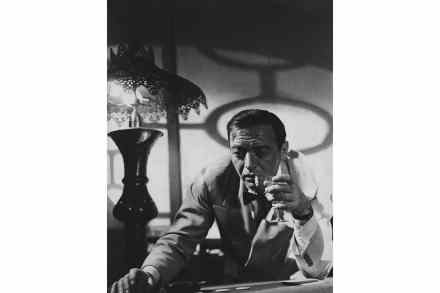
John malkovich

What cinema gets wrong about conductors

From our UK edition

André Previn began his career at MGM. And after he’d quit the studio to become conductor of the London Symphony Orchestra, he liked to share an anecdote. His old Hollywood pal Norman Jewison, the director of Rollerball, brought a film composer friend to hear Previn conduct the LSO. ‘It’s nice, isn’t it, to see André here at the Festival Hall, with his own orchestra, getting cheered because of his performance of Beethoven’s Ninth?’ ventured Jewison. His colleague nodded: ‘Sure, but you have to admit – it’s a shame how completely he screwed up his career.

The babyishness of Hunger Games on Stage

From our UK edition

The Hunger Games is based on a 2008 novel  about a despotic regime where brainwashed citizens are entertained with televised duels between teenagers. Not a bad idea. We go behind the scenes and watch Katniss (Mia Carragher) being selected to fight Peeta (Euan Garrett) who secretly adores her. As soon as the plot starts, it seizes up. Instead of a gripping tragedy about two lovers forced to kill each other on TV, we’re given a masterclass in the show’s elaborate format. The duellists take part in interviews, coaching sessions, target practice, public parades and a popularity contest which permits them to attract ‘sponsors’ whose role is opaque. At the same time, we get a civics lesson.

In praise of character actors

From our UK edition

The star system is a false hierarchy: the best rarely make it to the top. I thought of this recently when it was announced that David Warner had died. Few outside acting could name him, though you may have seen his head flying off in The Omen, a film in which heads are cheap. Warner was a Manchester-born jobbing actor: a character actor, better defined by what he is not, which was a star. I could write pages about why a star is a star, and a character actor remains a character actor, but the most significant reason is simple. Warner was brilliant but he was not handsome.