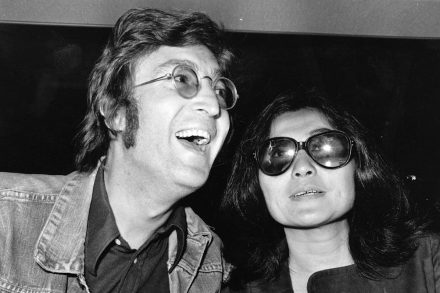
John lennon

The John Lennon visa is now the OnlyFans visa

The US created the O-1B visa system in 1972 after John Lennon was nearly deported, and it became clear that there was no immigration system to attract artists to the country. Lennon couldn’t possibly imagine what the system has become now – nearly half the applicants for the O1-B in the last year are OnlyFans models, according to a report published by the nonprofit Florida Phoenix. This makes sense in the Trump 2.0 era, where the President is a game-show host, the War Secretary is a news anchor, Dr. Oz runs Medicare and the former first lady of World Wrestling Entertainment is in charge of the Department of Education. Our cinemas are empty and the average American reads negative five books a year. Bonnie Blue, there’s a luxury condo in Miami waiting for you.

OnlyFans

Uncovering Brian Wilson’s real genius

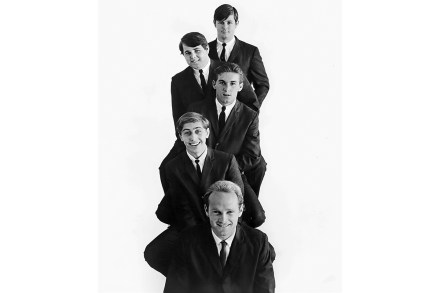
The death earlier this year of Brian Wilson, aged 82, was marked by the usual tributes to a man who was not only a pioneer of popular music, but also a sadly troubled genius whose early years of wild success were quickly overtaken by decades of drug addiction and mental health problems. A recurring theme in the obituaries was what might have happened in the aftermath of the Beach Boys’ masterpiece, 1966’s Pet Sounds, if Wilson, by then the band’s producer and lead songwriter, had not descended almost immediately into narcotic-induced torpor. It has commonly been suggested that Paul McCartney – who revered Wilson – was also jealous of the achievement of Pet Sounds, which arguably overshadowed the Beatles’ Revolver, and that Sgt.

Unpacking John Lennon and Paul McCartney’s complex relationship

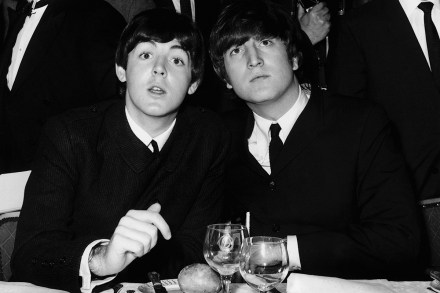
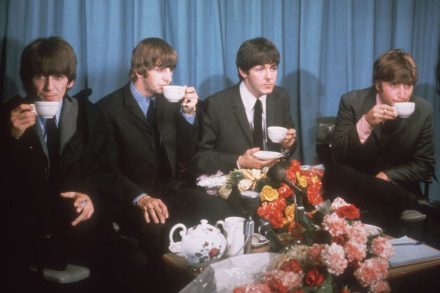
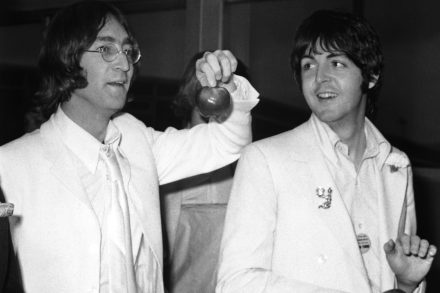
Fifty-five years after they broke up, what is there left to say about the Beatles? There have been so many books written about the group and so many obsessively detailed websites devoted to exploring every song, every public utterance, every twist and turn in their history, that the average rational man or woman might think they know all there is to be known about them. Craig Brown’s magisterial 2020 volume 150 Glimpses of the Beatles was a pop-cultural dive into their peerless influence and standing; Ian MacDonald’s still legendary Revolution in the Head dives into the 241 songs that they recorded (although, of course, it should be 242, thanks to the emergence of “Now And Then” in 2023) and does so with grace, intelligence and slightly frightening attention to detail.

John

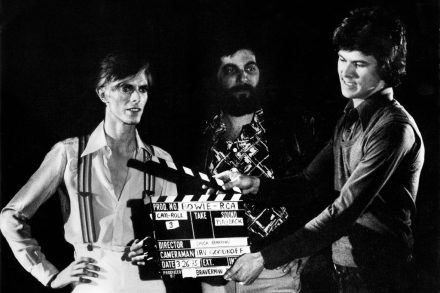
David Bowie’s plastic soul: Young Americans at fifty

When the Puerto Rican guitarist Carlos Alomar first met David Bowie, he didn’t think a man could turn a whiter shade of pale. The singer looked emaciated; his complexion teetered on translucency, and weighing only 95 pounds, the only signs of life were a pulse and a mop of orange hair. It was the mid-Seventies, and Bowie was touring America deep in the throes of addiction — the “darkest years” of his life — surviving on a paltry diet of red peppers, cigarettes, milk and cocaine. Yet somehow, through the haze of these drug-fueled years, Bowie underwent a chameleonic reinvention of self and sound — and finally broke America. Bowie had cast a sheen of suspicion over America as an aspiring artist, even admitting to hating it initially.

david bowie

‘Now and Then’: the Beatles are back

In the Sixties, the rivalry between the Beatles and the Rolling Stones  — even if it was more of a hype battle dreamt up by their respective publicity departments — meant that whenever one band released an album or single, the other was never too far behind. Sometimes, they even explicitly referenced their competitor’s work; the Stones’s 1967 album Their Satanic Majesties Request was “inspired” by the Beatles’s LP Sgt. Pepper’s Lonely Hearts Club Band, released earlier that year. Yet after the Beatles split up in 1970, the rivalry seemed to be at an end, and the deaths of John Lennon in 1980 and George Harrison in 2001 apparently put paid to any possibility of the Liverpudlian band continuing in any form. Oh, how wrong we were.

beatles

What if the Beatles never broke up?

There's a new film out about the Beatles. It's about them being in the studio doing stuff that you do in studios. It's really good. Have you heard about it? Of course you have. I am referring to the omnipotent, omniscient and omnipresent Get Back, Peter Jackson's reanimation of the Beatle Band’s last days in the bunker. It's a bit like Downfall, but without Hitler. As a middle-aged doctor of rock 'n' roll, I am required to take the cultural temperature of what we now call Heritage Rock. This is the music that middle-aged (and rising) men like when they can't keep up with young people’s music anymore. Think Neil Young, and that pretty much covers it. And when Neil Young is not re-releasing live albums from his pomp, then think the Beatles.

white album

The rising cost of remembering the Fab Four

If you’re a diehard Beatles fan, it’s been a pricy year. And it’s going to get much worse. Within the last 12 months, those of us unable to resist new or repackaged product from John, Paul, George and Ringo have wrestled with sense and reason over whether to splash out on one of the numerous limited-edition, pre-release colored vinyl copies of McCartney III, the mega-box set reissue of Lennon’s Plastic Ono Band from 1970 or even, dear old Ringo’s recent EP, ‘Zoom In’. And there’s more to come; expect a cascade of marketing hoopla around August’s Get Back, the Lord Of The Rings director Peter Jackson’s reworking of the band’s 1969 misery-memoir movie Let It Be, as well as a lavish tome of McCartney lyrics and memoirs in November.

beatles george harrison

Fifty years of ‘Imagine’

How should we measure the value of a work of art or, failing that, a pop song? Take for example John Lennon’s ‘Imagine’, which was recorded exactly 50 years ago. It certainly scores on the sales front, having shifted about 21 million copies worldwide according to the Chartmasters service. That’s a healthy revenue stream in anyone’s book, particularly for a tune whose lyric urges us to envision a world without possessions. The ‘ubiquitous’ box gets ticked, too, because ‘Imagine’ has been covered by more than 200 other artists. It’s the unifying song we all seem to turn to at moments of crisis, as when the pianist David Martello performed it in front of the Paris Bataclan the morning after the November 2015 terrorist attacks there.

imagine

The great lost Beatles album

The Beatles never had a proper Christmas number one, only seasonal number ones with unseasonal bangers: ‘I Want To Hold Your Hand’, ‘I Feel Fine’, ‘We Can Work It Out’/‘Day Tripper’ (1963-65) and ‘Hello Goodbye’ (1967). Though they never made a traditional Christmas record, the Fabs loved Yule — and you know you should be glad. Between 1963 and 1969, they recorded an album-worth of charming Christmas nonsense. Welcome to the semi-secret hinterland between the legal and bootleg worlds: the Beatles’ Fan Club Christmas flexi discs. The flexis have only had one official release since their private circulation to the ravenous Brit-Beatle fan club.

beatles

We loved them, yeah, yeah, yeah

When the Beatles’ first authorized biographer, Hunter Davies, clinched the deal in 1967, his publisher remarked that ‘we know everything we could possibly know about the Beatles and they’ll disappear soon’. In that same year, the philosopher Bryan Magee adopted an incredulous tone in the Listener: ‘Does anyone seriously believe that Beatles music will be...part of daily life all over the world in the 2000s?’But here in the recently released statistics for the Top 10 global recording artists of 2019, among the Taylor Swifts and the Ed Sheerans, 50 years after they broke up — let me introduce you to the band you’ve known for all these years.

beatles glimpses

They say it’s your birthday? It’s my birthday too, yeah!

The White Album is one the greatest works of 20th century art, executed by the greatest exponents of the 20th century’s greatest popular and unpopular art: pop music. Which is why connoisseurs of this work of high magik know that there is nothing new to say about The Beatles, which, as everyone also knows, was The White Album’s official title. The minutiae of The Fabs’ mind-boggling State Of The Universe address from 1968 have been dissected and analyzed so completely that armies of middle-aged divorced male White Album necrophiliacs now roam the pub and bars of the West, clashing over the rallying cry, ‘But should it have been a single album?

white album