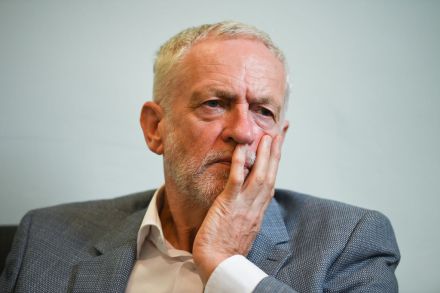
Jeremy corbyn

Labour’s conference has made it harder for its unhappy MPs to leave

From our UK edition

Labour's lost centrists weren't just physically absent at the party's conference: they were also absent from the debate. Perhaps those who had turned up from the 'moderate' wing of the party had expected frequent denunciations of 'Blairites' from the main stage, but it didn't come. In fact, even in the fringes, the moderates came up far less as enemies than the unions and Momentum. This is partly because the Labour Party now feels very comfortable in its Corbynite skin and is more interested in ensuring it can deselect those moderates in the most efficient way rather than attacking them. But the moderates themselves are also quiet because they are on what is probably best described as a psychological precipice.

J.K. Rowling and the darkness on the left

From our UK edition

You rarely come across a character in modern literature like Jimmy Knight. He’s a racist, but that’s not what makes him a novelty act. racists, after all, are deplored everywhere in the culture industry, from Hollywood to Pinewood Studios. Of this racist, however, his ex-wife says: ‘I wouldn’t trust him if it was anything to do with Jews. He doesn't like them. Israel is the root of all evil, according to Jimmy. Zionism: I got sick of the bloody sound of the word.’ Knight is also a misogynist, a type which is once again a familiar figure in contemporary fiction. But when his girlfriend cries out after he hits her, he replies by attacking her privilege with the language of the left: 'Oh fuck off, that didn’t hurt!

Don’t dismiss McDonnell as a loony

From our UK edition

‘Wherever Sir Stafford Cripps has tried to increase wealth and happiness,’ wrote the Conservative Scottish journalist Colm Brogan, ‘grass never grows again.’ But Roundup has its uses. When Brogan made this comment, Sir Stafford was Britain’s postwar ‘austerity’ chancellor of the exchequer, a post he held from 1947 to 1950. Dry as dust, Cripps had rejoined the Labour party only two years previously, having served as ambassador in Moscow, then in Churchill’s war cabinet. A leading voice on the hard left, he had been expelled from Labour for his advocacy of co-operation with communists in 1939, but his judgment had proved shrewd.

Corbyn’s confident conference speech will send Labour members home happy

From our UK edition

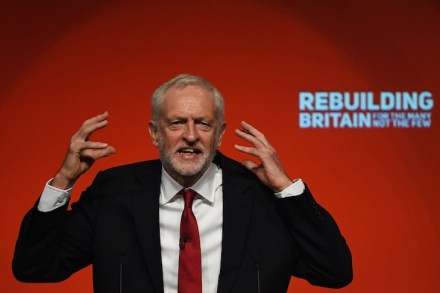
Jeremy Corbyn's speech to Labour conference showed how confident the Labour leader is now. He knew his way around the text enough to be able to make little spontaneous jokes, rather than reading the 'strong message here' instruction from the autocue, as he did in his 2015 address. He varied his pitch, his pace and his tone. None of these things have been guaranteed with Corbyn until now. The speech itself was well-written and structured, starting with a lengthy but effective values-based section where Corbyn praised the membership and attacked the press, which warmed up those in the hall no end. Not that the members needed warming up. They were, unsurprisingly, delighted by the very appearance of their leader, waving 'Jeremy Corbyn' scarves and signing that now famous song.

How blaming the media keeps Labour activists happy

From our UK edition

One of the features of conference season, along with the stale sandwiches and lack of natural light, is the obsession with 'the mood'. It's a nebulous thing, made up of the atmosphere in the conference hall and fringe meetings, but it can tell you a lot about what a party might be up to over the next few months. Labour's 2014 conference, for instance, felt eerily flat for a party that was supposed to be on the cusp of government. Conversely, the party's 2016 gathering felt pretty edgy following the second leadership contest in as many years. That conference saw a very clear pulling-apart of the 'moderates' and the Corbynites following the attempted coup against Jeremy Corbyn, and this set the agenda for the following year. The past few days in Liverpool haven't felt so sharp.

Labour Left plans to force Jeremy Corbyn into deselection process to make a point

From our UK edition

Jeremy Corbyn could be subject to a trigger ballot designed for the deselection of MPs, under plans discussed tonight by members of one of his most supportive party groups. The Labour Representation Committee, from which both Corbyn and John McDonnell hail, met this evening to discuss how to get its way when it comes to party democracy. Save for when McDonnell popped in to thank the LRC for continuing to organise when it looked as though the Left would never win a foothold in the party, the mood was one of frustration. Members were largely cheerful yet also irritated that plans for ‘open selections’ - more commonly known as mandatory re-selection - hadn’t made it into the party’s rule book this week.

How Corbyn opponents are now turning to the trade unions

From our UK edition

The Overton Window is a concept beloved particularly by the Left. It's a theory about the range of political ideas that the public will accept, and the reason the Left has been particularly interested in this window in recent years is that there is a belief you can move it in a certain direction so that previously radical and frightening ideas become quite normal. Jeremy Corbyn's supporters certainly believe that their party has succeeded in moving the Overton Window over the past few years, and that the old political adages about the public not wanting an overly left-wing party no longer apply. But within the party itself, there has also been a rather interesting movement of windows.

J.K. Rowling and the darkness on the left | 24 September 2018

From our UK edition

You rarely come across a character in modern literature like Jimmy Knight. He’s a racist, but that’s not what makes him a novelty act. racists, after all, are deplored everywhere in the culture industry, from Hollywood to Pinewood Studios. Of this racist, however, his ex-wife says: ‘I wouldn’t trust him if it was anything to do with Jews. He doesn't like them. Israel is the root of all evil, according to Jimmy. Zionism: I got sick of the bloody sound of the word.’ Knight is also a misogynist, a type which is once again a familiar figure in contemporary fiction. But when his girlfriend cries out after he hits her, he replies by attacking her privilege with the language of the left: 'Oh fuck off, that didn’t hurt!

Labour conference 2018, in pictures

From our UK edition

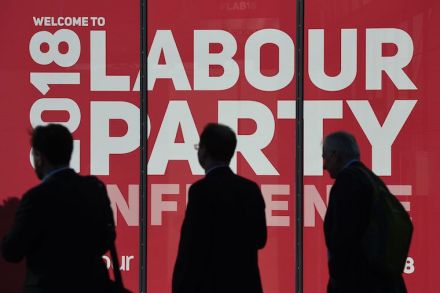
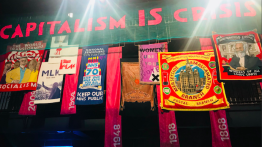
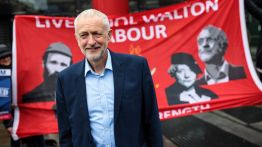
It's that time of year again: Labour conference. With Jeremy Corbyn's grip on the party tightening in the past year, the conference, too, has taken on a distinctly Corbynista feel. The exhibition hall is made up of a mix of business stands – including Apple – and campaign groups. Meanwhile, over at the sister festival – Momentum's World Transformed festival – pictures of Marx adorn the walls alongside banners making clear Sun journalists are not welcome. Viva la revolución! (Mr S will update this post as the conference goes on.

What Jeremy Corbyn wants to talk about at Labour conference

From our UK edition

A lot of Labour’s energy at the moment seems to be spent on internal battles over which faction wins power on which committee, and whether it should be easier to deselect sitting MPs. A measure of whether its conference is a success is whether it manages to talk about what it wants to do in government. I understand that the leadership’s aim this week is to try to produce an analysis of where society has gone wrong. This sounds rather ‘Broken Britain’, though unsurprisingly the party won’t be using that line. Instead, the tag is ‘rebuilding Britain’, and Jeremy Corbyn and his colleagues will be talking about the impact of eight years of austerity, and post-industrialisation, particularly on parts of the UK that feel left behind.

Labour’s deputy leader move highlights the party’s most interesting split

From our UK edition

Generally, talk of a ‘split’ in the Labour Party focuses on the chasm between Jeremy Corbyn’s supporters and those ‘moderate’ MPs who want to leave. But there’s another, bigger split, which is between the Corbynites and a large chunk of MPs, including Deputy Leader Tom Watson, who disagree with the party’s leader but think Labour can change. Watson did go through a phase of staying rather quiet in the months after the last general election, avoiding both party events and interviews where he might be forced to take a stand against the leadership.

Jeremy Corbyn is getting more serious about Brexit and Theresa May ought to worry

From our UK edition

The most important statement by Jeremy Corbyn in today’s Sunday Mirror interview is not that Labour’s leader will embrace a so-called People’s Vote if that were what Labour’s conference backs this week. It is that Labour is “not happy” with the PM’s Chequers Brexit plan “and we would vote against it”. This is Labour's strongest and least ambiguous attack on Chequers. And – as if that were needed – it underwrites the view of many Tory MPs and ministers that the PM’s attempt to sell Chequers to Brussels is even more fatuous than dead-horse flogging, given that some 50 odd True Brexit Conservative backbenchers are adamant that they would vote against it.

Corbyn’s Salisbury response is straight from the Trump playbook

From our UK edition

It is deeply weird that Jeremy Corbyn will not condemn Russia for carrying out a chemical weapons attack on British soil. Actually, it’s beyond weird. It’s astonishing. Earlier this year, Corbyn saw the same intelligence that convinced everyone else – including his closest comrade John McDonnell – that the Salisbury novichok poisoning of Sergei Skripal and his daughter Yulia was carried out by Russian agents and approved at the highest levels within the Kremlin. This same evidence was deemed sufficient grounds by 27 countries to expel more than a 150 Russian diplomats.

Jeremy Corbyn and Novichok: what did the Labour leader really say?

From our UK edition

Jeremy Corbyn's spokesman this afternoon caused something of a stir when he insisted to journalists that the Labour leader had always said that the evidence from the Salisbury attack pointed to direct or indirect Russian involvement. This didn't seem quite right: Corbyn attracted a great deal of opprobrium for failing to blame Russia for the attack at the time. It's worth going back over what precisely the Labour leader did say after the attack - and what he didn't. On 12 March, when Theresa May made her first statement to the Commons about the matter, she told MPs that 'the government have concluded that it is highly likely that Russia was responsible for the act against Sergei and Yulia Skripal'.

PMQs: Corbyn accuses May of ‘dancing round’ on Brexit

From our UK edition

It's a measure of quite how badly split the government is on Brexit that Jeremy Corbyn, who would previously avoid the matter because of problems in his own party, looked comfortable as he devoted all six of his questions at Prime Minister's Questions today to the subject. Theresa May came prepared, not so much with answers on who in her government is telling the truth about the Chequers agreement and the chances and consequences of a no deal, but with attacks on Corbyn's handling of Labour's anti-semitism row. This preparation gave the Prime Minister some decent pay-offs, including her final answer, when she closed the exchanges by saying 'he should be ashamed of himself'.

Why did Corbyn visit Palestine when it was mourning the co-founder of Hamas?

From our UK edition

Jeremy Corbyn is a man of peace with an unfortunate tendency to find himself in the wrong place at the wrong time with the wrong wreath – when it comes to anti-Semitism. Just last week it emerged that the Labour leader once claimed that Israel’s Prime Minister and other leading politicians compete to see 'who can kill the most' people in Palestine. Only Corbyn seems to be more relaxed about leaders who talk up killing Israelis and Americans. In the spring of 2004, the Labour leader – then a lowly backbencher – visited Palestine. It was a rather curious time for a visit given that after a series of assassinations of Hamas leaders, the mood was particularly febrile and Western visitors were thin on the ground. https://youtu.be/4vtV2yuqWTg?

Ken: Corbyn is the man to tackle Britain’s anti-Semitism problem

From our UK edition

Labour has been embroiled in a summer long row about anti-Semitism, with no sign that the issue will be resolved any time soon. Yet according to Ken Livingstone, there is only one man for the job of tackling anti-Semitism across Britain: Jeremy Corbyn. In an interview on Sky News – in which Ken, once again, talked about Hitler – the former mayor of London had this to say: ‘I’d be prepared to bet you now 100 quid that once we get a Jeremy Corbyn government, by the end of that government, anti-Semitism, racism, homophobia will all have declined quite significantly.’ If Corbyn's attempts to resolve the anti-Semitism debate in his own party is anything to go on, Mr S isn't convinced...

Labour NEC results: when will Corbyn’s opponents accept it’s over?

From our UK edition

It is quite clear what today's NEC results mean for the Corbynites in the Labour Party: they've consolidated their control over the party structures. All the candidates who won were backed by Momentum, apart from Peter Willsman, who had seen the Corbynite grassroots organisation drop its support after a recording emerged of him making anti-Semitic comments. Willsman pushed moderate candidate Eddie Izzard out and will remain on the party's ruling body. Izzard and 'independent left-winger Ann Black' came 10th and 13th respectively. Less clear is the implication for that rather nebulous group of anti-Corbynites generally known as 'the moderates'.

Will May or Corbyn fall first?

From our UK edition

Theresa May and Jeremy Corbyn are both on that Italian Job bus dangling over the cliff, with gold bars at one end and survival at the other. May wants to pursue her Chequers Brexit plan, even though doing so is alienating up to half her own MPs, True Brexiters and some erstwhile Remainers like Nick Boles (though, in truth, he has always been more Govean – or the agriculture secretary’s representative on earth – than europhile).