Jazz

Martin Gayford meets the jazz legend Wynton Marsalis

From our UK edition

In this week’s magazine, Martin Gayford interviews the trumpeter and jazz legend Wynton Marsalis, who founded ‘Jazz’ at Lincoln Center in New York City. Here are some quotes from his piece. ‘One of the things we talked about was the difficulty of playing jazz — especially in front of an audience. ‘The pressure of playing in public makes it all for real, I love the pressure of it. That’s what makes it fun.’ ‘Marsalis has dedicated his career to keeping the jazz tradition alive: not just part of it but all of it. That is what Jazz at Lincoln Center is about. The most difficult aspect of his mission, he believes, is not teaching the musicians, it’s training the audience.

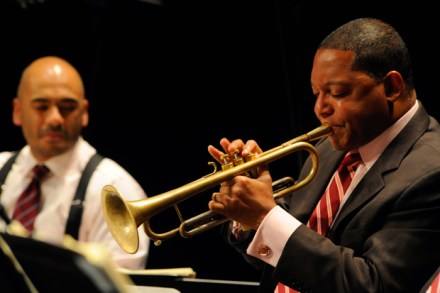
‘They took me in like I was their son’: Wynton Marsalis on jazz’s great tradition

From our UK edition

At the end of his performance at the Barbican with the Jazz at Lincoln Center Orchestra, Wynton Marsalis made a little speech. The next piece, he announced, was a number that Art Blakey’s Jazz Messengers used to play. Marsalis then recalled how he himself had played with the Jazz Messengers as an 18-year-old trumpet prodigy. He described how much he had learned from the drummer, who was then approaching 60, and especially about ‘the sacrifices you have to make to play this music’. Then the band roared into ‘Free for All’ by Wayne Shorter. A couple of days before, I had met Marsalis for a chat — it wasn’t precisely an interview because I’ve interviewed him so many times over the years we’ve turned into friends.

A book on Art Deco that’s a work of art in itself — but where’s the Savoy, Claridge’s and the Oxo Tower? 

From our UK edition

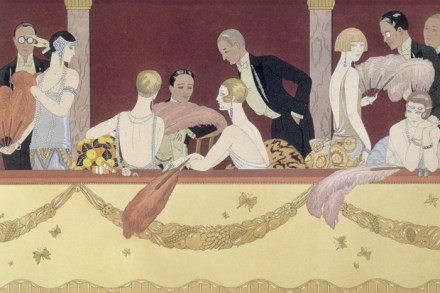
Over the past 45 years, there have been two distinct and divergent approaches to Art Deco. One of them — which was mine when I wrote the first little book on the subject in 1968 — was to treat the subject as a sociological, as well as artistic, phenomenon. As I wrote then, it was ‘the last of the total styles’, affecting almost everything, from letter-boxes and powder compacts to luxury liners and hotels. With that approach, one shows the dross as well as the gold, and asks such questions as ‘Why did the style become so universal?’ ‘How far did it succeed (with mass production) in coming to terms with the machine age’?

Magic of New Orleans

From our UK edition

More than 11 years after getting sober, memories of my more disgraceful drunken nights can still make me blush with shame. Waking up in a police cell with no idea how I came to be there was a low point and so was being discovered unconscious in the pouring rain under the shrubs in a neighbour’s garden. In the mercifully rare moments when I find myself dreaming of a drink, it is the thought of such dark times that helps keep me on the straight and narrow.  But of one long drunken night I have only the fondest if admittedly befuddled memories. It happened in 1996 on a press junket. Disney was opening its new animated film of The Hunchback of Notre Dame not in Paris, but in New Orleans, with its famous French Quarter.

A moth to the flame

From our UK edition

When Hannah Rothschild first met her great-aunt Nica it was 1984. Hannah was 22, and Nica, then 70, had asked her to come sometime after midnight to a basement jazz club in an area of pre-Giuliani downtown Manhattan ‘known for its crack dens and muggings’. She was able to find the venue, as promised, by the pale blue Bentley parked erratically outside and inhabited by a couple of drunks. Inside, her aunt, ‘the Baroness’, was easily identifiable as the only white person: a wizened old doll in a fur coat with a a long black-filter cigarette, drinking whisky out of a teapot.

High priest of bop

From our UK edition

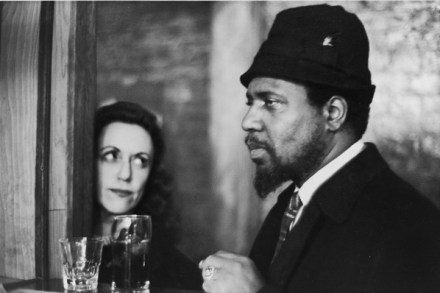
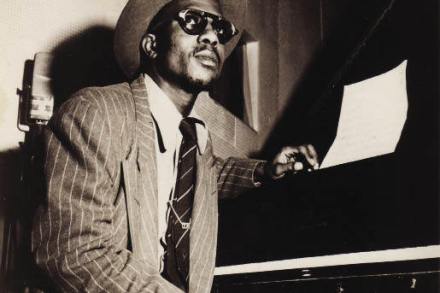
In the Rainbow Grill in New York one evening in 1971, according to Robin D. G. Kelley, Professor of History and American Studies at the University of Southern California, Duke Ellington  halted his band in mid-flow and announced: ‘Ladies and gentlemen, the baddest left hand in the history of jazz just walked into the room, Mr Thelonious Monk.' In the Rainbow Grill in New York one evening in 1971, according to Robin D. G. Kelley, Professor of History and American Studies at the University of Southern California, Duke Ellington  halted his band in mid-flow and announced: ‘Ladies and gentlemen, the baddest left hand in the history of jazz just walked into the room, Mr Thelonious Monk.’ In the code of jive talk, ‘baddest’ meant the best.

Humph swings

From our UK edition

Last Chorus: An Autobiographical Medley, by Humphrey Lyttleton ‘Old Etonian ex-Guards Officer jazz trumpeter’. That was the way tabloid gossip columnists used to describe Humphrey Lyttelton (1921-2008) in the early years of his fame. Not long after he was released from the Grenadiers at the end of the second world war, he hyphenated his identity to become Old Etonian ex-Guards Officer jazz trumpeter-bandleader-broadcaster-cartoonist-calligrapher-birdwatcher-gastronome-paterfamilias. In this amiable hotch-potch of a book, he reviews every aspect of his multifaceted life with bonhomous éclat. Now, as ever, Humph swings. His father, C. W.