Jazz

Caveats be damned

From our UK edition

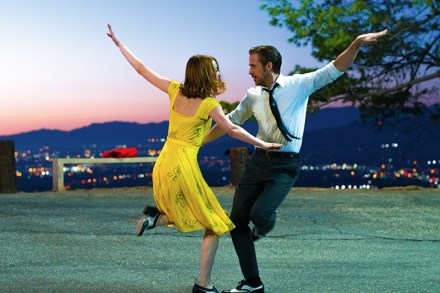
You will have registered the buzz surrounding La La Land and clocked its seven Golden Globe wins and 11 Bafta nominations. However, I know you won’t believe it’s wonderful unless you hear it directly from me, so here you are: it’s wonderful. Mostly. It’s wonderful, with a few caveats. I feel bad about the caveats but if you have caveats and repress them, it can make you quite ill in later years. Best to get them out there. But just so we’re clear: La La Land with caveats is still more wonderful than almost anything else. It is written and directed by Damien Chazelle (Whiplash), who grew up loving old-style romantic musicals, even if that was only ten minutes ago (he is 31, goddammit).

A big beast in Hush Puppies

From our UK edition

It always used to be said that, if it had been up to Guardian readers, Ken Clarke would certainly have been leader of the Conservative party. It might have gone beyond that. Some politicians are much loved by the general public, who never have to meet them, and loathed by their colleagues and unfortunate underlings — one thinks of Greville Janner or Alf Morris, who once pushed his fist into my face when I was refusing to do his bidding. That doesn’t seem to be true of Clarke, who is popular pretty much across the board, his instincts for decency and sceptical intelligence ensuring that. Although his Europhile commitments effectively barred him from the party leadership on the occasions when he might have stood a chance, his qualities have always been recognised.

Super human

From our UK edition

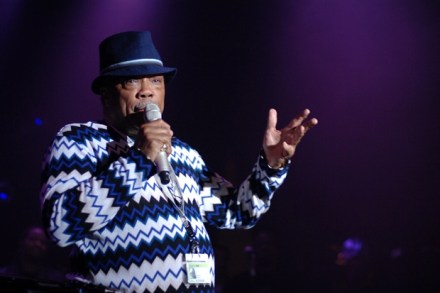
‘We think we’re in charge of this stuff but we’re not,’ said Quincy Jones, the composer, arranger, jazz trumpeter, musical genius. He was talking to Julian Joseph at the Montreux Jazz Festival for Jazz Line-Up on Radio 3 (Saturday). ‘It’s divine intervention.’ Jones, who masterminded Michael Jackson’s Thriller as well as countless other hits, film scores (including The Italian Job and The Color Purple) and his own ‘Soul Bossa Nova’, was remarkably sanguine about his extraordinary career. His enormous self-confidence was there from the start. Finding himself in Paris in the 1950s touring with a big band, he decided to stay on so that he could study with Nadia Boulanger and learn how to write for a symphony orchestra.

Funny is dangerous

From our UK edition

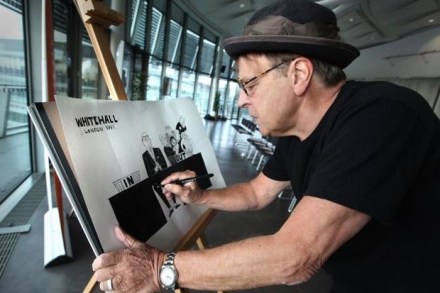
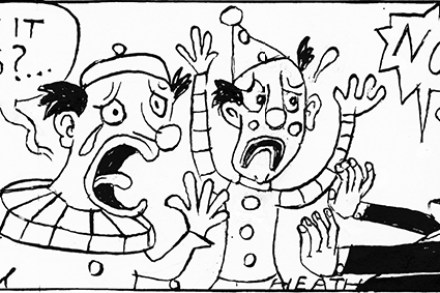
‘I’m off now,’ says Michael Heath, signing off from his selection of Desert Island Discs on Radio 4, ‘to go and do a gag about God knows what. I haven’t the foggiest idea.’ You’d think at 80 he might want to stop, or have to give up because he’d somehow lost his touch. But not the cartoon editor of this magazine, and chief creator of wicked skits on the idiocies and affectations of contemporary life. What’s it like working as a cartoonist after the attacks on the satirical magazine Charlie Hebdo? asked Kirsty Young. ‘It adds a certain frisson to your drawing,’ Michael replies. ‘But I never wanted to be a political cartoonist… I wanted to be funny.’ ‘People take offence,’ he says.

Nice effort, Don Cheadle, but no film will ever do Miles Davis’s defiant, volatile music justice

From our UK edition

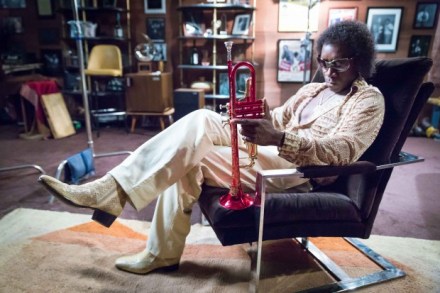
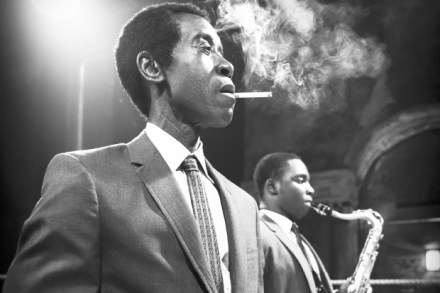
There’s an absolute zinger of a joke currently circulating around the London jazz scene. Miles Davis is being celebrated with a new biopic! And anything that spreads the message about jazz is undoubtedly a good thing. But – and now the punch-line – what a pity the film bogs itself down; all that sober analysis of Miles’s evolving concepts of harmony and musical structure diminishes what could otherwise have been a sure-fire commercial hit. In reality, Miles Ahead, directed by and starring Don Cheadle, is centred around a period in Miles Davis’s life between 1975 and 1979 when he was making precisely no music at all and instead spending his time binging on drugs, drink and recreational sex.

‘Do black movies really not sell?’

From our UK edition

The musical biopic is a staple of the Hollywood economy. Like an Airfix model kit it comes with the necessary parts presupplied: sex, drugs and a soundtrack. All the director need do is glue them together. Actors are keen too, as portraying musicians is like prospecting for Oscars: in recent years the lives of Edith Piaf, Ray Charles and Johnny Cash’s wife June Carter have all won statuettes for their stars. The life of Miles Davis, with its giant musical peaks and deep personal troughs, is tailor-made for the big screen. But for years he couldn’t be captured in a bottle. It hasn’t been for want of trying on the part of Don Cheadle, who stars in, directed, produced and took a co-writing credit on Miles Ahead.

Christmas tips from Niall Ferguson and Annie Nightingale

From our UK edition

For the Spectator’s Christmas survey, we asked for some favourite seasonal rituals – and what to avoid at Christmas. Niall Ferguson Every Christmas — or, to be precise, every Hogmanay — all the members of the jazz band I played in at university gather together with their families at our place in Wales. We eat and drink gargantuan amounts and play music with steadily deteriorating precision. It is a wonderful way to see in the new year. Annie Nightingale My favourite ritual is visiting people, and I have some rules. A bottle of bubbly to each. Be charming, be fun, but be brief. Quit while you’re still popular. Then you can book a cab home to watch Some Like It Hot and High Society. Now that’s what I call Christmas.

Love, loneliness and all that jazz

From our UK edition

Woody Allen (born Allan Stewart Konigsberg), the prolific, Oscar-winning auteur, New Orleans-style jazz clarinettist, doyen of New York delicatessen society, moralistic nihilist and icon of nebbishes everywhere, will be 80 on 1 December. He says he hopes to sleep through the occasion, but he is already completing next year’s film, his 47th, and preparing a series of programmes for television. In the meantime, here, in homage, are two magnificently illustrated catalogues raisonnés. Both books incidentally tell the story of his life, including the time when he courted his former partner Mia Farrow’s adopted daughter, Soon-Yi Previn, and caused all media hell to break loose. He survived disapproval by working, married the girl in 1997, and they still live happily together.

Music for the masses

From our UK edition

As pop music drifts away from many people’s lives, so its literature grows ever more serious and weighty, as though aware that this is an art form approaching the end of its time. Having had the pleasure of opening the first volume of Mark Lewisohn’s planned three-volume history of the Beatles and then fallen into a deep sleep attempting to read it, I feel only a sense of impending doom when presented with yet another vast tome of unimpeachable scholarship into the ephemeral. Peter Doggett, a long-serving toiler at the pop coalface, has produced a whopper here, a near-700-page history of pop’s 125 years, with the accent on the popular. What music did people like? Why did they like it? What did it bring to their lives?

The London ear

From our UK edition

The opening bars of Ralph Vaughan Williams’s A London Symphony (1914) are scooped out from the gloopy bedrock of the city. Vaughan Williams was dredging through the same mud, silt, slime and ooze as those scene-setting paragraphs of Our Mutual Friend (1865), where Charles Dickens shows that the real glue binding his book together will be the River Thames. Dickens’s famed ‘boat of dirty and disreputable appearance’ berths Our Mutual Friend in the earth and experience of London. Similarly, Vaughan Williams’s cellos and double basses, which launch his symphony, plod out from the sludge of the river. But, by the time his bucolic Scherzo waddles into view, you could be forgiven for assuming that RVW has taken a genteel amble around the countryside.

Dying of the light

From our UK edition

It’s a comfort that the creation of a new ballet inspired by French court entertainment can still happen in the amnesiac ballet country that Britain has become. The idea of making a modern-day meditation on the first ballet — Louis XIV’s 12-hour epic Le Ballet de la nuit (1653) — is as intellectual as Wayne McGregor’s roping in of cognitive science as source material. It faces many of the same traps when it comes to capturing that elusive necessity: theatricality. Only David Bintley could do this, deploying his artistic authority as the 20-year director of Birmingham Royal Ballet as any French despot would. The scheme’s theatricality is innate. Le Ballet de la nuit starred the 14-year-old Louis.

The Heckler: Why I’m allergic to Stephen Sondheim

From our UK edition

I came out in a rash when I heard that Emma Thompson was to star in Stephen Sondheim’s Sweeney Todd at the Coliseum. Sondheim has that effect on me. And it’s an allergy I bear with pride. I’ve been the victim of a Sondheim evening only once in my life and I emerged feeling as if I’d been shrieked at for three hours by a gorilla with rabies. The show, Sunday in the Park with George, was conceived as an exercise in ‘musical pointillism’ to honour the painter Georges Seurat. Musical pointillism? Come on. Sondheim has supporters that I admire, like Michael Grandage, and I would put the following questions to these deluded fanatics.

Is there anything a gospel choir can’t cheer up?

From our UK edition

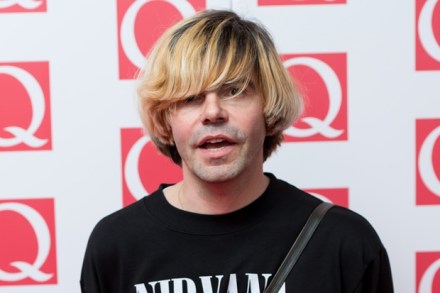
‘I’m starting to think that all of the world’s major problems can be solved with either oyster sauce or backing vocals.’ That was Brian Eno writing in his diary one evening, after a long day’s thinking and maybe a glass or two of something agreeable. I am not entirely convinced by the bivalve mollusc argument, but the second half of his apophthegm makes perfect sense. Last week I was listening to Tim Burgess’s 2012 album Oh No I Love You (OGenesis), a recent and possibly inspired purchase. Mr Burgess is perhaps better known as lead singer and increasingly large face of The Charlatans, the long-serving Midlands indie band who enjoyed a brief spell in the sun during the Britpop horror.

Blue Note’s 75 years of hot jazz

From our UK edition

This is a big book, a monumental text with 800 illustrations, 400 of them in colour, to be contemplated more easily on a lectern than in bed, celebrating the 75-year history of the greatest record company devoted solely to the variegated music called jazz. Blue Note Records, with headquarters in Manhattan, originated in the romantic imagination of a privileged adolescent, a Jewish architect’s son (the Jewishness was significant), who was born and brought up in Christopher Isherwood’s neighbourhood in Berlin, which regarded itself, with justification, as Europe’s capital of jazz in the hedonistic heyday of the Weimar republic. Alfred Lion precociously consorted with the city’s artists, musicians and all-round bohemian intellectuals.

Roland Barthes was a fan of Sister Sledge – and I can see why

From our UK edition

Disco, the tackiest of music subcultures, is the nostalgia choice de nos jours. The sudden revival is a sort of pop gentrification. You want proof? They play Baccara’s 'Yes Sir, I Can Boogie' in Pret A Manger. Sister Sledge, too. Sledge were never the naffest of the movement’s megastars, but that’s not saying much. Roland Barthes was a fan, whatever that implies. 'How many people do you think are here as an ironic statement?' a friend asked as we stood in Camden’s Jazz Cafe waiting for the Sledge to take the stage. It was a good question. Who actually comes to a disco revival gig? And can such a thing exist outside of inverted commas? The first answer was: hipsters, Peter Stringfellow lookalikes and - wow - normal people.

Why is Radio 3 still leaderless?

From our UK edition

It’s happened almost by stealth but the number of listeners to 6 Music has now overtaken Radio 3, creeping up to 1.89 million per week (just .05 million more than the classical-music station). Actually the margin between them is probably greater because 6 Music has no analogue signal and can only be heard digitally. Whereas 6 Music sounds cool and with its digital playlist capability and big-star DJs is just so on-trend, 3 is being left behind. Even more disturbing, there was no controller available to defend the station and remind us that the listening figures will bounce back in the next quarter because of the Proms effect — two months of nightly concerts, live on air, available online, and heard (and perhaps more importantly admired) throughout the world.

Martin Gayford meets the jazz legend Wynton Marsalis

From our UK edition

In this week’s magazine, Martin Gayford interviews the trumpeter and jazz legend Wynton Marsalis, who founded ‘Jazz’ at Lincoln Center in New York City. Here are some quotes from his piece. ‘One of the things we talked about was the difficulty of playing jazz — especially in front of an audience. ‘The pressure of playing in public makes it all for real, I love the pressure of it. That’s what makes it fun.’ ‘Marsalis has dedicated his career to keeping the jazz tradition alive: not just part of it but all of it. That is what Jazz at Lincoln Center is about. The most difficult aspect of his mission, he believes, is not teaching the musicians, it’s training the audience.

‘They took me in like I was their son’: Wynton Marsalis on jazz’s great tradition

From our UK edition

At the end of his performance at the Barbican with the Jazz at Lincoln Center Orchestra, Wynton Marsalis made a little speech. The next piece, he announced, was a number that Art Blakey’s Jazz Messengers used to play. Marsalis then recalled how he himself had played with the Jazz Messengers as an 18-year-old trumpet prodigy. He described how much he had learned from the drummer, who was then approaching 60, and especially about ‘the sacrifices you have to make to play this music’. Then the band roared into ‘Free for All’ by Wayne Shorter. A couple of days before, I had met Marsalis for a chat — it wasn’t precisely an interview because I’ve interviewed him so many times over the years we’ve turned into friends.

A book on Art Deco that’s a work of art in itself — but where’s the Savoy, Claridge’s and the Oxo Tower? 

From our UK edition

Over the past 45 years, there have been two distinct and divergent approaches to Art Deco. One of them — which was mine when I wrote the first little book on the subject in 1968 — was to treat the subject as a sociological, as well as artistic, phenomenon. As I wrote then, it was ‘the last of the total styles’, affecting almost everything, from letter-boxes and powder compacts to luxury liners and hotels. With that approach, one shows the dross as well as the gold, and asks such questions as ‘Why did the style become so universal?’ ‘How far did it succeed (with mass production) in coming to terms with the machine age’?

Magic of New Orleans

From our UK edition

More than 11 years after getting sober, memories of my more disgraceful drunken nights can still make me blush with shame. Waking up in a police cell with no idea how I came to be there was a low point and so was being discovered unconscious in the pouring rain under the shrubs in a neighbour’s garden. In the mercifully rare moments when I find myself dreaming of a drink, it is the thought of such dark times that helps keep me on the straight and narrow.  But of one long drunken night I have only the fondest if admittedly befuddled memories. It happened in 1996 on a press junket. Disney was opening its new animated film of The Hunchback of Notre Dame not in Paris, but in New Orleans, with its famous French Quarter.