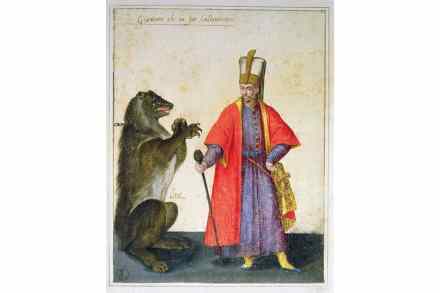
Janissaries

The Byzantine empire ends in an orgy of rape and slaughter

From our UK edition

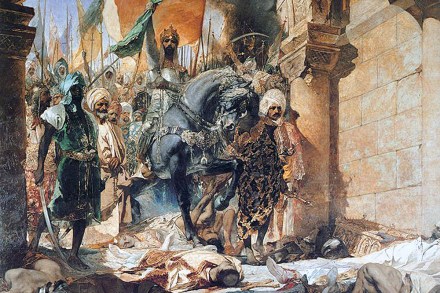
Is there really anything new to say about the conquest of Constantinople? In the absence of fresh archaeological discoveries, a previously unknown text or neglected eyewitness account, can we reasonably expect, almost 600 years later, to break new ground? Anthony Kaldellis, a Greek-American classics professor at the University of Chicago, thinks so. His 1453 claims to offer a new perspective, namely that, contrary to almost all modern accounts, the Ottoman Sultan Mehmed II’s ultimate victory was ‘far less assured than is often thought’. It was a close run thing. Constantine XI, the last Byzantine emperor, almost won. For many readers familiar with this story, that won’t sound especially new at all.
What the Quran has to say about slavery

From our UK edition

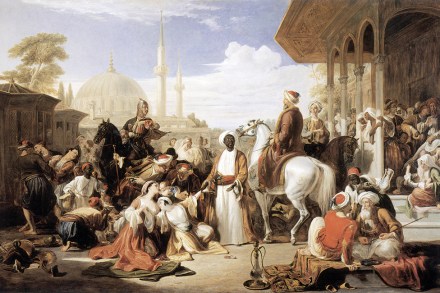
Slavery is one of the oldest and most persistent institutions of humankind. It was already well established four millennia ago when it was mentioned in the Epic of Gilgamesh. Today it has been formally abolished almost everywhere, but there are still reckoned to be some 30 million people living in some form of forced labour. For most of human history slavery was regarded as an economic necessity, one of many relationships of dependence which were accepted as facts of life. The current obsession with British and American involvement has concentrated attention on the Atlantic slave trade. This has masked the involvement of other significant actors. Foremost among them are the Islamic kingdoms of the Middle East. Islamic slavery is poorly documented.

Survival of the cruellest in 16th-century Constantinople

From our UK edition

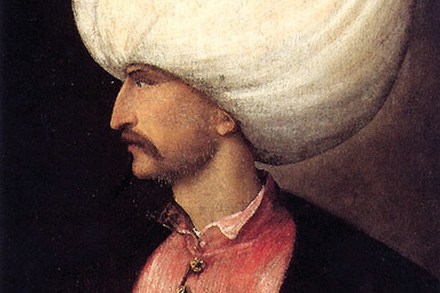
The 16th-century Ottoman ruler Sultan Suleyman liked to impose himself on foreign monarchs from the start, always beginning official letters with the uncompromising assertion: ‘I am the great lord and conqueror of the whole world.’ In this sparkling account of his middle years, the second in an ambitious three-volume biography, Christopher de Bellaigue never actually describes Suleyman as ‘the magnificent’, his most widely known epithet. But he certainly conjures up his awesome presence at home and abroad in animated prose saturated with vivid colour and detail. So, in 1538, we encounter the sultan in his mid-forties, a swan-necked figure in a white lozenge-shaped turban, riding to war in the Balkans.

Were the Ottoman Turks as European as they thought themselves?

From our UK edition

This is the best of times to be writing history, since so much of what has been taken for granted, especially in the West, is being revised. Assumptions about the past that we accepted as fact, and events we once looked upon with pride, are now being questioned. A dark cloud hovers over the Benin Bronzes, Elgin Marbles and Rosetta Stone in the British Museum and looks likely to burst. The same applies to figures who were considered heroes and placed on pedestals. If the statue of Winston Churchill in Parliament Square had not been covered recently, it might have followed the fate of Edward Colston’s.