James baldwin

New York crime caper: Cool Machine, by Colson Whitehead, reviewed

From our UK edition

Cool Machine, the final novel in Colson Whitehead’s Harlem trilogy (following Harlem Shuffle and Crook Manifesto), is another tour de force and a fitting conclusion to the Uptown peregrinations of his endearing protagonist Ray Carney, a successful Harlem furniture salesman and part-time fence. It’s an old-school crime caper, set in 1980s New York against the backdrop of Mayor Koch’s rapidly gentrifying city, told in three interconnected sections excoriating Reagan-era capitalism. The ubiquitous construction works, graffiti and corruption are fuelled by the twin deities of power and money.
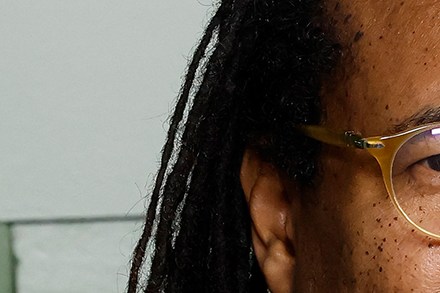
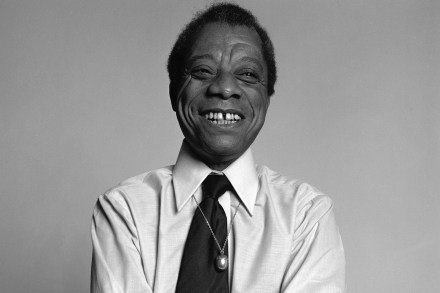
A more rounded picture of James Baldwin

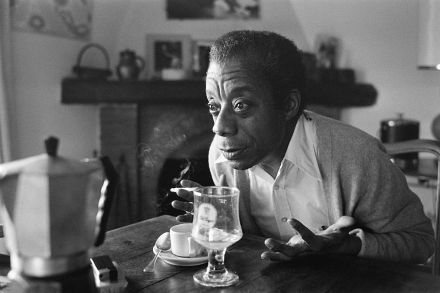
James Baldwin never wanted to be a symbol, but became one anyway: a stand-in for defiance, for beauty, for pain wrapped in elegance and for the entire weight of a country’s unresolved sin. Baldwin didn’t just write about America – he exposed it: the good, the bad and the ugly. He told the truth, even when it hurt. He didn’t soften the edges. What he never quite got, in his lifetime, was intimacy on the page about his own life. Biography existed around him, but he was rarely at the center of it. If we see him now, we see a man who smoked too much, drank too much and who sometimes ran from both his lovers and himself – rather than what he was: an intangible literary icon. Nicholas Boggs tries, in Baldwin: A Love Story, to give us a more rounded picture of the author.

Baldwin

Rooms with little left to view: the queer spaces of E.M. Forster and others

From our UK edition

In this intriguing and idiosyncratic book, which aims to present ‘a new history of queer culture and identity over the past 125 years’, Diarmuid Hester recalls how he went to look at E.M. Forster’s former sitting room in King’s College, Cambridge. This once ‘intimate space’, filled with possessions accumulated over a long life, in which Forster wrote and entertained many notable guests from 1946 to his death in 1970, had been repurposed as the college’s ‘grad suite’, filled with battered furniture from Ikea, a football table and a television set. The only remnant of Forster’s residency was a large mantelpiece designed by the writer’s father.

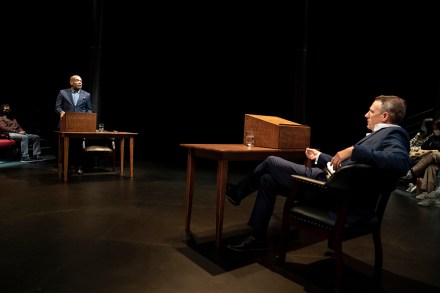
Baldwin and Buckley clash on the New York stage

It’s fair to ask what James Baldwin would have made of Baldwin and Buckley at Cambridge, the Public Theater’s recent presentation of his famous 1965 debate against William F. Buckley Jr. It’s not that the show doesn’t strain mightily to champion Baldwin in the contest — it does — but the novelist viewed what he called “problem” or “protest” art with particular scorn. This was a writer who torched fellow travelers Harriet Beecher Stowe and Richard Wright in the same breath for perpetuating, in his view, the same “monstrous legend” of racial inferiority. To call Baldwin an activist or a champion of civil rights doesn’t quite cover it: the man operated on a theological plane, aiming at spiritual transformation. His standards for art were notoriously exacting.

baldwin buckley

From teenage delinquent to man of letters: James Campbell’s remarkable career

From our UK edition

The great age of the Scottish autodidact must have ended a century ago, but it had a prodigious impact while it lasted. To read John Gross’s The Rise and Fall of the Man of Letters (1969) is to be plunged headfirst into a world of kenspeckle lads studying Nietzsche behind the crankshaft and miners quoting Burns to each other as they were winched up from the Lanarkshire coal face. If James Campbell (born 1951) isn’t quite a figure to rank with James Thompson the Younger (1834-82) or the Rev.

Artless, crude and thuggish: Bridge Theatre’s Book of Dust reviewed

From our UK edition

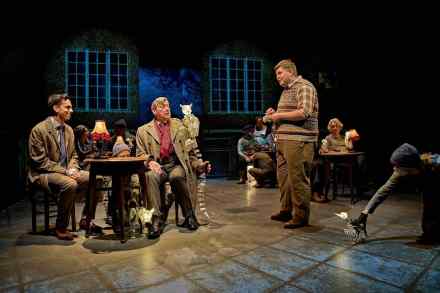
Philip Pullman’s The Book of Dust has been adapted at the Bridge. The yarn is set in Oxford, and the surrounding countryside, and the whole of the first act is devoted to exposition because Pullman’s fantasy world is impenetrably complicated. The chief character, a dim-witted child, wanders around the place and listens while terms like ‘magisterium’, ‘alethiometer’ and ‘daemon’ are explained to him. Meanwhile we’re introduced to Pullman’s range of human personalities. He can do two: first, the ooh-arr yokel who is thick but kind, and secondly, the posh academic who is clever but evil. These archetypes give rise to a total of 32 characters who are represented by 16 actors. A lot of simplification was needed here.

Racists will love it: National Theatre’s Death of England – Delroy reviewed

From our UK edition

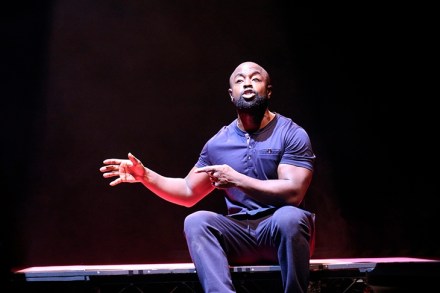
Death of England: Delroy is a companion piece to Death of England, which ran in February at the NT and examined the white working classes. Here the focus is on a successful black Briton, Delroy, who votes Tory and feels at home in multicultural society. The charismatic Michael Balogun plays him as a complex, shrewd and humane figure. He likes to mock white people who judge others according to superficialities like accent and pronunciation. And he recalls his horrified excitement when a white girl at school calmly placed her finger inside his boxer shorts. Delroy has plenty of white pals including his girlfriend, Carly, who is expecting their child. The only antisocial voice in his life belongs to his mother, a Jamaican bigot, who objects to Carly’s ethnicity.

Forget White Fragility: here are 10 books America should be reading about race

This extraordinary summer of protest and upheaval has sparked the most pervasive and sustained interest in the question of what it means to be black in the United States that I have witnessed. The American people, it can be said in all earnestness, are finally having that proverbial ‘national conversation’ on racism. And yet, one of the more fascinating consequences thus far has been the emergence of White Fragility, a text written by the Italian-American academic and corporate consultant Robin DiAngelo, and How to Be an Antiracist, by the historian Ibram X. Kendi, as the two most sought after (by a wide margin) explanatory aids for understanding our moment. Both books posit race — and racial difference — as something real and practically essential.

Anti-Semitism