J.k. rowling

The torture of Michael Frayn’s Copenhagen

From our UK edition

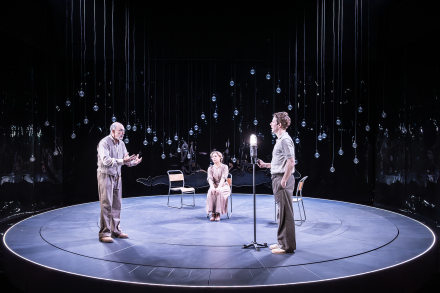
Copenhagen by Michael Frayn is a problem play. It debuted at the National in 1998 and ran for two years in the West End before transferring to Broadway. Since then, no UK producer has mounted a revival. Something must alarm investors. It’s a very chatty show. Three actors with three wooden chairs appear on a plain stage reciting dialogue about a meeting in Denmark in 1941 between the physicist Niels Bohr, his missus, and a family friend, Werner Heisenberg. The discussion focuses on the main developments in atomic science during the 20th century. Mrs Bohr, played by Alex Kingston, is there to offer a female angle on the ruminations of the two mega-nerds.

Is Labour ‘racist’ too? Plus Trump’s Gaza gamble & Rowling vs Watson

From our UK edition

48 min listen

This week, Michael and Maddie report from the Labour party conference in Liverpool and unpick Keir Starmer’s big speech. Was his attempt to reclaim patriotism for Labour a genuine statement of values – or a clumsy exercise in stereotypes about steelworkers, chip shops and football nostalgia? And why does Labour’s attack line on Nigel Farage risk sounding like political ‘nuclear warfare’ that could backfire outside the conference hall? And what about the Tories? With Labour bringing the fight to the Reform party, where does this leave Kemi Badenoch and the Conservatives ahead of their conference later this week? They then turn to Donald Trump’s extraordinary new Middle East peace initiative.

The woman I’m not – Nicola Sturgeon

From our UK edition

Nicola Sturgeon has all the usual things she wants to achieve in her memoir: rumours to scotch, a legacy to spell out, and so on. But the most important thing to the former first minister seems to be telling her readers that she is in fact not Nicola Sturgeon. The ‘seemingly confident, combative woman who dominated Scottish politics for more than a decade, unnerved the Westminster establishment, helped lead Scotland to the brink of independence and steered it through a global pandemic’ (her words) is in fact an outfit that the real author of Frankly has been wearing for a very long time. She seems quite keen to cast it off. In 1992, she says, ‘Nicola the soundbite, facsimile politician was born’.

Trump must end the National Endowment for Democracy once and for all

Readers of J. K. Rowling’s Harry Potter entertainments will recall that the number-one bad hat, Tom Marvolo Riddle, AKA Voldemort, had a clever way of preserving himself. Rightly worried that the forces of good might try to destroy him, the Dark Lord devised a way of infusing living bits of himself into various objects and people. The resulting magical charm was called a “Horcrux.”   “If the body of a Horcrux owner is killed,” we read in a Potter gloss, “that portion of the soul that had remained in the body does not pass on to the next world, but will rather exist in a non-corporeal form capable of being resurrected by another wizard.” Nice work if you can get it.

What future awaits the new Harry Potter stars?

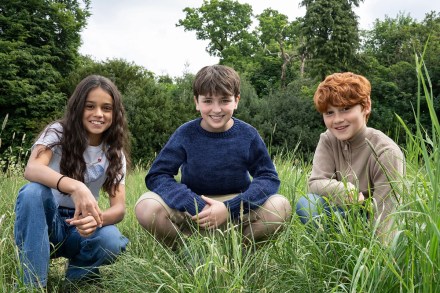
If you haven’t yet heard the names Dominic McLaughlin, Arabella Stanton or Alastair Stout, then rest assured, in a couple of years they will be entirely inescapable. They are the three actors who have been cast in the new and highly anticipated Harry Potter television series, which is going into production for HBO later this year with a likely broadcast date of late 2026 or 2027. Respectively, they’re playing Harry, Hermione Granger and Ron Weasley, and they have been picked after a long search that has seen 32,000 children put themselves forward (or, more likely in many cases, been put forward by their ambitious parents) to play the iconic trio in the new adaptations of J.K. Rowling’s wizarding series.

harry potter

A warm welcome in Salem from women and witches

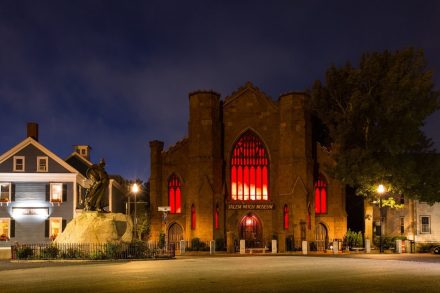
Pulling up at Marblehead’s Harbor Light Inn, my oldest friend and I wasted no time securing two counter seats at the Tavern tucked inside. A Christmas tree twinkled incongruously as we planned the hallowed pilgrimage most travelers reserve for spooky season: the next day we’d make the twenty-minute drive to Salem, the scene of the infamous witch trials of 1692. Peeling ourselves away from this glorious little seaside B&B, replete with canopy beds and resplendent fireplaces, would be harder than expected. “Excuse the smell! We’ve been baking all day,” said general manager Carolyn as we caught a waft of banana bread.

Stephen King’s You Like it Darker shows a master at his peak

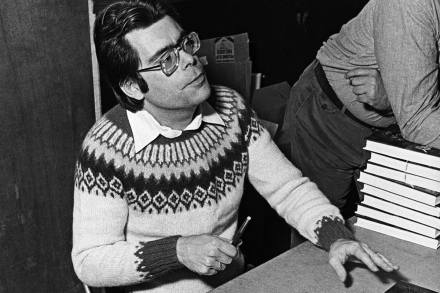
It is not hyperbole to call Stephen King the most influential horror writer alive. Across page and screen alike, nobody else can claim to have had such an expansive and lasting impact on popular culture. King’s name has become so commonplace that it’s easy to take it and him for granted, and to forget that behind the ultrafamiliar and now-ubiquitous branding there lies, in fact, a wild and strikingly original mind and a beating, bloody, passionate heart. You Like It Darker, King’s latest offering, is a highly accomplished and masterful collection of twelve short (and not so short) stories, all blistering examples of King’s powers. Though some have seen the light of day elsewhere, most are published here for the first time. All are worth the purchase.

King

Could J.K. Rowling be Oxford’s next chancellor?

From our UK edition

Among my generation of Oxford graduates – late fifties, early sixties – there is currently a great deal of talk about who the next chancellor should be. In February, the present incumbent, Chris Patten, announced he was stepping down at the end of this academic year, thereby triggering an election to find his successor. The electorate consists of anyone with a degree from the university, which is about 350,000 people. In addition to the predictable runners and riders – Tony Blair, Rory Stewart, Imran Khan – three ex-Conservative prime ministers are in the mix. The chancellorship of Oxford is one of the few remaining elected offices in the UK in which a Tory still stands a chance. Former holders include the Duke of Wellington, the Earl of Derby and Harold Macmillan.

The roots of J.K. Rowling’s contrarianism

Like his creator J.K. Rowling, Harry Potter says unspeakable things. He teases his cousin Dudley, the prince of his aunt’s suburban kingdom. He calls the Dark Lord Voldemort by his name. He even speaks to snakes. In other words, if Potter were a real person, he’d likely write a Substack, present a podcast and empathize with his creator’s recent public controversies. You are probably familiar with Rowling’s protests against trans activists’ demands to use women’s restrooms.

Rowling

Tears of the Kingdom is the unifier America needs 

The newest entry in the Legend of Zelda series, Tears of the Kingdom, was recently released to rave reviews.   Much like in its predecessor, Breath of the Wild, gamers make their way through the vast and boundless ruins of the Kingdom of Hyrule, playing as the hero Link on his epic quest to save Princess Zelda and defeat the evil wizard Ganondorf.  The game is an instant classic and highlights the action and intensity the Zelda series is known for. Thankfully, that intensity seems to be limited to the game itself and hasn’t bled into the real world.

zelda tears kingdom

Judy Blume steps on the J.K. Rowling landmine

Until a few weeks ago, Judy Blume’s reputation as one of the world’s most admired and respected novelists seemed assured. She has sold over 82 million copies of her twenty-five books, has won countless awards and was named one of TIME’s most influential people earlier this year. But those whom the gods wish to destroy are asked for their views on J.K. Rowling — and so when Blume was asked as much in an interview, she replied, “I love her... I am behind her 100 percent as I watch from afar... I haven’t been in touch with her during this tough time. Probably I should.” This went badly, as might be imagined — “Fuck Judy Blume!

judy blume

The generation gap over J.K. Rowling

I’ve often thought that a candid fly-on-the-wall documentary about the production of the Harry Potter films would be considerably more entertaining than any of the lackluster pictures themselves (Alfonso Cuaron’s excellent Prisoner of Azkaban duly excepted). Alan Rickman’s recent diaries suggest that the sets were unhappy, frantic places where actors were seldom allowed to create memorable characters and where the focus on the juvenile performers meant that one of the finest British ensemble casts ever assembled often functioned as little more than expensive set-dressing. Yet more than a decade after the final film, the actors continue to command headlines, some of which is thanks to Harry Potter creator J.K. Rowling’s views on the trans issue.

What happened to Stephen Fry’s belief in scientific reason?

From our UK edition

Here’s my question for Stephen Fry after he said his trans friends had felt ‘deeply upset’ by some of the comments made by J.K. Rowling: why didn’t you just say to them, ‘So what?’ Fry used to be all about saying ‘So what?’ to people who went on about feeling offended by words. His irritation with offence-takers has even become a meme. ‘It’s now very common to hear people say, “I’m rather offended by that”. As if that gives them certain rights’, he once said. ‘It’s actually nothing more… than a whine. “I find that offensive.” It has no meaning; it has no purpose; it has no reason to be respected as a phrase. “I am offended by that.” Well, so fucking what?’ He’s changed his tune.

J.K. Rowling laughs all the way to the bank 

In Harry Potter and the Sorcerer's Stone, Ron Weasley uses a levitation spell to knock a troll unconscious. On Thursday evening, his creator J.K. Rowling repeated the feat on Twitter. The world's most highly paid author was asked how she slept at night, "knowing you’ve lost a whole audience from buying your books?" “I read my most recent royalty cheques and find the pain goes away pretty quickly,” she replied. https://twitter.com/jk_rowling/status/1580639051774054404 Now, Cockburn has always been a fan of J.K. Rowling, but her recent years on the right side of the culture war has seen her find a new audience, consisting of people with common sense.

j.k. rowling

Free expression after the Rushdie attack

In an interview with Stern magazine at the end of July, Sir Salman Rushdie was asked about the current circumstances of his life. Given that this is a question that he has faced since 1989, Rushdie might have been expected to respond with boredom, even irritation — as, understandably, he has done in other public conversations, when the subject of the fatwa that he has been under for nearly three and a half decades has been raised by an inquisitive or prurient journalist — but he responded with reasonably good cheer. Describing his everyday existence as “very normal,” he even ventured a light-hearted remark, saying, “A fatwa is a serious thing. Luckily we didn’t have the internet back then. The Iranians had to send the fatwa to the mosques by fax.

Rushdie

Why can’t a woman be a man?

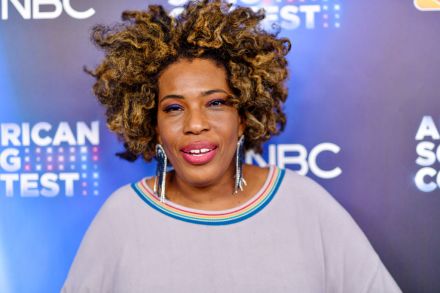
Sex and gender were supposed to be allies in the identitarian march of the feminist left. But gender, it appears, keeps butting up against the reality of sex. "I will say this and everyone's gonna hate me,” singer Macy Gray recently told Piers Morgan, “but as a woman, just because you go change your (body) parts, doesn't make you a woman, sorry.” (She subsequently apologized for her comments.) Bette Midler also elicited censure for her recent tweet: "WOMEN OF THE WORLD! We are being stripped of our rights over our bodies, our lives and even of our name!" (She later qualified that her comments were not intended to be “transphobic.”) Women, generations of feminists have been telling us, are supposed to be powerful. They’re supposed to be capable.

When ‘words are violence’ turns to actual violence

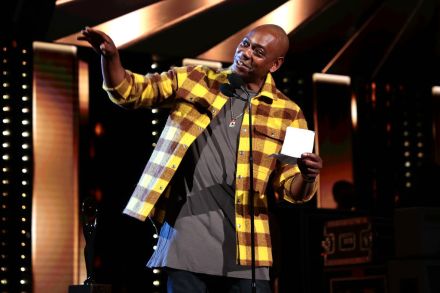
In the wake of comedian Dave Chappelle’s Netflix special The Closer, activists both online and off warned that Chappelle’s jokes about the trans community would lead to real-world harm, even murder. Instead the trans community has struck first by attacking Chappelle onstage. In his special, Chappelle tells the story of a trans person and friend who defended his stand-up material. Chappelle offered his friend career help by having her open for him on stage. Yet after being bullied by the trans mob for supporting Chappelle, his friend committed suicide. Earlier this week, Chappelle himself was physically attacked at the Hollywood Bowl in Los Angeles, during a comedy set that saw many famous faces, including Elon Musk and Chris Rock, in the audience.

Standing with J.K. Rowling

When Roland Barthes wrote his 1967 essay “The Death of the Author,” he probably didn’t intend that, fifty-five years later, a major American news outlet would be provocatively suggesting that the world’s bestselling author should be de-personed, de-platformed or de-materialized from history. And yet that is exactly what has happened with the New York Times. They recently ran a series of advertisements on the subway featuring a reader named “Lianna” who is, as much of their subscriber base now are, “breaking the binary,” experiencing “queer love in color” and meditating on “heritage in rich cues.” So far, so predictable. But the ads took a grimmer turn when one suggested that Lianna was “imagining Harry Potter without its creator.

Rowling

Time to slay J.K. Rowling’s ‘Fantastic Beasts’

Next week marks the release of the third J.K. Rowling-scripted Fantastic Beasts film, a series that has overstayed its welcome. This latest iteration is subtitled The Secrets of Dumbledore. As if to wrong-foot those who would smirkingly speculate that one of Dumbledore’s secrets is his sexuality, the film opens with the old wizard and his former lover-turned-nemesis Grindelwald (now played by Mads Mikkelsen, replacing a disgraced Johnny Depp) mourning the end of their love affair, which at least makes the homosexual subtext hinted at in previous films explicit. But that, alas, is about it for any kind of coherence, or interest, or originality.

J.K. Rowling and the death of nuance

From our UK edition

There are few good things to say about the public conversation around transgender issues, which all too often shows us — all of us — at our worst. But it also offers up a seemingly endless series of case studies illustrating wider problems with the way contemporary culture and institutions deal with difficult ideas. The latest lesson comes from Boswells School in Chelmsford, Essex. It has dropped J.K. Rowling’s name from one of its houses. Previously, she was honoured as a champion of self-discipline, regarded as a role model for children perhaps for her determination in starting her globally-successful series of books under difficult circumstances.