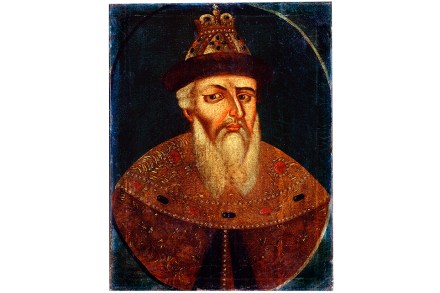
Ivan the terrible

The history of Moscow was one of extreme violence from the start

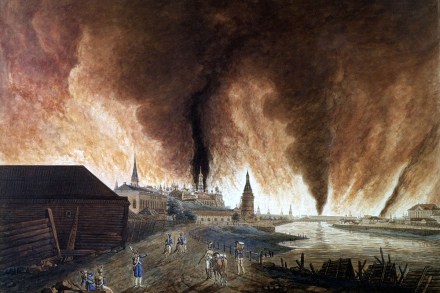
‘Moscow is hard to love,’ Simon Morrison writes at the beginning of this engaging book, ‘but I love it.’ He deliberately sets out unconstrained by academic pieties, despite holding the post of Professor of Music and Slavic Languages and Literatures at Princeton University. He says he wrote A Kingdom and a Village ‘out of nostalgia for pre-oligarch decrepitude, when the world looked at Moscow with pity’. The Orthodox Church and the security services have been conjoined from the 16th century to the present The book is tripartite. The first part begins in 1147, when a prince named Yuri built a fort on a hill above a river. (When the authorities

Distrust and resentment have plagued Anglo-Russian relations for centuries

Has a book ever been more bizarrely mis-titled than this one? The First Cold War: Anglo-Russian Relations in the 19th Century has nothing whatever to do with the actual Cold War, nor is it for the most part concerned with the 19th century. Rather, Barbara Emerson has written a thorough and often diverting diplomatic history of Anglo-Russian relations from the 16th to the early 20th century. This period encompasses at least 14 wars in which British and Russian troops found themselves embroiled, sometimes on the same side, sometimes on opposite sides. None of these wars was remotely ‘cold’. Nor does Emerson attempt to make any argument that the shifting great

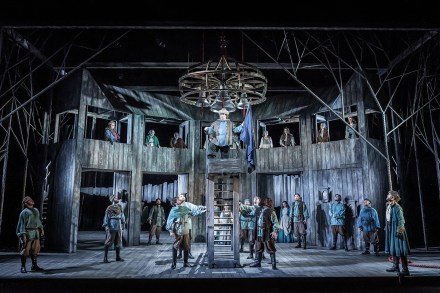
Wow, this is good: Grange Park Opera’s Ivan the Terrible reviewed

There are worse inconveniences than having to wear a face mask to the opera. But there’s one consequence that hadn’t really struck home until an hour into Rimsky-Korsakov’s Ivan the Terrible. The citizens of Pskov are massing in the streets. The Tsar’s army is approaching, and Rimsky is building one of those surging Russian crowd scenes: bass-heavy chorus blazing away while ominous bell sounds — basses, horns and rasping gong — shake the orchestra to its bones. Suddenly a bloodstained figure staggers in and collapses; a refugee from nearby Novgorod. ‘Your brother-city sends its greetings, and asks you to arrange its funeral,’ he gasps. At that point, I’d have given