Italian food

Go to Cicoria for the food, stay for the opera

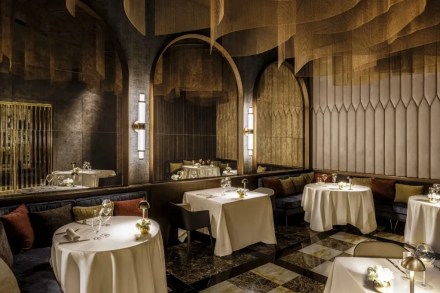
Smart Italian restaurants in cultural destinations are like buses: you wait ages for one and suddenly two come along at once. I recently praised Locatelli at London’s National Gallery. Returning to the city, it is the turn of Cicoria at the Royal Ballet and Opera, Covent Garden; a joint under the aegis of Angela Hartnett, well-known for her upscale restaurant Murano in Mayfair, her casual chain Cafe Murano and her frequent appearances on the box. Surprisingly few of the world’s great opera houses have given much thought to catering, although things are improving. I ate very well recently at Madrid’s Teatro Real and you can push the boat out with caviar at the Met in New York.
cicoria

Locatelli has entered the premier league of museum dining

Does your museum feel tired and run down? Is the entrance unwelcoming? The bookshop shabby? The restaurant a mere café? If so, call Annabelle Selldorf, the German-American architect whose talent and sensitivity have made her the go-to person for reviving weary museums. Her recent transformation of the Frick in New York has been widely acclaimed and she will soon start work on the Wallace Collection in London. But the latest masterwork has seen Selldorf sprinkle her fairy dust on the Sainsbury Wing of London’s National Gallery. Those with long architectural memories will recall how in 1984, the then Prince of Wales christened the proposed new wing of the Gallery “a monstrous carbuncle on the face of a much-loved and elegant friend.

Locatelli

Eating my way through Sicily

I arrived home six pounds heavier after three weeks in Sicily. That is the weight of a gallon of milk. Eight cans of beer. Or a small Yorkshire Terrier. I could try blaming the Cerebrus heatwave on my filthy granita habit and lack of almost any bodily movement (and it didn’t help) but the reality is this: Sicily is the fantastical realm they say it is and stupendously beautiful. And the food is even better.  Roman, Arab, French, Greek and North African influences spectacularize every meal. Almond milk granita is spooned into glistening brioche rolls before you can wipe the sleep from your eyes. Chocolate cannoli appear out of nowhere at breakfast. Arancini oozes globs of molten cheese in a manner that’s, quite frankly, sexy.

sicily

Opening a bottle with… chef Heros de Agostinis

“Stealth wealth” became A Thing in 2023. TikTok was awash with “get the look!” fashion videos; magazines full of think pieces on crisp white shirts and camel cashmere. The idea is to ooze money — or at least look like you do — in classic, understated cuts and colors. What the Streeps and Paltrows have been doing for decades is now the standard for the aspirational and chronically online.  The trend came to mind as I tumbled into Rome’s five-star Anantara Palazzo Naiadi during the Cerberus heatwave. Slick with sweat, a suitcase half my size and missing one wheel, toenails unpainted and there to interview chef Heros de Agostinis, I wished I’d paid more attention. There are fancy hotels, then there are stratospherically fancy hotels like this one.

heros de agostinis

The real food of Venice

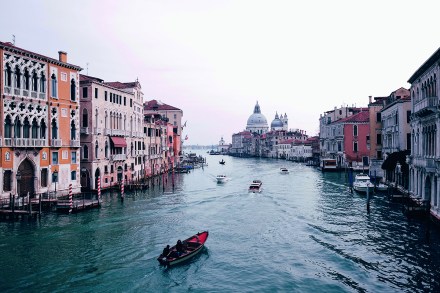
A few years ago, I moved to Newlyn, a fishing village in west Cornwall. I didn’t understand why I moved to Newlyn until I returned to Venice. I take almost all my holidays in Venice, and it is a cliché that Venice only slowly reveals her mysteries. You must fight your way past a mass of Renaissance portraiture and mirrored palaces but the mystery it showed me this time is this: like Newlyn, Venice is a fishing village. Venice got rich in the thirteenth century, monopolized the trade routes to the east for two centuries and covered itself in Istrian stone, which Newlyn didn’t. But it’s still a fishing village, founded by people running away from barbarians, into the mud flats of a lagoon to fish for crabs. It is easy to forget that — unless you look for Venetian cuisine.

venice