Israeli Defense Forces

Why Israel is pushing further into Lebanon

Israel launched a limited ground operation in southern Lebanon this week, intended to expand the de facto buffer zone which it has maintained along the border since the ceasefire of November 2024. At that time, Israel held control of five positions on the Lebanese side of the border. In response to Hezbollah’s decision to re-engage with Israel in the context of the current conflict between Jerusalem and Tehran, the IDF is pushing further into Lebanon.   Israel is now bombing Hezbollah targets throughout the country. Ground forces, meanwhile, are cautiously pushing forward. According to Israeli media reports, the IDF’s goal is to establish 13 additional positions north of the border.


Lebanon

The Israel-Lebanon ceasefire is in danger of shattering

It’s been almost a year since Israel and Hezbollah, the Lebanese militia that arguably held more power in Lebanon than the government itself, signed a ceasefire to end a ferocious two-month long war. The deal couldn’t have come at a better time; thousands of Israeli air and artillery strikes had pulverized southern Lebanon, Hezbollah’s traditional base of operations, leading to a displacement crisis and killing close to 4,000 Lebanese. Whole swaths of northern Israel had been vacated due to Hezbollah missile attacks, forcing the Israeli government of Prime Minister Benjamin Netanyahu to spend money on tens of thousands of civilians bunking in hotel rooms. But the agreement is wearing thin. The ceasefire is really a ceasefire in name only. Will it hold?

lebanon

In praise of Gal Gadot

As Israelis around the world face cultural boycotts, it was uplifting to see Gal Gadot, an eighth-generation Israeli on one side and the granddaughter of an Auschwitz survivor on the other, honored with a star on the Hollywood Walk of Fame on Tuesday. “I think it’s going to take me time before I even realize that it’s real,” she told Variety. What won’t take time to realize – because by now we know the drill all too well – is that her ceremony was disrupted by pro-Palestinian activists wielding signs ranging from the pathetic to the downright chilling. “Heroes Fight Like Palestinians,” “Viva Viva Palestina,” “Up up with liberation, down down with occupation” and “Not another nickel, not another dime, no more money for Israel’s crime.

Trump personnel office rejects longtime Republican aides for admin roles

Can you pass the MAGA moral purity test? The White House’s Presidential Personnel Office is ticking off Republicans with some of its policy hires – or rejections. While President Donald Trump and Elon Musk are dead set on slashing government jobs via the Department of Government Efficiency, some in the GOP are frustrated that PPO is rejecting political appointees with apparently sterling MAGA credentials. They feel that PPO is flexing its muscles over both agency heads and Republican senators. Both groups have made requests for specific hires only to see their chosen candidates rejected by PPO, oftentimes with virtually no explanation, multiple high-level spurned applicants told Cockburn.

trump white house ppo

What follows Sinwar’s death in Israel’s war in Gaza and beyond 

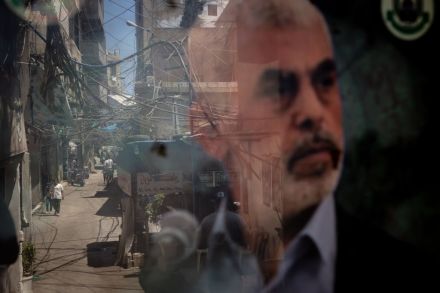
Yahya Sinwar, the Hamas leader and strategist responsible for the largest massacre of Jews since the Holocaust, is dead, killed by the Israeli Defense Forces in a tunnel beneath his hometown of Rafah in Gaza.   Although the Biden administration (rightfully) congratulated Israel, both President Biden and Vice President Harris had previously demanded Israel not stage a major military operation in Rafah, where Sinwar and other Hamas leaders were killed. That advice matched the administration’s strategic wisdom throughout the conflict.   With Sinwar gone, the key questions now are: what is the endgame in Gaza? And how does Israel’s success in Gaza affect the current battle against Hezbollah in Lebanon and the future battle against the Islamic Republic of Iran?

yahya sinwar

The US should stop raising false hope of an Israel-Hamas ceasefire

The months-long ceasefire and hostage release negotiations between Israel and Hamas have been the diplomatic equivalent of Groundhog Day. And the US officials tasked with bringing those talks across the finish-line have contributed mightily to the very bad, never-ending movie we (not to mention the hostages’ families and the more than 2 million Palestinians in Gaza) have watched since President Biden rolled out his ceasefire plan in late May. In the months since, Washington has committed verbal blunder after verbal blunder by getting over its skis and proclaiming progress where no progress exists.

ceasefire

Biden’s pause of weapons shipments to Israel is another misstep

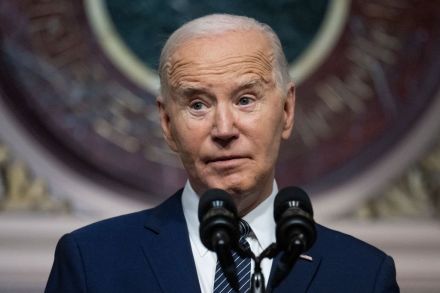
President Biden just made a strong move against Israel, ordering the US government to stop shipping weapons supplies to the Israeli Defense Forces. It was his fine strategic mind at work, once again.  Usually the public defers to the president and his advisors on foreign policy, unless the issues become very prominent or the president forfeits their trust. Those are the two problems now facing the Biden administration. The war in Gaza is a major issue — and the public has zero confidence in Joe’s strategic wisdom. He lost the public’s confidence on that score after the disastrous withdrawal from Afghanistan and the failed attempts to appease Iran. Now, they are unlikely to defer to his judgment in distancing himself from Israel, America’s greatest ally in the region.

biden weapons

Will Israel still attack Rafah?

The decision by Israel to withdraw its forces from the devastated city of Khan Younis could portend a battle for the control of Gaza. For Prime Minister Benjamin Netanyahu and the Israeli Defense Forces, the prize in the war against Hamas is the capture of the southern city of Rafah, a sprawling, tented enclave bulging with up to 1.4 million displaced and desperate Palestinians. Given that much of Gaza is now in ruins, there is almost nowhere left for the Palestinians trapped inside the city to flee. It is almost universally accepted that any assault would end in a bloodbath.

benjamin netanyahu rafah

Why Blue Line peace is proving elusive

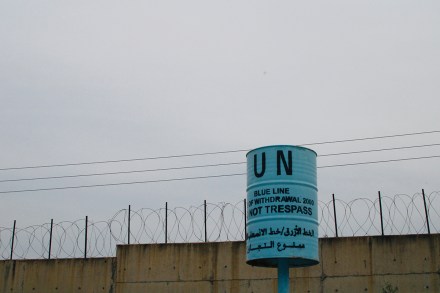
Naquora, Lebanon Tensions along the forty-nine-mile Blue Line that partitions Israel from Lebanon are as high as they’ve been in recent history. Given the stated objectives of Hezbollah, the powerful Shiite militia that controls Lebanon’s South and the IDF, which seeks to repel them beyond striking distance, that's saying a lot. Ten thousand sky-blue helmets stand between the warring sides, protecting a division of international troops from the raining debris of intercepted rockets. Nobody is targeting them, but collateral damage is inevitable in a region that sees fatal exchanges on a daily basis. The United Nations Interim Force in Lebanon was established in 1978 following the Israeli invasion of Lebanon.

unifil un blue line lebanon

Is Biden’s patience with Israel running out?

Back in 2016, Donald Trump had a memorable quote that pretty much encapsulated his old over the Republican Party: "I could stand in the middle of Fifth Avenue and shoot somebody, and I wouldn't lose any voters, OK.” At this point, you might be able say the same thing about Israeli prime minister Benjamin Netanyahu. The premier could stroll up Fifth Avenue, shoot somebody on the street and still receive US-supplied joint direct attack munitions, 2,000-pound bombs, fighter aircraft and no-strings-attached diplomatic support. The man can apparently do no wrong in the eyes of the Biden administration — or more accurately, he couldn’t do anything that would warrant even a minor, let alone substantive, adjustment in US policy.  But is that changing?

joe biden israel idf jose andres

Why hasn’t Hamas freed its American hostages?

Hamas’s most valuable assets are the American hostages it holds. That simple fact means the terrorist organization will demand the highest value in return. What can America give Hamas in exchange? Not prisoners, since the US doesn’t hold any Hamas fighters. That means the US cannot follow the Israeli pattern of giving Hamas three Palestinian prisoners in exchange for every one held by Hamas. Nor can America provide boatloads of cash, as the Biden administration has for Iran. Biden could continuing giving Iran money, but that is much harder in the midst of war. And it is untenable politically to pay Hamas directly while the fighting continues. The Biden team might promise to help rebuild Gaza later, but that’s not valuable to Hamas right now, as it fights for its life.

hamas

Time for Biden to change course from Obama’s failed Middle East policies

When a long-silent former president finally speaks out, the public listens. So do foreign leaders, especially when the former president is closely tied to the current one. That’s why Barack Obama’s comments on the war in Gaza attracted attention.  Anyone who remembers President Obama’s foreign policy knew what to expect: criticism of Israel and a delicate dance around Iran’s malign behavior. In fact, he did not mention Iran at all. He totally ignored their role. His audience expected him to add a few words of moral self-righteousness, warning Israel about future civilian casualties, as if Israeli Defense Forces hadn’t taken enormous and costly steps to avoid them.

biden obama resize

A lie can get halfway around the world

The charge damning Israel with bombing a hospital in Gaza has circled the globe at lightning speed, time and again. But slowly the truth is getting its pants on. The evidence is increasingly clear that Israeli Defense Forces did not bomb a hospital in Gaza, either deliberately or inadvertently. A video, now publicly available, shows the rocket coming from inside Gaza, not from outside or from a plane. CNN has had experts confirm that analysis. The US has confirmed that point with sensitive (and still secret) signals-intelligence. So has Israeli intelligence, independent of the US. There is also at least one captured phone call among jihadists acknowledging that the rocket was fired from inside Gaza. That, too, is publicly available.