Israel

Starmer at sea, Iran on the brink & the importance of shame

From our UK edition

46 min listen

Starmer’s war zone: the Prime Minister’s perilous position This week, our new political editor Tim Shipman takes the helm and, in his cover piece, examines how Keir Starmer can no longer find political refuge in foreign affairs. After a period of globe-trotting in which the Prime Minister was dubbed ‘never-here Keir’, Starmer’s handling of international matters had largely been seen as a strength. But as tensions escalate in the Iran–Israel conflict, global events are beginning to create serious challenges. They threaten not only to derail the government’s economic plans but also to deepen divisions within the Labour party, particularly between the leadership and much of the parliamentary party. Tim joined the podcast alongside The Spectator US editor Freddy Gray.
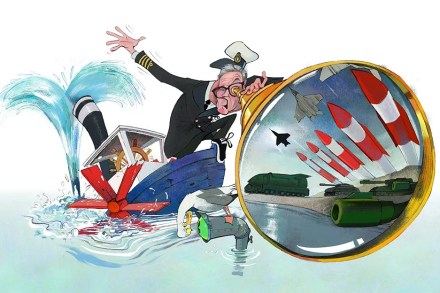
Striking Fordow will not solve the Iran problem

From our UK edition

The world is watching Donald Trump to see if he will give his military the green light to use one of America’s most deadly weapons, the Massive Ordnance Penetrator (Mop), to destroy Iran’s underground nuclear facilities at Fordow. As a man with a seemingly inexhaustible need for attention, this is a gratifying position for him to be in. But a potentially dangerous one for the rest of us. ‘Trump doesn’t have a taste for war,’ someone said to me recently. ‘War’s bad for business.’ This appears to be true so far; we have certainly seen Trump try his hand at peace-making in Gaza, Ukraine and Iran with consistently poor results. But history is full of examples of far more principled men than Trump acquiring a taste for war through a thirst for power and money.

What else could Israel do?

From our UK edition

Over the past few days British readers have been able to enjoy a number of hot takes on the situation in the Middle East. First, there have been all the politicians, such as the Scottish First Minister John Swinney, who have called for our government to step in and ‘de-escalate’ the conflict between Israel and Iran. But even leaving aside whether the mullahs in Tehran can be swayed by Britain or Scotland, ‘de-escalation’ is the only surefire way to ensure that they continue to pursue a nuclear capability. Elsewhere, the BBC has been playing a blinder. When the conflict began, it decided that its audience would be well served by having the celebrity chef Hugh Fearnley-Whittingstall give his thoughts on the matter.

Who’s pushing Trump to be an Iran hawk?

From our UK edition

‘This never would have happened if I had been president,’ says Donald Trump, whenever the international news goes from bad to worse. It’s a line he uses a lot in relation to the wars in Ukraine and Gaza, both of which began in the interregnum between his first administration and his second. Yet the latest war, between Israel and Iran, is a different matter. Trump of course blames his predecessor, Joe Biden, who ‘made Iran rich’ with $300 billion for the evil regime’s dreaded nuclear weapons programme. It was Trump, though, who in 2018 tore up Barack Obama’s nuclear deal with Iran and in 2020 killed Qasem Soleimani, the head of the Iranian Revolutionary Guard’s Quds Force.

Westminster waits for Donald’s decision

From our UK edition

14 min listen

Westminster waits with bated breath to discover whether Donald Trump will ally with Israel in striking Iranian nuclear sites. The President called for ‘UNCONDITIONAL SURRENDER!’ from Tehran overnight. The day to day of domestic politics appears diminished by comparison with the ever-looming threat of an escalated conflict… But the show must go on: today’s PMQs saw Chris Philp (why not Robert Jenrick?) and Angela Rayner deputising for their absent leaders; Liz Kendall introduced legislation to enact cuts to personal independence payments for disabled people; the Commons voted to decriminalise abortion at any point until birth; and the Office for National Statistics (ONS) is up to its old tricks, announcing that inflation has fallen when the reality is much more complicated.

Posting your way through World War Three

A few months ago Team Trump tried to organize its war-gaming plans on the messaging app Signal. It didn’t work. It appears the team has taken to an even more secure platform, as the Iran-Israel war escalates, communicating instead on X. US ambassador to Israel, Mike Huckabee shares with the President, Cockburn and everyone else: Mr. President, God spared you in Butler, PA to be the most consequential President in a century – maybe ever. The decisions on your shoulders I would not want to be made by anyone else. You have so many voices speaking to you Sir, but there is only ONE voice that matters. HIS voice. I am your appointed servant in this land and am available for you but I do not try to get in your presence often because I trust your instincts.

Trump
Trump

Trump is putting ‘America First’ by ignoring the MAGA punditocracy

Political imbrioglios often take on the character of theological controversy. Back in the 6th century, the wise men of the Western Church, pondering the Trinity, decided to make an addition to the Nicene Creed. The Holy Spirit, they determined, proceeded not simply “ex Patre” (“from the Father”) but also “filioque,” “and from the son.” No big deal, right? Wrong. For reasons I shall refrain from dilating on now, the Eastern Church repudiated the addition. Controversy raged for centuries. Indeed, what became known as the “filioque controversy” culminated, in AD 1054, in the Great Schism between the Eastern Church and the West. For most of us mortals, the controversy now seems arcane, not to say bootless. But at the time it was a matter of life and death.

Regime change

Trump won’t be dragged into a regime-change war

The handsome pages of The Spectator World’s July issue readers will find an essay of mine arguing that the United States doesn’t win wars anymore because we don’t even understand what a modern war is. From the French Revolution to the Cold War, and in the long, warm afterglow—thankfully, non-nuclear—of Cold War success, Western elites have tended to think about wars in terms of regimes and ideologies. Winning a war is all about changing the opponent’s regime so that it endorses one’s own ideology: turning a “dictatorship” into a “liberal democracy” through the magic of bombs and bullets.

Operation Rising: will Trump get dragged into the Israel-Iran conflict?

From our UK edition

20 min listen

Relations between Iran and Israel are deteriorating rapidly, with comparisons being drawn to Israel’s 1981 strike on Iraq’s Osirak nuclear reactor. Israeli Prime Minister Benjamin Netanyahu appears to be advocating for regime change in Tehran, reportedly encouraging the United States to take military action. Donald Trump, who previously came close to authorising a strike, is now said to be more cautious – mindful of the risks of exposing American forces abroad and being drawn into another protracted conflict, contrary to the non-interventionist platform on which he was elected. The Iranian regime, built on a foundation of resistance, is responding to Israel’s attacks while also expanding its network of regional proxies, which now extends as far as South America and east Africa.

Why Democrats back the wrong side of 80-20 issues

“80-20” issues have become a catchphrase recently. Most voters on those issues favor one policy by overwhelming margins and oppose the other. The “winning side” may poll anywhere between 60 and 90 percent, depending on the issue, but they are all conveniently grouped under the same label of “80-20.” These lopsided issues have three striking features. First, there seem to be more and more of them, especially on contentious social issues and law enforcement. Second, the same constituency that supports the 20 percent side of one issue frequently supports the 20 percent side of other issues, even those that are substantively quite different. Once an issue is depicted as “progressive,” for example, it generates that support.

Inside the April Ryan-John Fredericks Briefing Room brouhaha

Radio Ga Ga That’s it, yes, it’s war! Forget Israel and Iran’s back and forth, ignore the tanks on Constitution Avenue: the real conflict of the week was the heated Briefing Room scrap between two titans of radio, John Fredericks and April Ryan. It all kicked off on Wednesday afternoon ahead of the press briefing, when Trump-supporting call-in host Fredericks sidled in and started airing his grievances about how the briefings used to work under the previous Trump administration. He was moaning about how he never got to ask questions due to the focus-pulling antics of CNN’s Jim Acosta and April Ryan, who, sources tell Cockburn, he referred to as the “woman from urban radio.” Fredericks said this... while directly next to Ryan.

april ryan
Khamenei

Will Israel kill Iran’s Supreme Leader Ayatollah Ali Khamenei?

After Iran's Supreme Leader Ayatollah Ali Khamenei promised new retaliatory attacks against Israel following its unprecedented military operation, there has been considerable speculation about whether Israel will retaliate in the ongoing volley by killing Khamenei himself. Khamenei is the glue that holds the Islamic Republic together, having served as supreme leader since 1989. If he were to be killed by Israel, it would shock the Islamic Republic and could destabilize the regime. Targeting Khamenei via airstrikes or infiltrating the Islamic Revolutionary Guard Corps (IRGC) Vali Amr Protection Corps, which provides his personal protection, would be the two most probable modes to eliminate him. As he grows older, Khamenei's world has become smaller.

Netanyahu

Trump has been outmaneuvered by Netanyahu

The surprising thing isn’t that Israeli Prime Minister Benjamin Netanyahu attacked Iran. It’s that the current bombing campaign didn’t occur sooner. Netanyahu has been inveighing against the Iran threat for decades. The prospect that Trump might be prepared to cut a nuclear deal with the Iranian mullahs finally forced his hand. Trump, who based much of his MAGA movement around opposition to endless wars in the Middle East, has been outmaneuvered by Bibi. Intent on a Nobel Peace Prize, Trump proclaimed that he would secure an end to the Ukraine war within 24 hours. Then he focused his attentions on Iran. But his impulse to avoid war, any war, in the Middle East has been foiled.

Trump’s birthday surprise – war with Iran?

The Trump presidency is giving us all a type of news-related diabetes. So much sensational information is spewing out of our screens all the time. There are so many stories, so much richness and history and irony, and so much silliness and seriousness entwined. We are dangerously overfed and now the lines of reality are blurring and people feel mad and sick. The Trump-Musk saga goes on, as Elon telephones Donald and shows his contrition on X. Trump sends in troops to control anti-ICE protests. Trump attends Les Miserables at his increasingly camp Kennedy Center.

In defence of Piers Morgan

From our UK edition

‘What happened to Piers Morgan?’ asked a Spectator writer last weekend. The answer, according to slavishly pro-Israel commentator Jonathan Sacerdoti, is that I’m now ‘darker’, ‘degraded’, ‘dismal’ and ‘debase(d)’ – because I’ve become more critical of how Israel is prosecuting its war in Gaza. For a long time on my YouTube show Uncensored, I defended the country’s right to defend itself after 7 October attacks. But I now believe Benjamin Netanyahu’s government has crossed the ‘proportionality’ line with its recent food and aid blockade and relentless bombardment of civilians. Self-evidently, Israel is failing in its mission to eliminate Hamas and get the remaining hostages released.

A Jewish guide to arguing 

From our UK edition

52 min listen

Daniel Taub, former Israeli Ambassador to the UK, joins Damian Thompson to talk about his new book Beyond Dispute: Rediscovering the Jewish art of constructive disagreement. In a fast-moving interview, Daniel explains how the art of arguing has shaped Jewish humour and scholarship, and Damian asks him about keeping kosher, life after death – and the influence of the Talmud on Curb Your Enthusiasm.  Produced by Patrick Gibbons.

BBC editor accuses Trump of dishonesty – wrecking broadcaster’s impartiality

The BBC’s response to recent White House criticism over its Gaza coverage highlights the Corporation’s vulnerability on the question of impartiality in conflict reporting. What began as a public rebuke by Trump’s press secretary, Karoline Leavitt, over a disputed report quickly developed into a broader interrogation of the BBC’s editorial assumptions and its long-standing handling of the Israeli–Palestinian conflict. Jeremy Bowen, the BBC’s international editor, defended the Corporation and accused the Trump administration of dishonesty. Responding to Leavitt’s remarks, he said, “To be quite frank, the Trump administration does not have a good record when it comes to telling the truth itself. She’s making a political point, basically.

Donald Trump

Israel is going too far

From our UK edition

I have kept my silence on the Middle East for ten years. I left Israel in 2015, after five years as British ambassador, as the first Jew in the role. Since then, I have turned down every request to be a talking head. Neither the world nor my successors needed another ex-ambassador pundit. But I now feel obliged to break my silence, just once, to say that the Israeli government’s treatment of the Gazan population is both wrong and self-defeating. And that it is not anti-Israel or pro-Hamas to say that withholding humanitarian aid is not the answer. The situation is the opposite of straightforward. It is not just that there are no easy answers; there may be no answers of any sort. The Israeli position is impossible.

The derangement of Harvard

From our UK edition

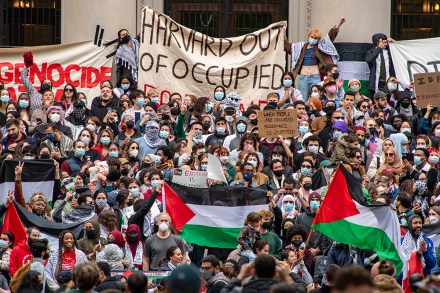
It is 60 years since William F. Buckley said that he would ‘rather be governed by the first 2,000 people in the Boston telephone directory than by the 2,000 people on the faculty of Harvard University’. Yet even the godfather of American conservatism would be surprised at how much more attractive the folks in the phone directory appear today. Harvard is currently having a major row with Donald Trump’s administration. It results from the way in which the university responded to the 7 October attacks in Israel. While the Hamas massacres were still on-going, more than 30 Harvard University student organisations signed a letter which claimed to hold the ‘Israeli regime entirely responsible for all unfolding violence’.

Trump’s ‘Golden Dome’ will raise the risk of attack on US

President Trump and his administration are advancing plans for their version of a homeland missile defense system, dubbed the “Golden Dome.” Proponents of the Golden Dome, such as Air Force Chief of Staff General David Allvin, claim that it is required to protect the US homeland. Secretary of Defense Pete Hegseth praised the project, arguing it is “a generational investment in the security of America and Americans,” and that the Golden Dome would be capable of intercepting “cruise missiles, ballistic missiles, hypersonic missiles, drones, whether they’re conventional or nuclear.” While this all sounds good, there are reasons to worry about the genesis of the idea, its cost, its feasibility and its risks.

Golden Dome