Israel

Inside Israel’s Iron Dome

From our UK edition

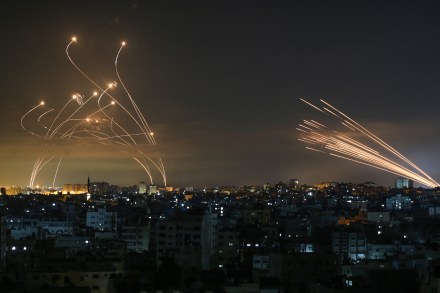
A dramatic photo from the Gaza strip taken in the early hours of Friday morning looks like something out of a Marvel film. On the right, rockets fly from Gaza. The gentle trajectory of their parabolic curves shouldn’t fool anyone: these are unguided explosives travelling at hundreds of miles an hour towards an Israeli town. On the left, each one snaking a unique, winding path, interceptors from Israel’s Iron Dome anti-rocket system shoot up to meet the missiles. In 2001, when Hamas started firing rockets from Gaza into Israel (and, at that time, the still-extant Israeli settlements in Gaza), the terrorist organisation introduced a new weapon that would change the strategic picture of the Israeli-Palestinian conflict.
Revealed: How Israel tricked Hamas

From our UK edition

I received a message from a trusted contact in Israel yesterday telling me that no ground offensive was planned in Gaza. This was despite the fact that heavy armour and infantry reservists were massing on the border. I decided to hold the story and break it in the morning. Within hours, however, the official Israeli army Twitter account had suggested to the world that ground troops had gone into action. ‘IDF (Israel Defence Force) air and ground troops are currently attacking in the Gaza Strip,’ it said. Nobody noted the careful ambiguity. Within minutes, the news had spread across the world. ‘Israel goes in,’ screamed the MailOnline, the world’s biggest newspaper website.

Democrats for Hamas

The truly multiracial coalition in the US these days isn’t the Democratic party. It’s the anti-Semitic mass movement that takes to the streets of blue-state cities every time Israel defends itself against terrorism. Israel will no doubt survive the latest barrage of disapproval from people with a bottomless supply of personal pronouns and malicious memes. But this is a problem for American Jews today — and it will be all of America’s problem tomorrow, because the overrunning of the public square by anti-Jewish cranks and conspiracy theorists is a perennial warning sign of social breakdown. Spend a few minutes in the open sewer that is social media, and you are left in no doubt. The Democratic left has become thoroughly ‘Corbynized’, overtaken by the hard left.

hamas

How politics ruined Instagram

Someday, we’ll count them like fallen soldiers: the online platforms that began by promising to be different, an escape from the grind of endless internet flame wars, and ended up like all the others, captured by memeified outrage. The trajectory is always the same. Tumblr, originally a home for cheeky fanblogs with titles like ‘fuckyeahsharks!’, was overtaken in a few short years by the ‘Your Fave Is Problematic’ brand of outrage archaeology. Facebook started as a place to collect your photos, share updates about your lunch and platonically ‘poke’ your friends, only to devolve into a wasteland abandoned by virtually everyone except a bunch of angry boomers battling over whether or not Hillary Clinton does, in fact, eat babies. Twitter...

instagram

Don’t compare Israel to Hamas

From our UK edition

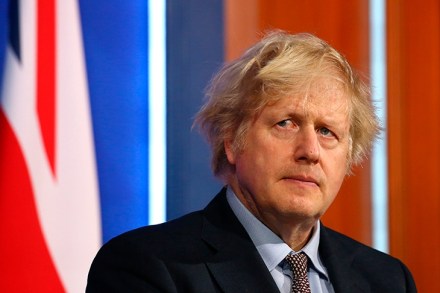
No, not this time, Boris. The Prime Minister’s ‘both sides’ response to the terrorist attacks on Israel underscores how Western political elites — left, right and centre — lose all critical reasoning when it comes to one tiny strip of land in the Middle East. Israel is under assault from Hamas, the Islamist mafia that runs Gaza like 19th-century Sicily. This follows tensions over the policing of holy sites during Ramadan; a spate of violent street incidents between Israelis and Palestinians; marching and incitement by the Israeli far-right; Palestinian rioting in Jerusalem; and Arab-Israeli rioting outside the capital.

The battle the Israeli Defense Force can’t win

From our UK edition

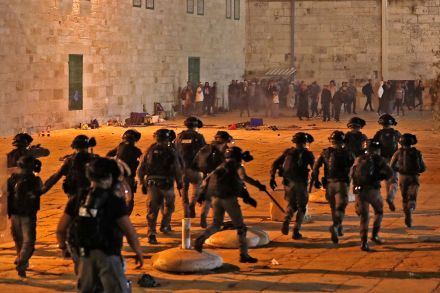
The hostilities between Israel and Gaza caught Netanyahu’s government by surprise. What started as a local demonstration by Palestinians against ongoing efforts to evict them quickly escalated into violent clashes with a heavy-handed Israeli police. Hamas then demanded Israel remove its forces from the area, including the nearby Al-Aqsa mosque, or face reprisals. When they didn’t, the terror group retaliated by firing rockets into Jerusalem. This was on Monday. By Wednesday there had been fierce exchanges of fire between both sides. Hamas fired over 1,500 rockets towards Israeli cities and towns. Despite Israel’s impressive Iron Dome anti-missile system and widely available shelters, over 200 Israelis have been injured and seven killed.

Palestinians in Jerusalem live in a strange limbo

From our UK edition

Jerusalem Thomas Friedman has a lot to answer for. The New York Times’s oracle has ruined, through overuse in his columns, the best source of local knowledge for journalists: the cab driver. No other hack can now quote his driver for fear of colleagues’ ridicule. Which is a pity, because the cab drivers in Jerusalem are those rare creatures who not only regularly cross between the three deeply divided cities — Zionist Jerusalem, ultra-Orthodox Jerusalem and Palestinian Jerusalem — but also converse freely with the denizens of all three.

Portrait of the week: Scotland votes, Queen speaks and Israel-Palestine crisis escalates

From our UK edition

Home A new complexion of British politics was revealed by the capture of Hartlepool by Jill Mortimer for the Conservatives in a by-election, with 15,529 to the Labour candidate’s 8,589. Since its formation in 1974, the constituency had been Labour. Sir Keir Starmer, the Labour leader, said his party had ‘lost the trust of working people, particularly in places like Hartlepool’. The Conservative Ben Houchen was re-elected as mayor of the Tees Valley with 72.8 per cent of the vote. Of 143 English council seats, the Conservatives now control 63, 13 more than before, with 2,345 councillors; Labour lost control of eight councils to end up with 44, and 1,345 councillors. Sir Keir then made a botch of a shadow cabinet shuffle.

Israel’s worrying descent into violence

From our UK edition

I didn’t hear the boom on Monday night. I didn’t hear the siren either, due to some loud renovations. Sitting at my desk in the bomb shelter in my flat that doubles as a home office, I found out we were under rocket attack by reading about it on Twitter. With the blast door and inch-thick steel window plate closed, I waited for the all-clear. A few minutes later, minor damage was reported to a house just outside Jerusalem, hit by shrapnel from a rocket that flew 40 miles from Gaza. Others were intercepted by the Iron Dome anti-rocket system. A dramatic end to Jerusalem Day, when Israel celebrates the reunification of the city under Israeli rule in 1967.

Israel is not to blame for shelved Palestinian elections

From our UK edition

Last week, the irony that stalks the Middle East found a new expression: while Israel has been playing out an almost comical surfeit of democracy, staging four elections in two years, the Palestinian Authority, which has refused to give voters a say since 2006, has shelved another election. Mahmoud Abbas, 85, is currently enjoying the 16th year of his supposedly four-year term as Palestinian president. (Would it be too cheap a shot to wonder how the world would react if Netanyahu behaved like that?) When he announced that a poll would finally be held this month, seasoned observers laid bets that it would never happen.

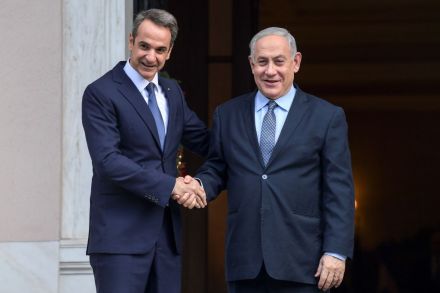
What Europe can learn from Greece’s alliance with Israel

From our UK edition

In the 21st chapter of his magisterial 1948 history of the Second World War, Winston Churchill began with an arresting statement: ‘The Greeks rival the Jews in being the most politically-minded race in the world.’ In his distinctive tongue-in-cheek yet insightful style, he explained:  ‘Wherever there are three Jews there will be found two Prime Ministers and one leader of the Opposition. The same is true of this other famous ancient race, whose stormy and endless struggle for life stretches back to the fountain springs of human thought.’ Seventy-three years after they were written, these racial generalisations may ring dissonant in certain 21st century ears.

Riots in Jerusalem

From our UK edition

In 2015, I was nearly beaten by a far-right mob in Jerusalem. Thursday night’s riot in the holy city reminded me a lot of that evening. Thankfully, this time, nobody died, but that same feeling of tension, anger and violence was in the air. My run in with the mob began at a small vigil to protest against the murder of a family at the hands of Palestinian terrorists. For some reason they decided we were ‘left-wing protesters’ — the police were able to encircle us but could do nothing to stop the bottles being thrown, the spit, the curses. Our crowd of attacks moved on, beating any Arabs they came across.

What is Michael Gove up to in Israel?

From our UK edition

Boris Johnson may have had to cancel his trip to India but that hasn't stopped his colleagues embarking on trips overseas. Michael Gove is in Israel today on a fact-finding mission ahead of his review into immunity vaccine passports. The Cabinet Office minister has been meeting with Israeli politicians, including prime minister Benjamin Netanyahu as well as the foreign minister and health minister.  The trip – which I reported earlier this month – is focussed on what the UK can learn from Israel's Covid response. Discussions are also taking place on a possible green travel corridor between the two countries for when overseas holidays are allowed again.

Why vaccinated Israel is worth a visit

From our UK edition

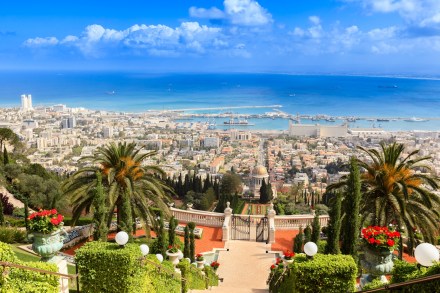
Have you been watching Shtisel during lockdown? Or maybe you are just one of the hundreds (thousands?) of us eyeing vaccination rates and realising the obvious candidate for this year’s summer holiday green list: Israel. Land of mountains, sea, multiple religions, ancient and knotty history, and copious amounts of houmous. Whether the 8,550 square mile country, just a fifth of the width of England and its widest point, can fit us all is another matter but if you are searching for more or less any type of holiday, it’s likely that Israel can provide. Historic city break The Western Wall, Jerusalem (iStock) No prizes for guessing Israel’s most storied city. Legends, tales and parables seem to hum from Jerusalem’s old town walls.

Can Iran help keep King Bibi in power?

From our UK edition

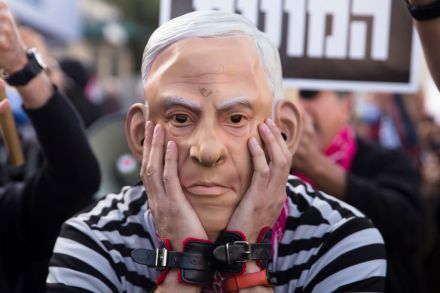
Benjamin Netanyahu has a problem: he doesn’t have sufficient support to form a coalition. With 20 days left to complete this near impossible task, he is desperate; and, when backed into a corner, Netanyahu looks to Iran as his saviour. The timing of the recent explosion in Iran’s Natanz’s nuclear facility – and particularly the fact that Israel has done little to dispel the notion that it was to blame – suggests that the motivation was at least partially political.  This isn't to say the attacks on Iran aren’t normally motivated by interests of national security. The threat of a nuclear-capable Iran is substantial: according to Iran, the Natanz nuclear site holds thousands of advanced centrifuges.

Israel’s shadow war with Iran explodes into ‘nuclear terrorism’

From our UK edition

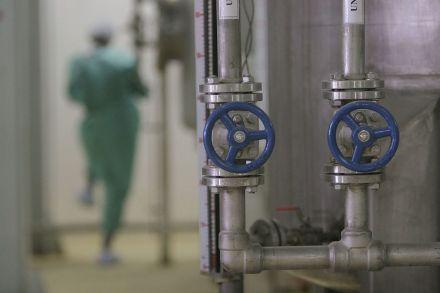
If time flows at an even pace, then history does not. Joe Biden may still be new in the job, but he finds himself at the centre of a war between Israel and Iran in everything but name. After a comparative lull, events are not so much accelerating as whirling around the president, drawing him inexorably in. Last night, Iranian officials reported that the Natanz uranium enrichment plant – a lynchpin of its nuclear programme – had been the victim of what they described as 'nuclear terrorism'. According to US officials quoted in the New York Times, an explosion destroyed the independent power system that supplied the centrifuges for enriching uranium.

The West’s shameful Iranian capitulation

From our UK edition

On a sweltering day in July 2018, German police pulled over a scarlet Ford S-Max hire car that was travelling at speed towards Austria. The driver, Assadollah Assadi, the third secretary to the Iranian embassy in Vienna, was arrested at gunpoint and taken into custody. Although unusual, there was a good reason for detaining the diplomat: Assadi had used his immunity to smuggle a bomb on a commercial airliner from Tehran to Austria, intending to carry out what would have been one of Europe’s worst atrocities in recent years.

Can Boris beat the vaccine passport rebels?

From our UK edition

No prime minister wants to be dependent on the opposition to get the government’s business through the House of Commons. But it is likely that Boris Johnson will be in this position when it comes to ‘Covid status certificates’, other-wise known as domestic vaccine passports. More than 40 Tory MPs have already signed a pledge to oppose them, and the government’s majority is 80. ‘It is just down to Starmer. If he whips against, Boris will lose,’ says one of the leaders of the Tory rebellion. The policy has hit a nerve in the Conservative party. The view in government is that these MPs are unlikely to change their minds. They won’t be assuaged by promises to limit the scheme to mass events or anything like that.

Britain’s vaccine success was supposed to lead to freedom. What happened?

From our UK edition

In November, when cases were surging and a second lockdown was under way, Boris Johnson made a big promise: things might look bleak, he said, but the ‘scientific cavalry’ would arrive. It duly did, with a vaccination programme that became the envy of Europe. The mood of the country lifted. Today, Britain is still on course to become the first country in Europe to vaccinate its way out of the pandemic — and lockdown. The economy can reopen in time for summer: truly a great escape. Science achieved the seemingly impossible. Produced in record time, Covid vaccines are proving more effective than most predicted. In Britain, cases and deaths have fallen by 95 per cent since the latest peak, a stunning descent.

In Israel, vaccine passports are already redundant

From our UK edition

Jerusalem The vaccination centre where I got my jabs was in the cavernous foyer of the Jerusalem Arena, Israel’s largest indoor sports venue. Through the locked glass doors, I could see the seats where my 15-year-old and I spent so many hours cheering on our basketball team. Putting my ear to the door, I could hear the players practising. Last week, we were finally back in the stands after a year’s absence. Fans were allowed in, at quarter of the arena’s capacity. After showing my season ticket, I was then asked for my ‘green pass’, which proves I have been vaccinated. My son, too young for vaccination, had to queue outside for a quick Covid test before joining me.