Israel

Why the post-Cold War era is far from over

In various speeches this year, secretary of state Antony Blinken has declared that “the post-Cold War era is over.” The announcement passes all but unnoticed, eclipsed as it is by crises, such as war in Ukraine and the Middle East, that make Blinken’s point in a starker way. Not so long ago, it was taken for granted that the fall of the Berlin Wall in 1989 had inaugurated a new age. Now, if Blinken is correct, the lifespan of that age hardly exceeds the duration of Tom Brady’s career as a star quarterback. By 1989, the United States had ascended to the status of sole remaining superpower. No challenges to its global primacy — political, military, economic or cultural — were visible anywhere on the horizon.

post-Cold War era
jewish

Indian Exodus: the Jewish population exits after 2,000 years

In December the Gate of Heaven synagogue in Thane, a city that links the peninsula of Mumbai with the Indian mainland, will light the Chanukah menorahs as it has annually since its opening in 1879. Among the initial members were Jews whose ancestors may have arrived in India during the time of King Solomon, when Middle East trade routes were established to exchange iron, peacocks, gems, ginger and other spices. Over the many intervening centuries, waves of Jewish immigration have washed up on the Indian shores from different ends of the earth. The varying groups came with separate traditions and practices and ways of living, but they shared prayers and faith, a distinct identity in a country where identity carries great importance.

The shrinking lifespan of the college president

Twenty-five years ago I published an essay titled “Dogfish.” It was not about the little sharks that skim along the bottom of the Atlantic and Pacific coasts and only rarely end up on the American dinner table. It was rather a fanciful way to draw attention to the brevity of the average tenure of the college president. Back then the average president served 6.7 years. The spotted dogfish, by contrast, was believed to live almost three times as long. A lot has changed in the intervening quarter century. For one thing, it is now believed that the natural lifespan of the dogfish is thirty-five to forty years, though some say eighty.  Meanwhile the average term of a college president has shrunk to 5.9 years.

college president

Portrait of the week: Met in a muddle, King’s Speech and a wine production slump 

From our UK edition

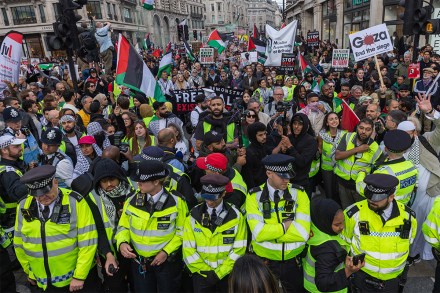
Home Rishi Sunak, the Prime Minister, said of pro-Palestinian demonstrations: ‘To plan protests on Armistice Day is provocative and disrespectful, and there is a clear and present risk that the Cenotaph and other war memorials could be desecrated.’ The Metropolitan Police urged organisers of a pro-Palestinian march on 11 November to postpone it, but they refused. The Prime Minister then said he would hold the Metropolitan Police Commissioner ‘accountable’ for his decision to greenlight the ‘disrespectful’ demonstration. Imran Hussain MP left the Labour front bench over Sir Keir Starmer’s opposition to a ceasefire in Gaza, and Afrasiab Anwar, the leader of Burnley council, and ten councillors left the Labour party.

Benjamin Netanyahu is increasingly seen as Israel’s curse

From our UK edition

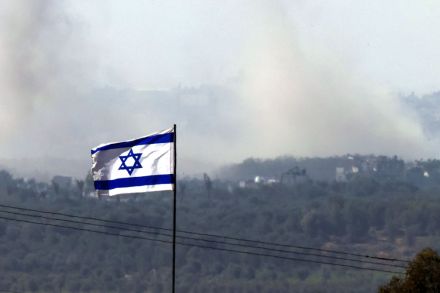
Jerusalem On Tuesday, I was driving down to an Israeli army headquarters on the border with Gaza as a massive convoy of police cars and black bullet-proof limousines forced me onto the side of the road by the town of Ofakim. In Israel, only one man travels in a convoy that large.  It was 7 November, a month after the Hamas attack on Israeli communities in which 1,400 were murdered and the war between Israel and Hamas in Gaza began. Even during peacetime the Prime Minister’s movements are shrouded in secrecy until he is safely back in one of his homes or offices.

Alan Dershowitz: when Israel must consider the nuclear option

Professor Alan Dershowitz is one of Israel’s most prominent defenders outside the Jewish state. He has just written — in record time — a book about the events of October 7: War Against the Jews — How to End Hamas Barbarism. It will be published next month and will argue, among other things, that the Hamas attack “has required Israel to consider its nuclear option as a last resort to assure its survival.” I spoke to Professor Dershowitz and asked him first, about another of the book’s arguments, that there should be no absolute distinction between civilians and combatants in Gaza, but instead “a continuum of civilianality.” "It existed in Nazi Germany," he said.

dershowitz nuclear option

White House announces effort to counter Islamophobia as antisemitism rises

War is raging in Israel and Kamala Harris is holding down the home front with the same political aplomb she handled the border crisis — that is to say, poorly. With thousands of lives lost in Israel and an increasing number of antisemitic attacks in the US, Harris is proud to announce the White House's new program to target... Islamophobia.   “Taking on hate is a national priority. Today, @POTUS and I are announcing the country’s first National Strategy to Counter Islamophobia. This action is the latest step forward in our work to combat a surge of hate in America,” Harris shared in a post on X Wednesday evening.   https://twitter.

kamala harris islamophobia

Does Joe Biden have an Israel problem?

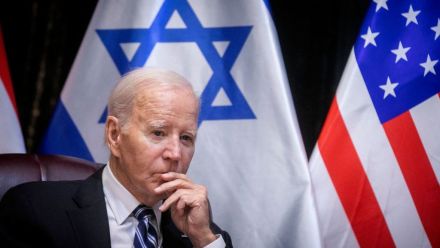
Welcome to Thunderdome, where for the first time some cracks are showing in the emphatic Democratic support for Joe Biden. Even with his many widely apparent defects as a candidate and a president, Biden’s support from strong Democratic constituencies has remained largely consistent throughout his tenure. The loss of Independent support at this juncture is rationalized away by many Democrats, who feel that once Donald Trump is presumably the GOP nominee, they’ll be able to get all those leaners in the center back in the fold. But now, thanks to his policy choices on Israel, Biden is suffering a major blow among a significant Democrat constituency made more important given its geographic concentration in Michigan, Ohio and Pennsylvania: Arab Americans.

israel

The world is a mess. Why not find escapism through wine? 

From our UK edition

In most children’s stories, the good characters live happily ever after. Works suitable for older readers tend to greater realism. Even ‘Gaudeamus Igitur’, that most joyous of drinking songs, presses the case for carpe diem. ‘Get stuck in to your pleasures laddie,’ it seems to be saying, ‘before it is too late.’ With the world in such a mess – less carpe diem than dies irae – the case for a vinous route to escapism might seen persuasive. Housman seemed to think so. ‘Could man be drunk for ever,’ starts one poem, then all would be well. Not for long. ‘But men at whiles are sober/ And think by fits and starts/ And if they think they fasten/ Their hands upon their hearts.

What did Hamas think was going to happen?

From our UK edition

Much misfortune the woebegone couldn’t have seen coming: a raging fire in the house next door that spreads to yours. The invention of some kooky technology called ‘the internet’ that puts your travel agency out of business. Yet other calamities are foreseeable. If you suddenly stop filing tax returns without a good excuse – like, dying – it’s a virtual certainty that the all-seeing computer will come after you. So when compounding fees and interest leave you skint, our sympathies are apt to be scant. What did you think was going to happen?

Letters: policing pro-Palestinian rallies isn’t an exact science

From our UK edition

Call for common justice Sir: Rod Liddle’s piece on the true desires of Palestinians was rare in its acceptance of the complexity of aspiration (‘What Hamas promised its electorate’, 28 October). People cleave to those who stand for their best hopes. They voted for Hamas. Rod ends saying only Israeli Arabs in his experience did not loathe Jews. Why would they? Presumably being the right side of the ‘peace’ wall, they had no fear of losing their birthright to illegal settlers acting in defiance of UN resolutions with official acquiescence. If the Israeli rule of law could have extended to the occupied West Bank Arabs, then there would be no indefensible double standard. It is clearly a missed opportunity and did not need a ‘two state solution’, just common justice and sense.

Democrats and the media unite against new GOP speaker

It took a few weeks, but Republicans got their act together and did the impossible: elected a new speaker of the House, Louisiana’s Mike Johnson. Johnson and his team have an incredible amount of work ahead of them — from funding the government to fundraising for House Republicans. What’s particularly noteworthy to me in the hours ahead of Johnson becoming speaker is the all-out effort Democrats and their media mouthpieces are making to define him — mostly by spreading provable misinformation.  Johnson’s Democratic counterparts on the Judiciary Committee immediately lashed out at him for being a member of the Freedom Caucus, which is an outright lie.

Keir Starmer’s Israel problem is growing

From our UK edition

13 min listen

Today, Keir Starmer held a long meeting with some Muslim Labour MPs over their concern on his stance on the Israel-Hamas conflict, first ignited by comments he made on LBC which seemed to justify Israel's electricity and water blockade of Gaza. The Labour leader has made huge progress to move his party on from the reputation of anti-Semitism forged during the Corbyn era – but can he find a middle way to please all wings of his party on this deeply emotive issue? Cindy Yu talks to Katy Balls and Isabel Hardman. Produced by Cindy Yu.

Portrait of the Week: Tory by-election misery, ‘jihad’ chants and emergency aid

From our UK edition

Home Rishi Sunak, the Prime Minister, on his return from Israel (where he spoke with Benjamin Netanyahu, the Prime Minister) and to Saudi Arabia (where he spoke with Mohammed bin Salman, the crown prince), told the House of Commons: ‘Hamas is not only a threat to Israel, but to many others across the region. All the leaders I met agreed that this is a watershed moment. It’s time to set the region on a better path.’ Twelve Britons had died in the Hamas attack, and five were missing. Of the blast at Gaza’s al-Ahli hospital on 17 October, which killed numbers of people into the hundreds, he said it was likely to have been caused by a missile fired from within Gaza. He announced £20 million extra in emergency aid to Gaza.

What Hamas promised to its electorate

From our UK edition

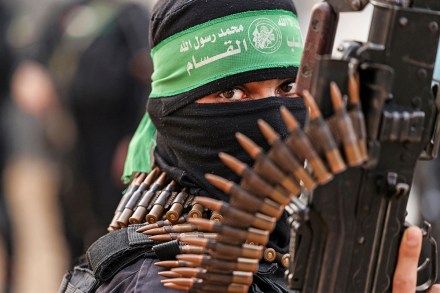
Things you do not hear very often, number one: a pro-Palestinian protestor denouncing Hamas for the barbarity of its incursion into Israel on 7 October, appalled at the savagery of those attacks upon children, grandmothers, etc. It may seem as if, in saying this, I am stating the obvious – because support for that pogrom was, I would suggest, strong among some of those carrying Palestinian flags on marches through London and elsewhere. Six Arab language journalists were suspended by the BBC when it was discovered that they retweeted messages glorifying in that day’s murder. They were not members of Hamas. Ordinary Palestinians interviewed, cowering in the rubble of Gaza, were not quoted condemning the attacks which led directly to their present misery.

Britain should back a ceasefire

From our UK edition

Six weeks ago, I invited Ahmed Alnaouq, a young diplomat who recently joined the Palestinian mission in London, to stay for a cricket weekend in Wiltshire. He resisted all entreaties to play the game but was in every other way a delightful guest. On Sunday, Ahmed learnt that his family in Gaza has been wiped out by an Israeli bomb. His father, siblings, and more than 15 nieces and nephews had all been killed. Twenty-three dead, no injuries. Another brother was killed by an Israeli bombing in 2014. His mother died three years ago because, he says, Israel denied her medical treatment. When I sent him a text message saying that he and his family were in my thoughts and prayers – it felt hopeless, but what else can one say? – he replied: ‘My family is gone Peter. All of them.

Why I don’t trust the BBC’s Trusted News Initiative

From our UK edition

You almost certainly haven’t heard of the Trusted News Initiative (TNI), although you probably should have. It’s a BBC-led consortium of the world’s most powerful news, social media and technology companies that seeks to cleanse the internet of ‘disinformation’. It carries out this mission by doing its best to discredit sites that challenge the prevailing narrative on topics like lockdowns, Covid vaccines, electoral fraud, the Ukraine war and climate change. It was founded in 2019 by Jessica Cecil, a senior BBC executive who, in 2021, was part of the Counter Disinformation Policy Forum, a shadowy group of ‘experts’ convened by the Department for Culture, Media and Sport to monitor criticism of the government’s pandemic response.

Homer’s take on theology

From our UK edition

The Hamas charter does not mince its words: ‘The Prophet, Allah bless him and grant him salvation, has said: “The Day of Judgement will not come about until Moslems fight the Jews (killing the Jews), when the Jew will hide behind stones and trees. The stones and trees will say O Moslems, O Abdulla, there is a Jew behind me, come and kill him.”’ A return to the ancient pagan gods would surely be an improvement, but the modern world adopts the Hamas line. Consider the current deities of the bigots whose opponents, hiding behind a clearly sacrilegious belief in rational argument, must be condemned to eternal cancellation. The Greek and Roman gods of myth were far more accommodating. Take Homer’s Iliad and Odyssey, the first works of what we call western literature (c.700 bc).

No one should trust the camera in the age of AI

From our UK edition

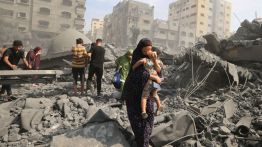
This war is being fought with pictures more than words. The poignant shots, often selfies, of families, children, even babies, who were to become victims of Hamas butchery, the wailing mothers and children on stretchers in Gaza, the missile strikes and collapsed concrete buildings. We know politicians on all sides lie, but photography is a mechanical process; these pictures must, surely, be the truth? Almost all these photos have been taken with mobile phones. To a rough approximation, everybody now has a smartphone. There are said to be seven billion smartphones in use around the world – there are only eight billion people. (Sales of what we used to know as cameras have crashed by 85 per cent.