Israel

How Adam Brody ruined Nobody Wants This

From our UK edition

I usually stay away from American TV shows about Judaism or Jewish people, because it is hard to breathe amid all the kitsch, cliché or, in the case of Curb Your Enthusiasm, the self-regarding sourness. But Nobody Wants This, the buzzy Netflix series about an arch-gentile sex podcaster falling for a young groovy rabbi in progressive California (based on the true story of its creator, the Jewish convert Erin Foster), managed to be both of this ilk and different, better. We are face to face with coastal Jewish America’s unbelievable divorce from their own reality Despite all the cringe-worthy Jewish jokes and self-consciously performed neuroses, I watched the first series in September 2024 and found myself charmed.

Britain is missing out by banning Israeli settler wine

From our UK edition

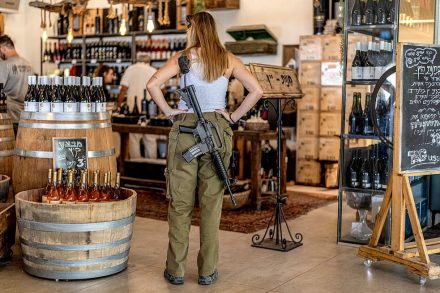
In many ways, it was like a winery somewhere remote in Spain. Dry, hot air, even in October. Scrubby, dusty hillsides, apart from the green of the vine fields. But the main building looked more American. Even the modified AR-15 above the bar didn’t seem out of place. The tension with the Arab population is evident in what Katsof says But I was not in Spain, nor Texas. Settlers Winery in Esh Kodesh is, depending on who you talk to, either in the Occupied West Bank or Samaria. Founded by Aaron Katsof, a reserve major in the IDF, the winery’s logo features boots on the ground. Katsof tells me this is because they ‘have to have boots on the ground to make a difference’, to establish ‘where the borders will cross’.

Irish football is suffering from a Palestinian purity test

From our UK edition

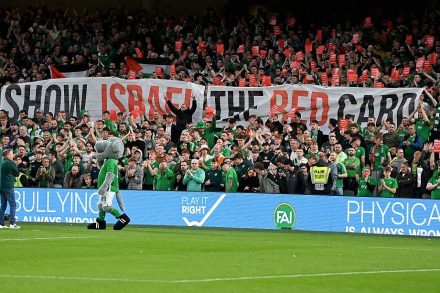
How did Ireland get here? As Ireland's footballers huddle in a Hungarian hotel deciding whether to play Israel tonight, it is worth asking who put them there. The quiet city of Debrecen in eastern Hungary has become the centre of the footballing world. Outside the team hotel, the world's press is camped, cameras trained on the doors. Inside, Ireland's team is locked in a meeting with FAI officials, deciding whether to play a match against Israel in the UEFA Nations League. Nobody outside quite knew what was going on. Training was called off with barely a moment's notice. The pre-match press conference, a UEFA obligation, was postponed by WhatsApp message. Then came the reports: the team was split. Gavin Bazunu and four others did not want to play.

Will Hamas really disarm?

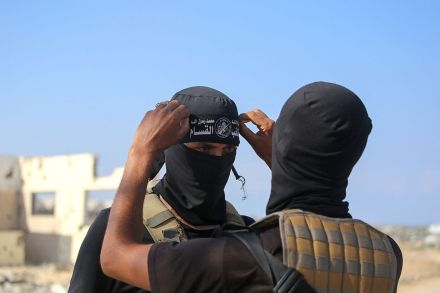
No one imagined that Hamas would voluntarily hand over its weapons and turn to politics and peace in the Gaza Strip. Even when President Trump announced his Board of Peace and 20-point plan toward a settlement to end the war with Israel, the sticking point, every analyst insisted, would be the disarmament of an organization designated a terrorist group by the United States, Britain, the European Union, Australia and many other nations. It’s unlikely that Hamas will cooperate unless Israeli troops withdraw as per the agreement Now, after months of negotiations – involving Trump’s two Middle East envoys, Egypt, Qatar and Turkey – and without any fanfare, the seemingly impossible has been achieved.

hamas

Can Reform see off the threat from Restore?

Nigel Farage has always prided himself on being able to see off any threat from his right flank. But now a new force has emerged in the form of his ex-colleague Rupert Lowe. When the two Reform MPs fell out 15 months ago, friends shared memes of Farage’s past fallen rivals ascending to heaven. “Come and join us, Rupert!” they exhorted. Instead, Lowe fought back, setting up his own party, Restore Britain. In the Makerfield by-election on June 18, one poll puts Restore on 7 percent – enough to stop Reform and hand the seat to Labour’s Andy Burnham. Restore’s strategy is simple: use Farage’s playbook against him. Like Farage, Lowe has put his faith in social media, building up a noisy following that can then be turned into a campaigning force.

restore

Israel won’t stop in Lebanon until Hezbollah is crushed

Direct US-brokered talks between Israeli and Lebanese representatives are set to take place in Washington this week. The Israeli delegation will be headed by Yehiel Leiter, Jerusalem’s ambassador to the US. Lebanon will be represented by Nada Hamadeh, the Lebanese ambassador to Washington. The State Department will host the negotiations. In his statement on Thursday announcing the talks, Israeli Prime Minister Benjamin Netanyahu framed their purpose as "disarming Hezbollah and establishing peaceful ‌relations between ⁠Israel and ⁠Lebanon." Lebanese Prime Minister Nawaf Salam, for his part, expressed his hope that Beirut should become a "demilitarized city.

lebanon

Why Israel is pushing further into Lebanon

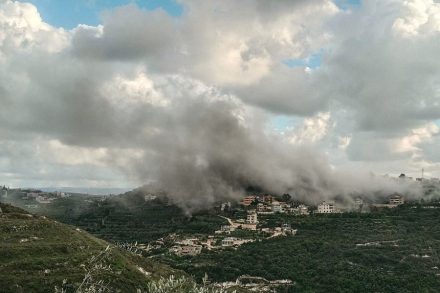
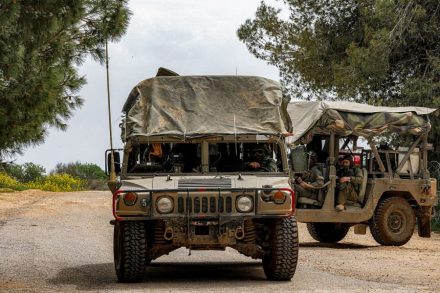
Israel launched a limited ground operation in southern Lebanon this week, intended to expand the de facto buffer zone which it has maintained along the border since the ceasefire of November 2024. At that time, Israel held control of five positions on the Lebanese side of the border. In response to Hezbollah’s decision to re-engage with Israel in the context of the current conflict between Jerusalem and Tehran, the IDF is pushing further into Lebanon.   Israel is now bombing Hezbollah targets throughout the country. Ground forces, meanwhile, are cautiously pushing forward. According to Israeli media reports, the IDF’s goal is to establish 13 additional positions north of the border.

Lebanon

How Tucker beat Huckabee

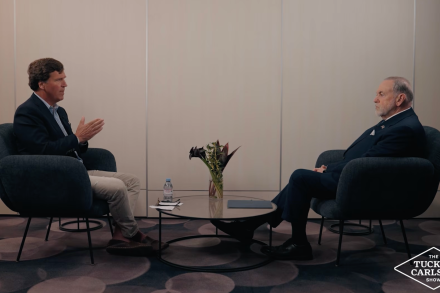
Earlier this month, when Tucker Carlson was in Jordan interviewing Levantine Christians, the US ambassador to Israel Mike Huckabee called out the pundit with whom he’s been engaged in a public online feud for some time: “Instead of talking ABOUT me, why don’t you come talk TO me? You seem to be generating a lot of heat about the Middle East. Why be afraid of the light?”  That, we can now see, was a bad mistake on Huckabee’s part. Carlson took up the offer, and, after some rather fraught back-and-forth about his travel arrangements, interviewed Huckabee at the private terminal at Ben Gurion Airport a few miles outside Tel Aviv.

The US plan for Gaza is absurd

Donald Trump’s strangely artificial Board of Peace event in Davos on Thursday looked like a Hollywood rendering of an international summit. Everything was too slick, faintly uncanny. Like an AI-generated image, it was photo-real yet failed the most basic human glance test. Too perfect. No wabi-sabi. The first tell was visual: the set, complete with a crisp new institutional logo: a globe on a shield, flanked by olive branches. It carried the unmistakable whiff of Grok or ChatGPT, but the strangeness went deeper than design. The speeches themselves were weirdly messianic and utopian.

gaza