Isis

Trump’s sudden Syria pullout reveals his administration’s chaos – and misguided priorities

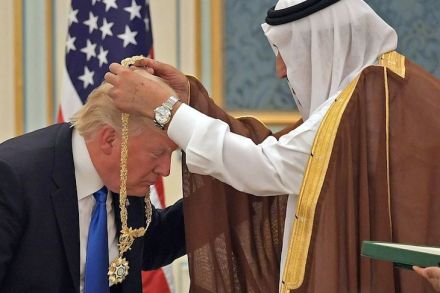
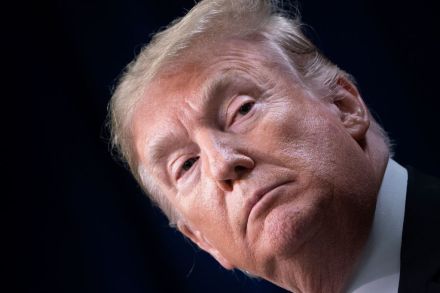
President Donald J. Trump’s surprise announcement on Wednesday that he is withdrawing the US military from Syria has shaken the Washington, DC, foreign policy establishment like a thunderclap. While there have been nods of approval from skeptics about American interventionism in the Middle East, that’s a rare breed inside the Beltway. Instead, DC foreign policy mavens, most of whom espouse neo-flavored beliefs (whether neoliberal or neoconservative) reacted with derision and horror to Trump’s proposed withdrawal from Syria’s terrible fratricide, ongoing for almost eight years. These media and think-tank denizens, once derided as ‘the Blob’ by Obama’s White House, have spoken with one voice, and it’s sharply critical of the president.
donald trump syria pullout

Hunter, scholar, boaster, dreamer

From our UK edition

The Assyrians placed sculptures of winged human-headed bulls (lamassus) at the entrances to their capital at Nineveh, in modern Mosul, to ward off evil. The mighty lamassu to the right of the Nergal Gate had been on guard for some 2,700 years when Isis vandals took a drill to it in 2015 and blew away its face. Today a copy, crafted out of date syrup cans, stands on the Fourth Plinth in Trafalgar Square. It wears the oblong beard and proud look of the Assyrian kings. The original sculpture dated to the time of Sennacherib, who ruled Assyria from 705 to 681 BC, and transformed Nineveh into a magnificent metropolis. No stranger himself to violent desecration, he made his eldest son king of Babylon, but went on the rampage when the Babylonians rebelled and had the ruler dispatched.

The true face of Islam

From our UK edition

In Britain today, Islam in its original essence is not to be found in mosques or Muslim schools, but on the first floor of the British Museum. There, the Albukhary Islamic gallery, newly opened to the public, dazzles visitors and defies every certainty promoted by today’s hardline Muslim activists. This spectacular exhibition of objects from across continents and centuries shows us a history of continuity of civilisations, coexistence of communities. It offers a compelling corrective to current popular notions of Islam as an idea and a civilisation. Too often, we assume that Islam’s arrival on the world stage involved some violent break with the past that brought forth a new Muslim civilisation.

And I think to myself, not a wonderful world

From our UK edition

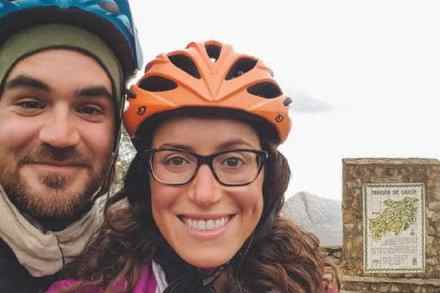
The story of Jay Austin and Lauren Geoghegan is an interesting one, I think, for what it tells us about the right, the left and human nature. These two youngish people — both 29, one of them a vegan, the other a vegetarian — jacked in their wonkish jobs in Washington DC in order to experience the world in all its glory. Their itinerary included dangerous areas — or at least areas deemed dangerous by western governments with an axe to grind. As Jay put it: ‘People, the narrative goes, are not to be trusted. People are bad. People are evil. I don’t buy it. Evil is a make-believe concept we’ve invented to deal with the complexities of fellow humans holding values and beliefs and perspectives different than our own... By and large, humans are kind.

The tragedy of Syria: how protest spiralled into savagery

The fateful day five years ago began like any other for the family. A pot of black tea with cardamon seeds sat on the table as Sara roused her youngest children and prepared them for school. But there were tiny clues. Leila, just turned 16 and wearing a floor-length dress, unusually offered to help. Her older sister Ayan appeared from her bedroom with a suitcase, which she said was being lent to a friend. Before they left, Leila whispered to each of her parents that she loved them. The pair did not return after school. Sara tried to call them, but their phones were switched off. She knew they were good girls, however; it was their brother, slipping away from his Somali heritage, that was her source of concern.

Millions of shattered lives

The fateful day five years ago began like any other for the family. A pot of black tea with cardamon seeds sat on the table as Sara roused her youngest children and prepared them for school. But there were tiny clues. Leila, just turned 16 and wearing a floor-length dress, unusually offered to help. Her older sister Ayan appeared from her bedroom with a suitcase, which she said was being lent to a friend. Before they left, Leila whispered to each of her parents that she loved them. The pair did not return after school. Sara tried to call them, but their phones were switched off. She knew they were good girls, however; it was their brother, slipping away from his Somali heritage, that was her source of concern.

How can any intelligent person have faith?

From our UK edition

Ten years ago, I had a strange debate about faith with a famous Jesuit and an agnostic psychoanalyst in a monastery on a cliff-top in Syria. At the time I thought I’d made some valuable additions to the discussion. The notes I took then record my own contributions with horrible precision. Looking back on it, I was just an observer. The main players were Father Paolo Dall’Oglio, an Italian priest who’d made his life in the Middle East, and Bernard S., a highly regarded Jungian analyst: neat, Swiss, troubled. The scene of this chat was Deir Mar Musa, a 6th-century monastery that Fr Paolo had restored, perched high on a ridge in the foothills of the Anti-Lebanon Mountains.

Bring jihadis to justice

From our UK edition

At first sight, the evidence presented in David Anderson’s report into the four terror attacks committed between March and June sounds damning. The security service, MI5, had had three of the six attackers on its radar. The Manchester bomber Salman Abedi, who murdered 22 people, had come to the attention of MI5 in 2014. As recently as the beginning of this year, he had been implicated in criminal activity, which MI5 officers now admit might have led to his attack being thwarted had it been investigated. Khuram Butt, one of the attackers at London Bridge, had been under investigation for two years, yet still he and his two accomplices were allowed the space to plot and carry out their attack, in which they murdered eight people.

Portrait of the week | 30 November 2017

From our UK edition

Home The engagement was announced of Prince Henry of Wales, aged 33, and the Los Angeles-born Meghan Markle, an actress aged 36. They are to marry at St George’s Chapel, Windsor, in May. Ms Markle scotched rumours that she might be a Catholic, declaring herself a Protestant preparing to be baptised into the Church of England and receive Confirmation before the wedding. Though Ms Markle is divorced, she has been allowed to marry in a church service. The couple told the broadcaster Mishal Husain in a televised interview that they were attempting to cook a chicken one day last month when the prince went down on one knee to propose. During the interview, Prince Harry said: ‘The corgis took to you straight away.

The next Iraq war

From our UK edition

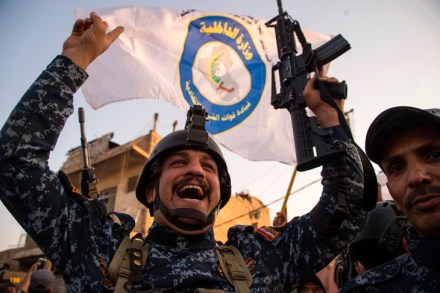
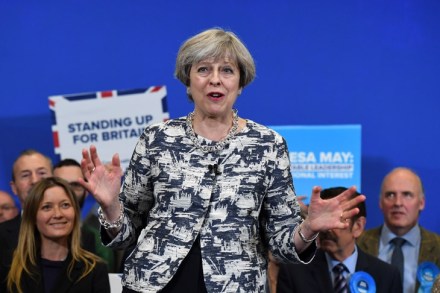
After the most intensive street-by-street combat since 1945, Isis’s so-called caliphate is no more. Last weekend, the Iraqi government won what should be the final battle and is now preparing to say that the war is ended. The jihadis still have the odd redoubt — but they have been forced out of Mosul and Raqqa after an intensive coalition campaign led by America and Britain. Donald Trump is unlikely to emulate his predecessor-but-one by appearing in front of a banner saying ‘Mission Accomplished’. Theresa May probably won’t deliver such a statement either. Indeed, the war against Isis has barely been mentioned by either politician, even though our involvement has been larger than expected.

What to do about returning jihadis

From our UK edition

In normal times, the reported return of 400 Isis fighters to Britain would be the biggest story out there. But with policymakers preoccupied by Brexit, and the press examining the sexual culture of Westminster, this news has not received the attention it deserves. The return of these fighters has profound implications. The security services are struggling to keep up with all the possible terrorists at large. Notably, Andrew Parker, the director-general of MI5, has warned that plots are being devised at the fastest rate he can remember in his 30-year career. Though he stressed that the security services have prevented seven attacks since March, he also said they cannot foil every effort. This is simply down to capacity.

Accept this as the new normal? Never

From our UK edition

Not long after the Parsons Green Tube bombing, another of those viral, defiant-in-the-face-of-terror cartoons started doing the rounds. It was quite witty — a section of Tube map, redrawn in the shape of a hand giving those pesky terrorists the middle finger. But it wasn’t remotely funny. In order for humour to work it has to spark a feeling of amused recognition. This did the opposite. It said something that all but the most deluded among us know to be a complete lie.

‘Kurdexit’ would make Brexit look strong and stable

From our UK edition

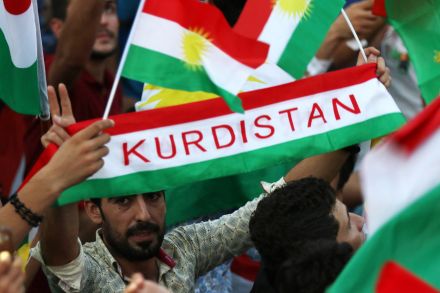
Last week, American, British and UN diplomats tried to persuade the Kurds in Iraq to delay their referendum on independence. This high-profile intervention came amid a swirl of fiery rhetoric from other actors, especially Iran. The diplomats haven't convinced the Kurdistani leadership, however, and so the vote will happen a week today – barring some last minute deal. The diplomats argued that the referendum will divide those fighting Daesh and destabilise the region. The Kurds argued that political divisions at home or with Baghdad have not hampered fighting Daesh. Besides, Kurdistani leaders are seeking a popular mandate for negotiating an amicable divorce with Baghdad over five or even ten years, rather than a sudden unilateral declaration of independence.

Straight to hell

From our UK edition

No, The State (Channel 4) wasn’t a recruiting manual for the Islamic State, though I did feel uneasy about it throughout the four episodes. The fundamental problem is this: if you’re going to make a watchable drama about bad people doing terrible things, you inevitably have to humanise them. And from there it’s just a short step to making them sympathetic. Peter Kosminsky’s drama followed four British Muslims to Syria to join IS.

Islamic State has recreated The Handmaid’s Tale

From our UK edition

Well, don’t think there’s much milage in the charge against Peter Kosminsky’s drama about IS, The State,  that it glamorises that outfit, do you? It was about as grisly a depiction of the horrors of IS as is commensurate with British viewing standards. So, in this account of four British recruits to IS broadcast this week, we didn’t get the rape of Yazidi women and their nine-year-old daughters but we got the slave market where the jihadists bought and sold them – there’s a secondary market, by the way, in these women in the Middle East. We didn’t get homosexuals tossed off the top of tall buildings, but we did get a local fearing his life lest it happen to him.

Don’t forget the Yazidis

From our UK edition

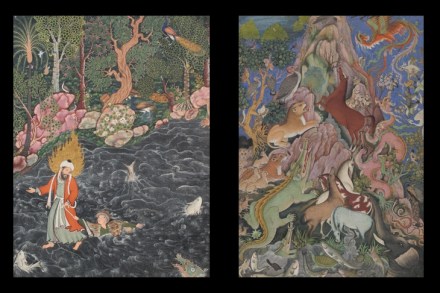
As the floodwaters subsided, the Ark drifted across northern Iraq. Finally, with a crunching jolt, it hit dry land. Its timbers had scraped the peak of a mountain range called Sinjar. Water began to pour in. Fortunately, a black serpent, its coils as thick as an arm, moved to plug the breach. The Ark did not sink. Noah, his family, and all the various animals on board survived to repopulate the earth. This story, so familiar, so strange, can be seen illustrated in a shady courtyard that also boasts, just for good measure, the very spot where Adam is claimed to have been fashioned from dust. Lalish, a magical compound of domes, towers and stairways, stands in a valley in Iraqi Kurdistan.

Hope in Mosul

From our UK edition

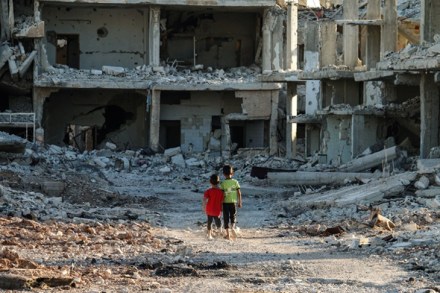
For the title of world’s most benighted city, Mosul takes some beating. Liberated from Saddam Hussein by US forces in 2003, the ancient Assyrian town was pummelled by years of insurgency before being seized by Isis in 2014 and its population subjected to militant theocracy. It has no water supply, no infrastructure, it has been gutted by occupation and there are some 850,000 displaced citizens. The Iraqi government’s long and bloody battle to regain what remains of Mosul culminated this week in a visit by Prime Minister Haider al-Abadi to declare victory. Many will find it hard to see anything to celebrate, given the destruction that has been wrought in the nine-month campaign to free the city from Isis control.

May needs her party

From our UK edition

As if we needed reminding, this past week has shown that the Islamist threat is a truly global problem. In the space of a few days, Isis claimed responsibility for attacks on London Bridge and Borough Market; and elsewhere, for the attack on the Iranian Parliament and the tomb of Ayatollah Khomeini in Tehran. It would be hard to think of more diverse targets than drinkers at London pubs on a Saturday night and the tomb of the theocratic Shia cleric who inspired the 1979 Iranian revolution. Yet for Isis there is logic. All are enemies: infidels, heretics, apostates. The Tehran atrocity shows again that what we are witnessing is a civil war within Islam. To the Sunni militant, the enemy could be a girl at a music concert or a worshipper at a Shia mosque.

The killing God

From our UK edition

On 6 July 1535, the severed head of England’s former lord chancellor, Sir Thomas More, was carried across London Bridge to the gatehouse on the southern bank. There it was parboiled and set on a spike. Another head, that of the bishop and theologian John Fisher, was removed to make way for it, and thrown into the Thames. Both men, rather than accept Henry VIII as Supreme Head of the Church of England, had willingly embraced martyrdom at the king’s hands. Both men would end up canonised by the Catholic Church. Amid the violent convulsions of the Reformation, nowhere bore more public witness to the willingness of men to kill and be killed in the cause of God than London Bridge. Time, though, would see the intensity of these religious passions fade.

High life | 1 June 2017

From our UK edition

I feel like an obituary writer, what with Nick Scott, Roger Moore, Alistair Horne — all great buddies — and now my oldest and closest friend, Aleko Goulandris, dead at 90. Mind you, they all had very good lives: plenty of women, lots of fun, accomplishments galore, and many children and grandchildren. And they all reached a certain age — what else can you ask of this ludicrous life of ours? Well, I won’t be writing about the high life this week, but scum life instead. And I’ll tell you why: those innocent young children slaughtered by that Islamist scumbag in Manchester, that’s why.