Ireland

As a gay atheist, I want to see the church oppose same-sex marriage

From our UK edition

I see. So now we have the result of the Irish referendum on gay marriage, and now we’ve heard the Roman Catholic Church’s chastened response, we shall have to rewrite Exodus 32, which (you may remember) reports Moses’ (and God’s) furious reaction to the nude dancing and heretical worship of Moloch in the form of a golden calf: the Sin of the Calf in the Hebrew literature. Moses had come down from Mount Sinai bringing God’s commandments written on two tablets of stone.

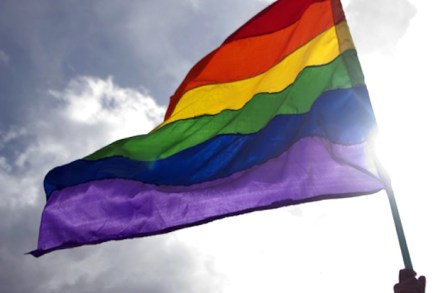
Gay marriage will split the Catholic Church

From our UK edition

Ireland, for so long the most overtly Catholic state in Western Europe, has voted for gay marriage by a stupendous margin – 62 per cent. Never before has a country legalised the practice by popular vote. It would be naive to ask: how could this happen? Hatred of the Church is one of the central features of modern Ireland, thanks not only to the paedophile scandals but also to the joyless quasi-Jansenist character of the Irish Church, which was handed complete control of education in the Free State after partition in 1922. (Many of its priests were outstandingly holy and charitable, but you'll get your head bitten off if you suggest that in today's anti-clerical republic.) Anyway, I don't want to focus on Ireland.

Ireland’s gay marriage vote was never an equal contest

From our UK edition

In more ways than one it’s impossible to be heard above the din right now in the wake of the Yes vote in Ireland on gay marriage. There’s a special noise that goes with an orgy of self-congratulation, a roar of mutual approbation, and it drowned everything else out in Dublin as the results came in today. Like rugby, only more triumphalist. Actually, I was watching the scene from the Sky studio in Millbank, where my interlocutor in central Dublin, Patrick Strudwick, a journalist and activist, was appearing on a screen on the streets and had to shout over the crowd to make himself heard, to repeat, over and over again, 'It’s a victory for love, for equality, for human rights'.

The free market is still the greatest force for reducing prejudice

From our UK edition

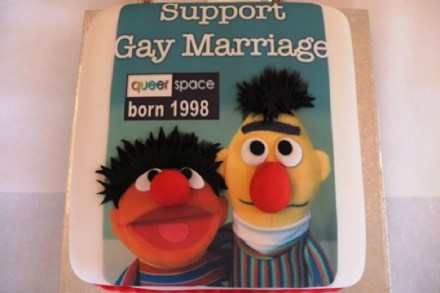
I suppose if you'd told someone in Northern Ireland 25 years ago that the most contentious issue come May 2015 would be a gay cake they would have taken that future. If you'd gone back another 300 years and told John Locke he might not be so pleased, however, to find that his principle of conscience had been so abused by the people who claimed to follow his philosophy. The Ashers refused to bake a cake that proclaimed a message in support of same-sex marriage, which they do not support, and therefore have been found to have discriminated. Yet no one would object to a baker who refused to bake a cake with the words 'Save Ulster from Sodomy' on it, or something otherwise lewd or offensive (or perhaps one of the Prophet Mohammed – now there’s an idea).

The ‘gay cake’ case highlights a new intolerance developing in Ireland

From our UK edition

In what sense, precisely, has a bakery in County Antrim contravened discrimination law by refusing to ice a cake with a gay marriage slogan on it? The 'gay cake' case does have the useful function of identifying the partisan and idiot character of the Equality Commission, in this case, of Northern Ireland, which acted for gay rights activist Gareth Lee, the offended customer, whose slogan was repudiated by Ashers Bakery. The cake itself is silent on the matter right now but it was, I gather, available to be consumed by any customer of Ashers Bakery, regardless of race, religion or sexual orientation. [caption id="attachment_9131252" align="alignright" width="221"] The image the customer wanted on the cake[/caption] And that’s just the point.

Ireland’s ‘tolerant’ elite now demonise anyone who opposes gay marriage

From our UK edition

If you think it’s tough being a Tory voter in 21st-century Britain, try being a ‘No’ voter in this week’s Irish referendum on gay marriage. Sure, Twitterati sneering at all things right-wing might have turned some Conservatives into Shy Tories, hiding their political leanings from pollsters. But in Ireland, to be a naysayer in relation to gay marriage is basically to make yourself a moral leper, unfit for polite society, ripe for exclusion from respectable circles. Irish opponents of gay marriage aren’t only encouraged to feel shy — they’re encouraged to feel shame. On Friday, the Irish electorate will be asked to vote on the redefinition of marriage as a relationship involving ‘two persons without distinction as to their sex’.

All the pomp of family life

From our UK edition

The Green Road is a novel in two parts about leaving and returning home. A big house called Ardeevin, walking distance from an unnamed town on the coastline of County Clare, is home to the Madigan family. At the centre of the family is Rosaleen Madigan, the matriarch: ‘A woman who did nothing and expected everything. She sat in this house, year after year, and she expected.’ The novel begins with the thwarting of one of Rosaleen’s expectations. She has taken to her bed in 1980 after Dan, the eldest of her four children, has announced that he is going to become a priest. Each of the first four chapters focuses on a Madigan sibling — Hanna, Dan, Constance, Emmet — and maps the escape routes they take out of rural Ireland in adult life.

I don’t trust these latest obesity predictions from the nanny state

From our UK edition

Seventy-four per cent of men and 64 per cent of women in Britain will be overweight or obese by 2030, or so the newspapers have reported today. In Ireland, the situation will be still worse, with the obesity rate amongst women predicted to rise from 23 per cent today to 57 per cent (!) in 2030, with 89 per cent of Irish men overweight. The research in question was presented at a conference in Prague today but remains unpublished so we do not know how its authors arrived at these figures. A representative of the World Health Organisation says, 'the data needs to be taken with extreme caution', but this advice has not been taken by the writers of such headlines as 'Almost everyone in Ireland will be overweight by 2030'.

Cheap shots and uncosted bribes are drowning out vision, wisdom and optimism

From our UK edition

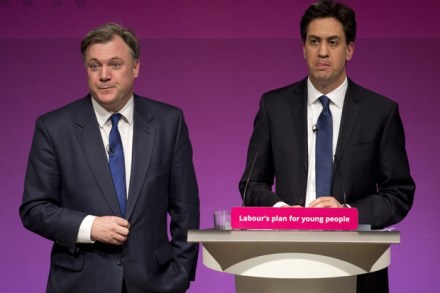
The interesting thing about Labour’s pledge to abolish non-dom tax status — a squib designed to trap Tories into expressing sympathy for the rich, in the knowledge on the part of Ed Miliband and Ed Balls that it might cause loss of tax revenues and inward investment — is that it has been welcomed by influential voices in the City. The Eds must be astonished to find Sir Roger Carr, chairman of BAE Systems and former deputy chairman of the Bank of England, bang on message: he told the FT that non-dom rules are ‘a relic of the past that unfairly favours the few at the expense of the many’.

Bet on a swift Grexit

From our UK edition

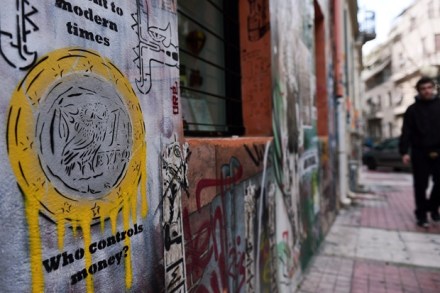
'Will Greece exit the eurozone in 2015?’ Paddy Power was pricing ‘yes’ at 3-to-1 on Tuesday, with 5-to-2 on another Greek general election within the year and 6-to-4 on the more cautious ‘Greece to adopt an official currency other than the euro by the end of 2017.’ I’m no betting man — as I reminded myself after backing a parade of point-to-point losers on Sunday — and I defer to our in-house speculator Freddy Gray, who will offer a wider guide to political bets worth having in the forthcoming Spectator Money (7 March).

A tatty new theatre offers up a comic gem that’s sure to be snapped up by the BBC

From our UK edition

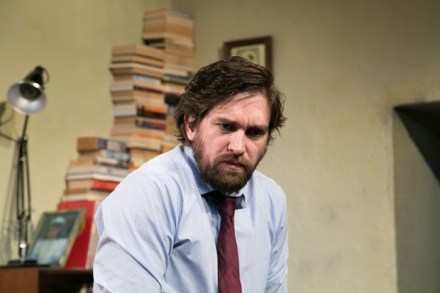
New venue. New enticement. In the undercroft of a vast but disregarded Bloomsbury church nestles the Museum of Comedy. The below-stairs space wears the heavy oaken lineaments of Victorian piety but the flagstones have been smothered with prim suburban carpeting, wall-to-wall. There’s a bar in one corner. Yes, a bar in a church. With prices high enough to make you take the pledge. The ecclesiastical shelves are crammed with books, magazines, scripts and photographs that summon up the ghosts of our comedy heroes. A big carved pew, centrally plonked, invites the worshipper to sit and read, let us say, the autobiography of Clive Dunn or the diaries of Kenneth Williams. The sheer incongruity of this arrangement causes palpitations in the brain.

Want to understand the conflict in Ukraine? Compare it to Ireland

From our UK edition

What seemed this time last year to be a little local difficulty in Ukraine has metastasised to the point where a peace plan drafted in Paris and Berlin may be all that stands in the way of war between the West and Russia. Over the months, many of those watching, appalled, from the safety of the side-lines, have combed history for precedents and parallels that might aid understanding or offer clues as to what might be done. Last spring, after Russia snatched Crimea and appeared ready to grab a chunk of eastern Ukraine too, the favoured comparisons were with Nazi Germany’s 1938 annexation of Sudetenland. It was a parallel that seemed all too plausible, given the Kremlin’s statements about the need to protect Russian 'compatriots' wherever they might live.

The pope is right – smacking your kids is sometimes OK

From our UK edition

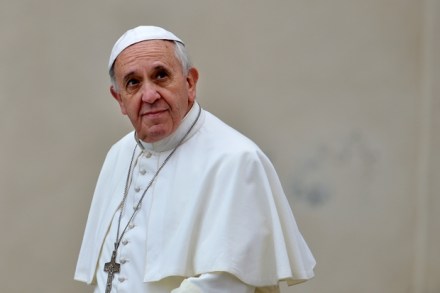
One good thing has come out of the fuss over the pope’s comments about it being ok to smack your children (so long as their dignity is maintained); it has flushed out the former Irish president, Mary McAleese, as tiresomely conventional in much the same way as her predecessor, Mary Robinson - the very incarnation of PC. Shame, because I’d been a fan until I read her letter to the Irish Times on Saturday criticising the pope for his remarks, on the basis that they’re at odds with the UN Convention on the Rights of the Child which, apparently, has zero tolerance when it comes to corporal punishment. Actually, make that two benefits to flow from the row.

On the Yeats trail in Galway

From our UK edition

The Go Galway bus from Dublin sounds an unlikely pleasure, but it is both comfortable and punctual. There is free Wi-Fi if you want it, but it would be criminal to do anything other than gawp at the view. Two and a half hours pass quickly when you are travelling at sunset, passing between rain clouds with rainbows falling out of the sky. While my trip was, as they say, for ‘the craic’ (a good friend’s 40th), I couldn’t come to Galway without making time for a W.B. Yeats pilgrimage. His patron Lady Augusta Gregory had her home near Gort, in the south of the county: Galway is saturated in his poetry; or perhaps I mean his poetry is saturated in Galway. But in the county today, there is both chaotic reverence and wilful disregard.

The Spectator at war: Preachers of sedition

From our UK edition

From The Spectator, 28 November 1914: If the press is to be muzzled, why do not the muzzling laws hold good in Ireland? It is against all common-sense to place Ireland in a privileged position — to give roving licences to any Irishmen who care to kill recruiting. Men have been arrested in England for spreading foolish false reports, which were not very much worse than the gossip of idiots. Why have the deliberate, callous preachers of sedition been allowed for so long to go untouched in Ireland?

The subversive wonders of Kilkenomics – where economics meets stand-up

From our UK edition

‘What is a Minsky moment, anyway?’ asks Gerry Stembridge, an Irish satirist. ‘I’ve been reading about them in the papers and have often wondered’. Stembridge is putting the question to Paul McCulley, chief economist at Pimco, the world’s largest bond fund with over $200 billion under management, one of the ten most influential economists on earth. McCulley is sporting a T-shirt and jeans. The two men, Celtic comic and American financial whiz, are on stage in a theatre in Kilkenny, a bijou provincial city in south-east Ireland. It’s Saturday night and they’re facing a sell-out crowd — all of whom have paid to watch a debate on global economics and most of whom aren’t waiting until the interval to have a drink.

A federal UK? Home Rule all round? We have been here before.

From our UK edition

There are fewer truly new things in politics than you think. The present constitutional uncertainty - which, it should be said, could scarcely have been avoided - is no exception. We have been here before, all of us, even if we choose to forget our previous gallops around this track. A century ago - on September 18th, to be precise - a bill for Irish Home Rule was finally passed. It had taken three attempts and nearly 30 years but it was passed at last. There would, once again, be an Irish parliament. Or there would have been had it not been for the Kaiser's War. The guns of August delayed Home Rule; Easter 1916 (and, especially, the response to Padraig Pearse's mad provocation) killed it. Nothing would recover; nothing would be quite the same again.

A Troubles novel with plenty of violence and, thank heaven, some sex too

From our UK edition

‘The Anglo-Irish, their tribe, are dying. . . . They will go without a struggle, unlamented,’ Christopher Bland, 76, declares at the outset of his exciting, poignant and ultimately consoling debut novel. He refers particularly to the Protestant landed gentry, who achieved political and economic ascendancy in Ireland even before the Penal Laws disenfranchised and dispossessed the Catholic majority, until, in the 20th century, rebellion and civil war brought about independence, with incomplete national unity.

‘Unity at home and strength abroad’. Britain prepares for WW1 by postponing Irish home rule

From our UK edition

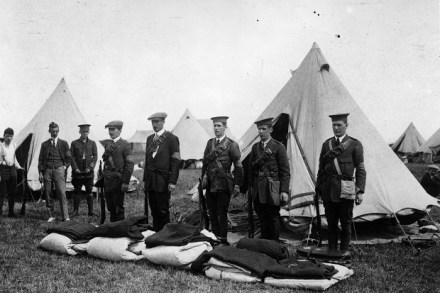
The outbreak of war between Austria-Hungary and Serbia in July 1914 forced British politicians to postpone the Amending Bill for Irish home rule. This was momentous because Nationalists and Unionists had been on the verge of civil war (see picture above) over the amendments, which concerned the exclusion of the six counties of Ulster. The Spectator noted, gravely, that a continental war appeared to be unavoidable, so the nation must pull together. ‘Unity at home and strength abroad,’ it demanded.

Forecasting is a mug’s game – but I was right about the economic revival

From our UK edition

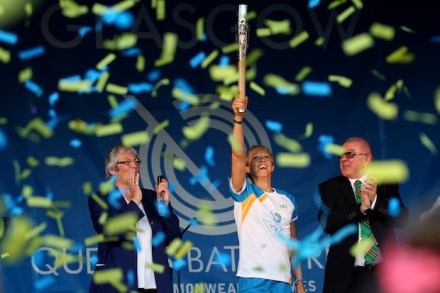
‘Perhaps I should shift my prediction to 23 July 2014,’ I wrote in April 2012. ‘That’s the opening of the Commonwealth Games in Glasgow, and we must all start thinking positively about it.’ I was talking about the moment when the nation would at last shake off its economic gloom, which I had previously pinned to the opening of the London Olympics. But that spring we fell back into negative GDP territory (avoiding a technical two-quarter ‘double dip’ only when the first-quarter result was revised upwards to zero) and I felt obliged to ‘elasticate my timetable’. Since the beginning of last year we have had 18 months of robust growth — but pundits less cheerful than me have continued to report a persistent absence of feelgood.