Iraq

As with Iraq, so with Russia

Against the backdrop of the Ukraine crisis, we have been bombarded with many historical analogies. Leading the list are the 1961 Berlin standoff and the 1962 Cuban Missile crisis. And then there is that all-time favorite, the 1938 Munich Agreement. Those crises should certainly not be regarded as ancient history. But then why go back 60 or 80 years when you can walk down memory lane? Like, say, when an American president was trying to rally the public and mobilize international support in the name of using military force against an alleged bloodthirsty dictator who was supposedly threatening Western geostrategic interests and challenging its liberal democratic values?
Return to Iraq

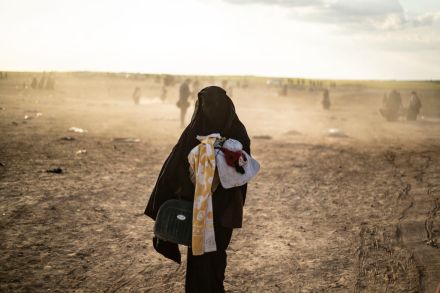
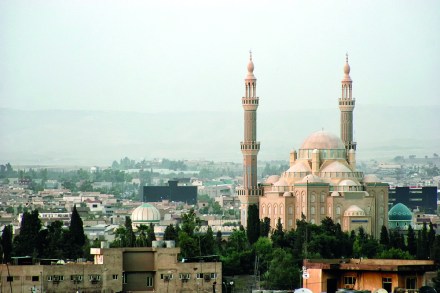
The land around Erbil, the capital city of the Kurdistan region of northern Iraq, is mostly beige, flat and seemingly endless. The mountain has seen a lot of action. The terror group ISIS remains dug in around it and the Kurdish peshmerga, with whom I recently spent time, continue to battle against them. Iraq. Two syllables, almost two decades of conflict. When people think of Iraq they think of several things: the disastrous 2003 war, oil (like all Arab countries in the popular imagination), ISIS and, if they’re a bit older, the mustachioed features of Saddam Hussein that stood, in the early years of this century, for the type of dictator painted as the West’s greatest threat. I think of all those things, too. But they’re leavened by something else: family.

iraq

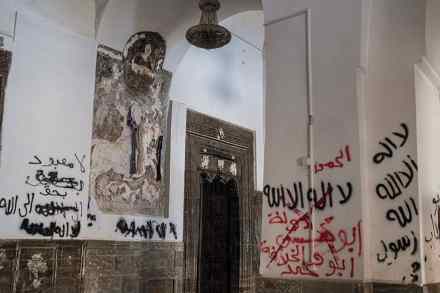
Is Christianity about to end in the place it began?

From our UK edition

Janine di Giovanni’s book begins in a Paris apartment during the first lockdown. She’s at a friend’s home, which she leaves for the odd shopping trip wearing a homemade mask and rubber kitchen gloves. Covid has made her anxious and she worries that we may lose things about our way of life forever. They need to be written down so we don’t forget. As she thinks about how her faith has comforted her during the pandemic she decides to tell the story of Christians in the Middle East who have experienced troubles of a different kind. She feels that Christianity is vanishing there, and if we don’t make a record of it, it will be lost.

Colin Powell: A great man – and a failure

From our UK edition

My memory of Colin Powell feels personal, even though we were 6,000 miles apart at the time. I was in Baghdad, covering the invasion of Iraq for the BBC. Powell was giving the speech of his life at the UN Security Council, accompanied by Powerpoint, trying to convince the world that Iraq had weapons of mass destruction. I had just come from a press conference with senior Iraqi officials, who denied there were any WMDs in the country. They were shifty, oleaginous, terrified of Saddam. It wasn’t hard to believe they were lying and that dignified, decent Colin Powell, was right. ‘If Powell says so,’ I thought, ‘it’s probably true.

Biden’s big UN whopper

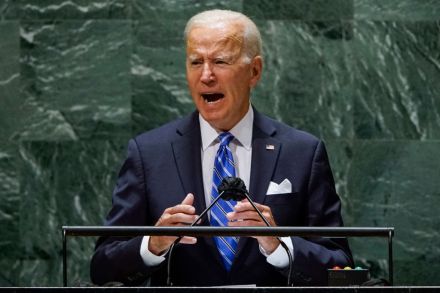
President Joe Biden walked into the grand UN General Assembly chamber this morning with a list of asks, an appeal for greater cooperation among the world’s great powers and a bit of controversy trailing behind him. Biden’s first UN address came at a difficult time in American diplomacy. The European Union, led by an irate France, is livid over a $60 billion US-Australian nuclear submarine deal that European leaders view as skeevy and duplicitous. And last month’s American troop exit from Afghanistan remains a sore point for contributing nations in the Nato coalition, some of which wanted more time to evacuate their own nationals. Biden, however, sidestepped all of these disputes.

un

How America squandered its moral authority in Iraq

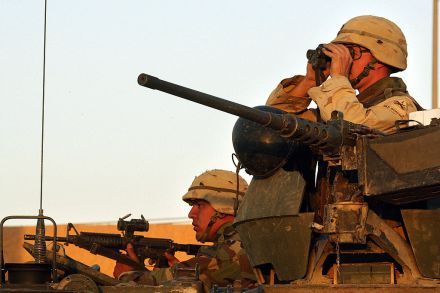
Day by day, you could almost see America’s moral authority draining away in Iraq. The weapons of mass destruction that the US had invaded the country to find didn’t exist. And it sometimes seemed as if a monstrous trick had been played on American troops: they were promised a welcome with ‘flowers and sweets’; they got roadside bombs and suicide attacks. In 2004, a year after the invasion, a 19-year-old Marine — outside the US for the first time in his life — looked up at a minaret sounding the call to prayer and asked me: ‘What are they saying? “Kill Americans?

iraq

We are all Donald Rumsfeld

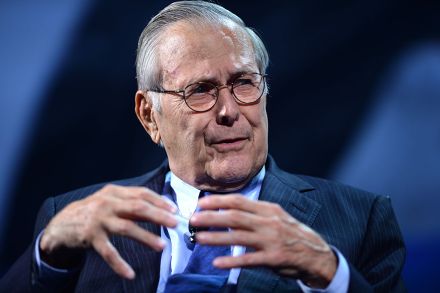
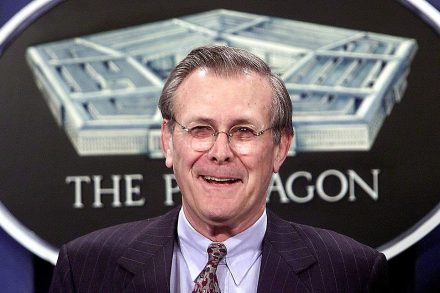
Donald Rumsfeld died this week — and it’s just so easy, isn’t it? It’s so convenient to dance on the grave of the man who helped bring about the disastrous Iraq war. For Rumsfeld, the old dictum, de mortuis nihil nisi bonum, seems to have been discarded almost from the start. The obituaries, mostly in left-leaning publications like the Atlantic and the Daily Beast, have been downright vicious. Rumsfeld was George W. Bush’s first defense secretary who, alongside Dick Cheney, pushed hard for deposing Saddam Hussein after 9/11. Because of this, he’s been labeled a war criminal. He’s been held responsible for hundreds of thousands of deaths, both in Iraq and in Afghanistan where he refused to accept a Taliban surrender.

donald rumsfeld

Donald Rumsfeld succeeded at everything — so why did he fail in the end?

What kind of man was Donald Rumsfeld? A successful one, by almost every measure. Ivy League scholar-athlete, captain of Princeton’s football and wrestling teams. Successful candidate for office, easily reelected to Congress twice before he left to join the Richard Nixon administration. There he proved a success at navigating both the federal bureaucracy and the internal politics of the scandal-consumed administration. He survived Nixon’s resignation and soon became Gerald Ford’s chief of staff — and after that, the youngest man ever to serve as secretary of defense, taking charge of a newly-minted all-volunteer force whose morale and discipline were in shambles after Vietnam.

donald rumsfeld

Adios, AUMF

Saddam Hussein was executed at the gallows in 2006 — but the Authorization for the Use of Force used by the US military to topple his regime in Iraq is still alive and kicking, a legacy the Pentagon has been loath to bury along with that war. That legislation, passed in October ahead of the March 2003 invasion of Baghdad, authorized then-president George W. Bush to use the Armed Forces of the United States ‘as he determines to be necessary and appropriate’ in order to ‘defend the national security of the United States against the continuing threat posed by Iraq; and enforce all relevant United Nations Security Council Resolutions regarding Iraq’.

aumf

Isis’s weakness is now its strength

From our UK edition

As coronavirus swept the globe a year ago, Isis began issuing pronouncements. ‘God, by his will, sent a punishment to the tyrants of this time and their followers,’ said one such; ‘we are pleased about this punishment from God for you.’ With the world on lockdown, Isis followers were urged not to sit around at home but to ‘raid the places’ of the enemies of God. ‘Don’t let a single day pass without making their lives awful.’ The virus might have begun as God’s punishment to China for persecuting the Uighurs but, as one Isis video put it, the pandemic was a chance to attack Americans, Europeans, Australians and Canadians. For a moment, the jihadis toyed with the idea of sending infected volunteers to sicken the enemy.

The dark Prince

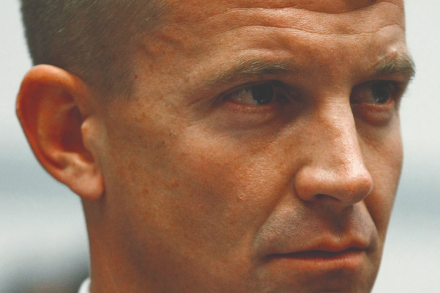
‘No modern US war would be complete without the involvement of Blackwater founder Erik Prince,’ wrote journalist Jeremy Scahill in his seminal book Dirty Wars. That was back in 2013. Since its founding in 1997, Blackwater, Prince’s private military outfit, has been reincarnated several times under different names. But Prince has stayed the same. Iraq, Afghanistan, Libya, Somalia — Prince, a very 21st-century mercenary, has wreaked havoc in all these places. He comes, he spoils, he leaves a mess that is impossible to clear up. Take Libya.

prince

Why are Covid conspiracies so appealing?

From our UK edition

The recent decision by several European countries to suspend the use of the AstraZeneca vaccine will have thrown petrol on the bonfire of conspiracies surrounding the pandemic. These range from believing that vaccines contain microchips so that Bill Gates can track you, to believing that the virus is a global conspiracy to allow governments to introduce new draconian measures to control their populations. Why are so many conspiracy theories thriving today and what do they tell us about ourselves? During my time serving in Iraq I heard lots of conspiracy theories. Many concerned exaggerated capabilities of the equipment we had, such as the belief that night-vision goggles and even Army-issued sunglasses gave the troops X-ray vision.

The British army in the 21st century under scrutiny

From our UK edition

In his history of the Pacific War, Eagle Against the Sun, Ronald Spector described the state of the US army on the eve of the second world war: ‘The main enemies were boredom and debt. The answer to such problems was often liquor.’ When the officer corps was not boozing, it was sufficiently obsessed with athletics to derail training, for ‘success at football and boxing could be as important to a man’s career as success in manoeuvres’. Its weapons were decrepit and its ranks ragged. George Marshall, the future chief of staff, commanded a notional battalion that numbered fewer than 200 men. That portrait of antebellum decay came to mind when reading The Changing of the Guard, a scathing account of the British army in the years after 9/11.

We shouldn’t forget the horrific crimes of Isis returnees

From our UK edition

Summer 2015. A five-year-old girl is chained up and left outside in the desert sun in Fallujah, Iraq – a punishment for wetting the bed while feeling unwell. The little girl slowly died of thirst in temperatures exceeding 50 degrees Celsius. Condemned to the same inhumane punishment was the girl's mother, made to endure the additional and unimaginable horror of helplessly watching the life drain from her daughter's tiny body. The mother and child were members of Iraq’s Yazidi religious minority. Their captors, members of Islamic State (IS), are said to be German and Iraqi. At the time, Islamic State recruits felt invincible. They taunted the West and ruled over civilians in their territory with cruelty and terror.

The twisted logic of Shamima Begum’s defenders

From our UK edition

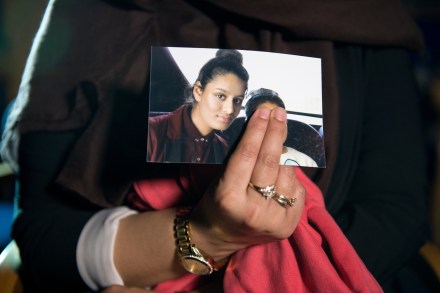
Shamima Begum is back in the news. Firstly because she’s had a makeover. She can be seen on the front page of today’s Telegraph sporting long, flowing locks, trendy shades and Western clothing. Is Shamima the Islamist now aspiring to be Shamima the celeb? Perhaps she’s angling for her own reality TV show: The Real Housewives of Raqqa. But the second reason she’s in the news is because the British-Indian sculptor Anish Kapoor has expressed sympathy for her. He says she’s a victim of British racism. I really wish Sir Anish would stick to what he’s (very) good at — public art installations — and leave the Shamima business alone. Because his comments are risible.

Confessions of an accidental foreign correspondent

From our UK edition

Perhaps you remember footage of the wave. It was mostly from traffic cameras, mute but darkly mesmerising. Millions of gallons of Pacific seawater upended by a 9.0 earthquake and hurled irresistibly inland. A few days later I saw what that meant, turning a corner in my hire-car to find the road blocked by a trawler that had been washed ashore. This week, Japan has commemorated the tenth anniversary of the tsunami which killed 15,000 of its people. A seismic tragedy which begat a man-made disaster. Inundated by water, part of the Fukushima nuclear reactor blew up, producing the worst radioactive leak since Chernobyl. It wasn’t long before scores of foreign journalists flew into Tokyo, with a brief to get to the worst affected areas.

What the Pope’s visit means for Iraq

From our UK edition

You could be forgiven for taking a cynical view of Pope Francis’s visit to Iraq this weekend. How could the Pope’s rhetoric about ‘fraternity’ alter the brutal reality for the country’s Christians, whose population has dwindled from 1.3 million to 200,000 since the US-led invasion? Might the visit end up legitimising a political class that has failed to defend Christians against discrimination and jihadist persecution? Even the Archbishop of Erbil bluntly remarked that the first papal trip to Iraq was ‘not going to help Christians materially or directly, because we are really in a very corrupt political and economic system. No doubt about that. [Pope Francis] will hear nice words...

Iran’s missile diplomacy

From our UK edition

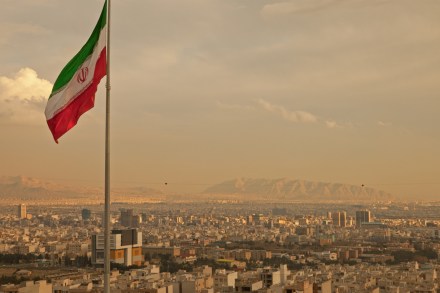
It’s a time for delivering messages in the Middle East, where messages rarely come without their near constant attendant: violence. On Monday night a volley of rockets struck a base hosting US troops in Erbil, the capital of Iraqi Kurdistan. International media reported that one rocket landed in the base and another on residential areas nearby; one civilian contractor was reportedly killed, and six others were wounded, including a US service member. At least five Iraqi civilians were also injured, with one in a critical condition. The militia group Saraya Awliyah al-Dam has claimed responsibility for Monday’s attack. The group remains, superficially at least, a mystery.

Pita Shack flashback

Friday afternoon in the Pita Shack diner in the northern suburbs of Austin, Texas and I was surrounded by Iraqis. There was even a picture of a sweet-looking Marsh Arab girl in her papyrus boat hanging on the wall. It was all unexpected but strangely familiar, stirring memories of Delta-30’s turret-scanning the junction of Red 11 in downtown Al Amarah back in 2004. During the first Gulf War in 1991, the Maysan province around Al Amarah was the site of local uprisings against Saddam Hussein. In retaliation he drained the region’s marshes to deprive the local Marsh Arabs of the waters on which their livelihoods and 6,000-year-old culture depended.

pita shack

Why the US assassination of Iran’s top general didn’t spark a war

From our UK edition

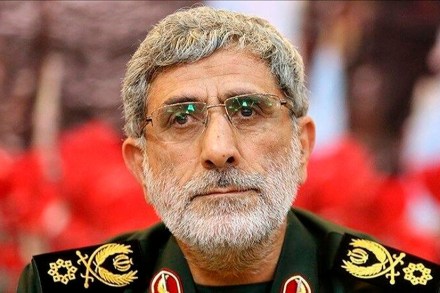
Iran’s new meddler-in-chief in Iraq is a bespectacled general called Esmail Ghaani. Brought in to replace Qassem Soleimani after his death in a US airstrike in January, he has the same green uniform as his predecessor, the same grey beard, and the same orders to make Iraq’s Shia militias do Tehran’s bidding. That, though, is where the similarities end. Soleimani was a legend among his followers in Iraq — he spent years building contacts with local commanders and joined them on the battlefield against Isis in Mosul. Ghaani, by contrast, is an owlish, uncharismatic figure who looks like he might be happier behind a desk. Unlike Soleimani, he doesn’t speak Arabic and has to rely on a translator during his visits to Baghdad.