Iraq

Liberal hawks

From our UK edition

From the moment David Cameron started agitating for a no fly-zone, he's been looking for allies. France and Denmark look like they will support him, with Russia and India opposed and China perhaps willing to abstain at the United Nations. But what about closer to home, inside the coalition? Since the formation of the coalition, every policy has been tested by what will it do for relations between the parties? Oddly, however, there has been no such test about Libyan policy. Newspapers have not been writing about splits, differences and agreements. That may be because Lord Ashdown went on the Today Programme and voiced conditional support for a no-fly zone. But the Lib Dem peer has always been a hawk.
New World temporarily postponed

From our UK edition

We are meant to be living in a multi-polar world, one where US power is waning, and where countries reject the prying interference of the West. Except, erm, we aren't. Today's world looks exactly as it did yesterday. First, many of the 20th century issues people thought would disappear – dictators, repression and democracy – remain as prevalent now as then. The Iraq War has tempered people's appetite for humanitarian interventions without extinguishing it. The key difference seems to be that support is now minimal on the Left and still strong on the neo-con Right. Everyone is also still focused on what the US will or will not do, even in Britain.

Lessons from wars gone by

From our UK edition

As the situation deteriorates in Libya and the international community begins to look at various options, including military ones, policymakers would do well to remember a number of key lessons from the last 15 years of warfare. Like all history, they don't provide a guide to the future, but can be a warning nonetheless. The Bosnian experience of the mid '90s contains four key lessons. The first is that international handwringing costs lives. Many lives. (The same lesson emerges from the post-Gulf War I slaughter of the Kurds and Shia by Saddam Hussein). Wait, and the situation usually gets worse not better. The second lesson is that however great the humanitarian need may be, any military mission must not be framed as a humanitarian one.

The emergence of a Cameron doctrine

From our UK edition

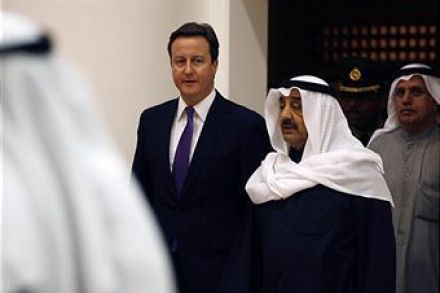
Daniel Finkelstein makes a simple but important point in the Times today (£): a Prime Minister’s foreign policy is determined by events more than by instincts. The revolts in the Middle East are defining David Cameron’s diplomacy. The emerging policy is a realistic expression of Britain’s current domestic and international capabilities. Cameron’s speech to the Kuwaiti parliament did not match Harold Macmillan’s ‘winds of change’ speech because Britain no longer disposes of continents. Likewise, Tony Blair’s messianic tendencies belong to a past era. Colonel Gaddafi’s murderous stream of conscious could have given cause to evoke the moral certainty of an 'ethical foreign policy'.

A new dawn for Dubya?

From our UK edition

Who is the unsung hero of the Egyptian revolution? Why, the 43rd President of the United States of course. (And, presumably, Tony Blair as well.) Reuel Marc Gerecht leapt to praise Bush in the pages of The New York Times. ‘President George W. Bush’s decision to build democracy in Iraq seemed so lame to many people because it appeared, at best, to be another example of American idealism run amok — the forceful implantation of a complex Western idea into infertile authoritarian soil. But Mr.

Democracy is now Halal

From our UK edition

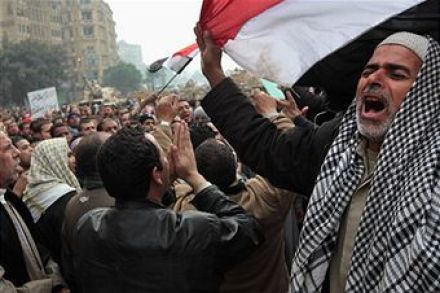
The popular uprisings in Egypt and Tunisia have exposed as nonsense the notion, held in many quarters, that Middle Easterners - be they Arabs, Persians, Muslims and Christians - are uncommonly uninterested in democracy. But as former CIA agent and Middle East expert Reuel Marc Gerecht writes in the New York Times: 'A revulsion against the Iraq war and a distaste for President Bush helped to blind people to the spread of democratic sentiments in the region. It blinded them to the fact that among Middle Easterners, democracy, not dictatorship, was now seen as a better vehicle for economic growth and social justice. Most important, Mr. Bush's distastefulness helped to blind Westerners to the momentous marriage of Islamism and democratic ideas.

Coffee House interview: Paul Wolfowitz

From our UK edition

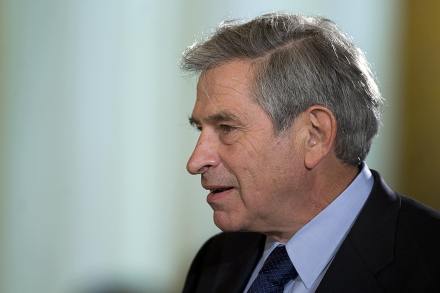
Nobody is as associated with George W Bush's drive to promote freedom and democracy in the Middle East as former US Deputy Defence Secretary Paul Wolfowitz. His role in the Iraq War, and belief that the US should promote democracy in a part of the world better known for authoritarian rulers, remains controversial to this day. But now that the Middle East is being rocked by pro-democracy protests – as people demand freedom, employment, and an end to tyranny – is this advocate of democracy finally being proven right? And what does he think about the dangers of democratic transitions?

Coffee House interview: Ursula Brennan

From our UK edition

Few government jobs are as demanding as that of Permanent Under-Secretary, or PUS, in the Ministry of Defence. With Liam Fox as your boss, General David Richards as your colleague, and an exhausted, overspent department to run, it is no surprise that when Bill Jeffrey retired many of the government's most senior officials – including, it is said, No 10's Jeremy Heywood – balked at the challenge. Forward stepped Ursula Brennan, who until then had held the ministry's No 2 job before a career in the Ministry of Justice, and what is now the Department for Work and Pensions.

Phoney Blair? On the contrary, Iraq was his most honest moment.

From our UK edition

Tony Blair's reappearance at the pointless Chilcot Inquiry - pointless because it won't change anyone's mind about anything or have any meaningful impact upon future policy - has at least permitted an interesting revision of the historical record. Rod Liddle sums this up in his typical pithy style: The more you read, the more you discover that it was Blair – entirely alone in the country – who wished to invade Iraq in 2003. The cabinet didn’t want to, even Blair’s cabal didn’t want to. Even Alastair Campbell had grave reservations. Everyone around him thought it wrong, or illegal, or both.

Déjà vu | 21 January 2011

From our UK edition

Tony Blair is beguiling the Chilcot Inquiry once again. He was majestic last time – quick witted, sincere and convinced. There was nothing in that benign hearing room to alter, as he might have put it, the ‘calculus of risk’. His ease was sufficient to crack subtle jokes at Gordon Brown’s expense, and most emerged from the hearing believing that Britain had actually been at war with Iran. He is already ploughing those same furrows, albeit with a barely audible note of impatience, irritated that these banal proceedings continue. Iran is the new Iraq, Blair says, and he publicly takes a ‘hard line’ against Tehran, just as his government, in its entirety, had done with Saddam Hussein.

The return of Chilcot

From our UK edition

The Chilcot Inquiry is back, and with bang not a whimper. In his opening statement, Sir John said: ‘There is one area where, I am sorry to say, it has not been possible to reach agreement with the government. The papers we hold include the notes which Prime Minister Blair sent to President Bush and the records of their discussions. The Inquiry recognises the privileged nature of those exchanges but, exceptionally, we sought disclosure of key extracts which illuminate Prime Minister Blair’s positions at critical points. The Cabinet Office did not agree this disclosure. On 10 December last year, in accordance with the Protocol, I asked the Cabinet Secretary to review that decision.

Stability versus freedom? 

From our UK edition

Since the Iraq War, there has been a protracted silence about whether or not the West should promote democracy and human rights in the Middle East. Predominantly, we have looked away as venal but seemingly stable regimes abuse their citizens, but events in Tunisia have reignited the debate. Writing in the International Herald Tribune, Roger Cohen argues that the West's support for stability in the Middle East proved in the end a recipe for radicalisation:   "Arab regimes, many of them U.S. allies, have lost touch with young populations. Their ossified, repressive, nepotistic, corrupt systems have proved blind to the awakening stirred by satellite TV networks, Facebook posts, tweets, Web videos and bloggers.

Sherard v The Generals

From our UK edition

As wars begin to end, arguments about their conduct begin. Such is the case with the British campaign in Helmand. In a submission to the Foreign Affairs Committee, the former British ambassador in Kabul – and one of the best diplomats of his generation – Sir Sherard Cowper-Coles blasted the Army: "Almost by definition, good soldiers are irrepressibly enthusiastic, unquenchably optimistic, fiercely loyal to their service and to their own units within that service, and not especially imaginative." But his strongest criticism was reserved for the Army's strategy of seeing Helmand through the prism of the SDSR – looking to save brigades from being cut, not looking primarily to win the war.

The clot at the heart of the MoD

From our UK edition

Gibbon wrote that the Roman Empire collapsed under the weight of its own stupendous fabric. So too is the Ministry of Defence. An investigation by the Times (£) has revealed that bureaucratic intransigence has cost the taxpayer £6bn and several servicemen their lives. We have been here before with the Nimrod disaster and the subsequent Gray and Haddon-Cave reports. ‘A culture of optimism’ in procurement and maintenance leads to unsustainable costs, expensive delays, and, occasionally, the indefensible loss of life. At last, the Commons Public Accounts Committee is volubly shocked and has called for urgent reform.

Laughing Mohammad Larijani, the Comical Ali of Iran

From our UK edition

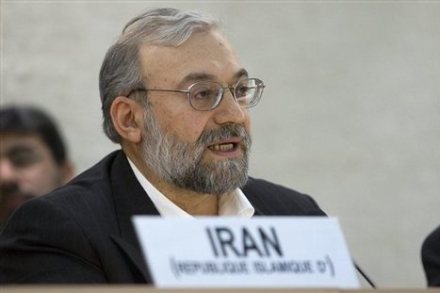
In the week when the Iranian regime forced Sakineh Mohammadi Ashtiani to goulishly re-enact the murder of her husband on TV, it is worth reading Newsweek's interview with Mohammad Javad Larijani, a regime insider. His answers call to mind Comical Ali, whose delusional denials of the US advance in Iraq made everyone realise how detached from reality Saddam Hussein's regime really was. First on the matter of torture, routinely said by the UN, former prisoners and defectors to be used by Iranian officials: "Torture is forbidden by the Constitution. Any law officer who tortures civilians will meet a very harsh punishment." Of course, he admits, the Iranian system could "need refinements," but over-all it is full of checks and balances.

Time for an Afghan Inquiry

From our UK edition

The Iraq Inquiry had been conspicuously silent, but now John Chilcot's team has called Tony Blair to give evidence again. It's expected that our former PM will make the trip to the Queen Elizabeth II centre early next year. That would push the expected deadline for the inquiry's work finishing – at the end of this year – into 2011. Few people, however, expect the inquiry to say anything novel or get Tony Blair to say anything different than before. Its well-phrased final report may change policy in the margins – but in the security establishment there is little question of what needs doing.

Dave Spart Returns to the Guardian

From our UK edition

Well, perhaps he's never left. There's much to enjoy in - and something nostalgic about - this piece by Michael Chessum and Jonathan Moses in today's Guardian. Apparently "politics as usual has failed" so, naturally, alternative methods must be sought. Now, as it happens, one can understand why students are disappointed by the Liberal Democrats' flip-flop on university funding. But this is bunk: And mobilise we must. The coalition's proposals represent a nigh irreversible transformation of higher education, and the commodification of knowledge and learning. Mobilise all you like, comrades. But while there's an intrinsic value to knowledge and learning they are also, quite evidently commodities.

Sir Christopher Meyer reviews George Bush’s memoirs

From our UK edition

Sir Christopher Meyer, the former British Ambassador to the United States, has reviewed George Bush's biography for the latest issue of The Spectator. We've pasted his entire review below, for readers of our Book Blog. Taking the long view, Christopher Meyer, The Spectator, 20 November 2010 While Tony Blair emerged from his memoirs as a chameleon of many colours, there is only one George W. Bush in Decision Points. The book reads like the man speaks. If it has been ghosted — and Bush gives thanks to a multitude of helpers — it has been done with consummate skill to preserve the authentic Bush voice. The result will be unexpected, even unwelcome, to many.

The new Iraq is beginning to look a lot like the old

From our UK edition

Nouri Maliki was last night appointed Iraqi prime minister after the country broke the world record for the slowest process of government formation. Eight months passed between the election and the formation, beating even previous Belgian records of procrastination. Hours after his appointment, however, members of al-Iraqiya, the main Sunni-backed alliance led by former Prime Minister Ayad Allawi, walked out of the Parliament. Their concern: Maliki's failure to do as he had promised and reinstate four Sunni leaders who had been banned for alleged ties to Saddam Hussein's Baath party.

Ten more highlights from the Bush serialisation

From our UK edition

You know the drill: the second part of the Times's Bush serialisation (£) is out today, so here are ten more highlights from their coverage. The book is also out today, so we can, as the former President suggests, draw our own conclusions. 1) Watching the towers collapse. "I caught enough fleeting glimpses of the coverage to understand the horror of what the American people were watching. Stranded people were jumping to their deaths from the World Trade Center towers. I felt their agony and despair. I had the most powerful job in the world, yet I felt powerless to help them. At one point, the television signal held steady long enough for me to see the south tower of the World Trade Center collapse. The north tower fell less than 30 minutes later.