Iraq

Ten highlights from the Bush serialisation

From our UK edition

Number 43 is back. And judging by his interview (£) with the Times editor James Harding – and that paper's serialisation (£) of his memoirs – he is standing defiant. As Bush himself puts it to his critics, "I ask those people to read the book. I understand that the filter can be harsh. But I think people will see someone who deliberated carefully on key issues, someone who did not sell his soul for politics, that he was willing to stand on principle and people can draw their own conclusions." "The book" is out tomorrow, so we will be able to draw our own conclusions then. But, in the meantime, here's a selection of extracts from the first part of the Times serialisation. The second part will come tomorrow, and cover 9/11, Blair and Katrina.

In international politics, the pursuit of stability is not enough

From our UK edition

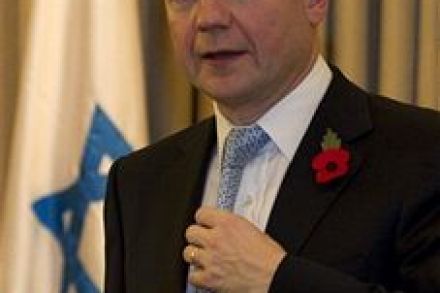
One of the biggest challenges facing the post-Iraq generation of foreign policy decision-makers, like William Hague and Hillary Clinton, is to balance the pursuit of overseas stability with promotion of the dynamic and sometimes de-stabilising forces that build countries' long-term stability and make economic and political progress possible. This may sound like an academic question but it is a very real change- and not just because the SDSR has made the task of building overseas stability a key government objective.   Take Iraq. After having lost an admirably violence-free and largely fair election, it looks likely that Iraqi Prime Minister Nouri al-Maliki will cling to power and the voter-winner, Ayad Allawi, will be denied a role in government.

Yes, Julian Assange Is A Journalist

From our UK edition

I'm not sure I understand the Wikileaks controversy. If one of the many definitions of news is (and always has been) that it is something that someone, somewhere does not want you to know then, yes, Julian Assange is a journalist. Perhaps newsman would be a better, more strictly accurate way of putting it. As such, it's strange to see Americans accusing him of treason (he's an Australian!) or William Hague complaining that the Wikileaks document-dumps put "British lives" at risk. So what? Then there's Jonah Goldberg complaining that a column headlined "All Quiet On the Black-Ops Front" and subtitled "Why is Julian Assange Still Alive?" has - this may shock you - been misunderstood.

The insidious fingers of Iran are all over Iraq

From our UK edition

Wikileaks is the story of the day. The Guardian has extensive coverage of unsubstantiated allegations made by unnamed Iraqis. That is not to prejudge the revelations, just to provide balance against the sensational headlines before proper investigations called for by the UN. In addition to the alleged atrocities and cover-ups, Wikileaks’ disclosures support what Blair and Bush said and maintain: Iran incited dissidence to exploit instability. In fact, it is still doing so, despite the Obama administration’s protests to the contrary. The New York Times has eviscerated Biden and Obama this morning.

David Miliband torpedos his brother’s big speech

From our UK edition

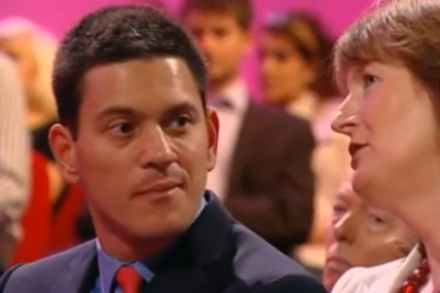
Make no mistake: David Miliband has handled himself with a fair amount of dignity over the past few days. But now some of his frustration has simmered to the surface. ITV news cameras were trained on him earlier, and caught him leaning towards Harriet Harman as she applauded his brother's claim that the Iraq War was "wrong" (see from two minutes into this video). According to the lipreaders, he says to her: "Why are clapping? You voted for it." To which she replies, "I'm clapping because he's leader and I'm supporting him." The elder Miliband does not look impressed. To be honest – and although I didn't support the Iraq War myself – I feel some sympathy for his position here.

In and out of favour in Iraq

From our UK edition

Nowadays the TV cameras make Baghdad look like a suburban car park, and for Tamara Chalabi, raised in England and Beirut on memories of pre-Saddam Iraq, the first encounter in 2003 was dismal. Her family kissed the very ground as they returned from exile, but initially she felt, and recognised, nothing. She has worked hard to connect with the city where she now lives, and in this absorbing book she has wrapped up much that is important in Iraq’s history in the story of her own family’s development through the 20th century. Of course the reader may want to ask what role Chalabi’s father played in landing Iraq in the mess it is in today.

‘It’s a bit of a riddle’

From our UK edition

Perhaps Donald Rumsfeld was right: the Coalition should not have gone for the 'hard slog' in Afghanistan (or Iraq). Hindsight suggests that Rumsfeld had foresight in his desire that a shock and awe campaign be followed by a light presence and eventual withdrawal - the blood baths that have ensued from intense deployment might have been avoided.  I hope the two times Secretary for Defence Secrte addresses those issues in his memoir, Known and Unknown, due to be published in January three months after Bush’s.

From the archives – Boris for Mayor

From our UK edition

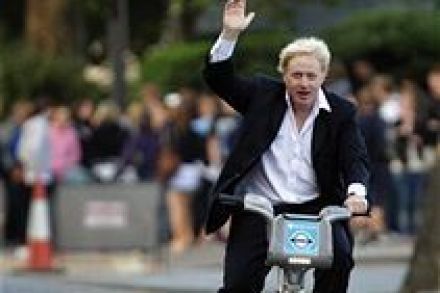
Boris Johnson has announced his candidacy for a second term as London Mayor. Here is what he wrote for the Spectator on the campaign trail last time round. How, as Mayor, I would help our brave troops, The Spectator, 17 December 2007 Even if the story is exaggerated, the underlying psychology is convincing. It is reliably reported that last month a woman in her thirties was doing her daily laps of the pool in Leatherhead, Surrey, when she became aware of an obstacle. A section of the swimming-pool had been roped off to allow 15 wounded soldiers to receive the therapy needed for their rehabilitation. It is hard to know what went through the young woman’s mind, but she must have grasped that these disfigurements had been incurred in Iraq and Afghanistan.

Buchan on Foreign Policy

From our UK edition

Sandy Arbuthnot in The Three Hostages: "Lord!" he cried, "how I loathe our new manners in foreign policy. The old English way was to regard all foreigners as slightly childish and rather idiotic and ourselves as the only grown-ups in a kindergarten world.  That meant that we had a cool detached view and did even-handed unsympathetic justice.  But now we have got into the nursery ourselves and are bear-fighting on the floor.  We take violent sides, and make pets, and of course if you are -phil something or other you have got to be -phobe something else.  It is all wrong.  We are becoming Balkanised." Discuss, paying special attention to Iraq and Afghanistan. To what extent, if any, do Arbuthnot's views retain some merit?

Clegg versus Straw – the re-match

From our UK edition

David Cameron’s father has suffered a stroke on holiday in France and so the PM is, understandably, travelling out there to be with him. This means that Nick Clegg will be standing in for him at PMQs. At the risk of sounding Jo Mooreish, this shift in PMQs personnel has political implications. Labour was always planning to use today to try and associate Cameron personally with Coulson and the whole voicemail interception story. That, obviously, can’t happen now. But Labour could ask Nick Clegg a series of awkward questions on this, has the deputy prime minister sought personal assurances from the director of communications about what he knew of phone hacking at the News of the World while he was editor and the like.

Blair pulls out of book launch

From our UK edition

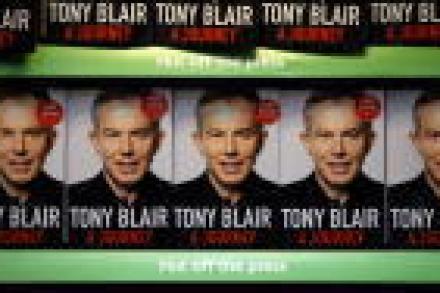
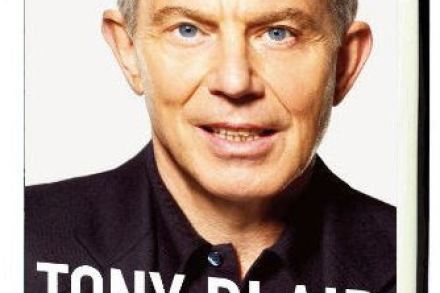
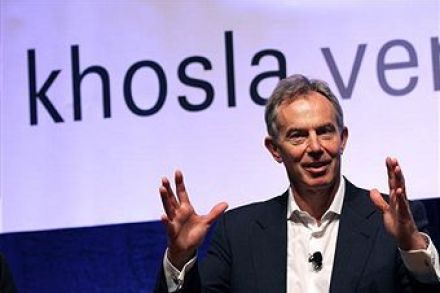
It is profoundly depressing that Tony Blair has had to pull out of his London book signing. Whatever you think of Blair, he is a man who led his party to three general elections victories and is the second longest serving Prime Minister of the post-war era. There is something very wrong if he feels he has to cancel an appearance at a book shop because of the threat of disruption from protesters whose intentions do not appear to be entirely peaceful. One other thing that should be noted is that the polling suggests that Blair is nowhere near as unpopular in this country as much of the coverage of his book suggests. A YouGov poll, timed to coincide with the book’s launch, found that a plurality, albeit narrow, of voters believe Blair was a good Prime Minister.

Richard Dannatt’s Convenient Excuses

From our UK edition

Let us concede that the MoD has been under-funded and over-stretched in recent years. Let us also concede that Gordon Brown and Tony Blair should have been aware of this and done something about it. But let's also remember that the armed forces' thirst for funds is essentially unquenchable. There is always something more, something newer, something bigger, something more expensive that they will say they need (that is, want) to do their job more effectively. That's human nature but I suspect we could increase defence spending by 50% and still be treated to headlines complaining that the MoD needs more cash. And, look, it's very convenient for General Sir Richard Dannatt to blame Blair and Brown for everything. There's some merit to this case: political leadership certainly matters.

The Feeble Mugabe Gotcha

From our UK edition

Step forward the FT's Jim Pickard: Some sceptics have often asked why Tony Blair was happy to help rid the world of some dictators and not others. The example most often cited is that of Robert Mugabe, who could have been deposed with even less effort than Saddam Hussein. Blair tries to justify the contradiction in his book, far from convincingly. “You need to ask if such action is feasible and practical. People often used to say to me: If you got rid of the gangsters in Sierra Leone, Milosevic, the Taliban and Saddam, why can’t you get rid of Mugabe?

Tony Blair’s memoirs: the first extracts

From our UK edition

Even the literary critics have to wait until tomorrow for the Blair memoirs – but the book's contents are slowing spilling out onto the Internet this evening. A series of extracts has just been published on the official website, and the Guardian has extensive coverage, including an interview with the man himself. So far, there's nothing too surprising. Blair, for instance, lays into Brown – but adds that it would have been wrong to sack him as Chancellor. And he declines to endorse a candidate for the Labour leadership, beyond offering a handful of veiled criticisms of Ed Miliband. Coffee House will have more tomorrow.

Blair, magnanimous master of PR

From our UK edition

It’s easy to be loose with a trifling £4.6m when you’re Tony Blair. Many will denounce his decision to give the advance and any royalties on his memoir to the British Legion as opportunistic - a cynical gesture characteristic of the man. As ever with Blair, there is more than a hint of a public relations exercise about this. But it is also extremely gracious, aiding people who prick his conscience. So I prefer to take his generosity at face value. As Con Coughlin puts it:   ‘Whatever you might think of Mr Blair, he always had the courage of his convictions when it came to defending our freedoms, whether it was confronting genocidal maniacs like Saddam Hussein and Slobodan Milosevic, or tackling the modern curse of Islamist terrorism.

Clegg denies it was a mistake to assert the illegality of the Iraq War at PMQs

From our UK edition

Nick Clegg has made this statement on Channel Four News: ‘I have always been open that my personal opinion that the legal base is not justified for our going into war. That wasn't the view of the previous government, this government as a whole, the new coalition government, doesn't take a view on the legality of it. But I don't think it is right for me to enter government and somehow completely airbrush out well-known personal views that I have held and expressed for a very long time. ‘I am the deputy prime minister, I am also a human being who feels with great conviction about things. I don't think that politics is well served by politicians suddenly falling utterly silent on things that they are well known to feel strongly about.

Already, the anti-war lawyers leap on Clegg’s slip

From our UK edition

Never one to miss the bus, Phillipe Sands QC has informed the Guardian that an international court would be ‘interested’ in Nick Clegg’s view that the Iraq War was illegal. Sands continues with his favourite homily: ‘Lord Goldsmith never gave a written advice that the war was lawful. Nick Clegg is only repeating what Lord Goldsmith told Tony Blair on 30 January 2003: that without a further UN security resolution the war would be illegal and Jack Straw knows that.’ Well, that would be right but for Goldsmith’s draft advice of the 12 February 2003, and his final clarification on 7 March 2003.

Not David Cameron’s finest hour

From our UK edition

David Cameron has just made a quite spectacular mistake. Talking to Sky News he said: 'I think it's important in life to speak as it is, and the fact is that we are a very effective partner of the US, but we are the junior partner'. 'We were the junior partner in 1940 when we were fighting the Nazis.' The obvious problem with Cameron’s remarks is that, as any fule kno, the Americans did not enter the war until after the attack on Pearl Harbor in 1941. The error is even odder given Cameron’s penchant for war movies, he’s watched Where Eagles Dare 17 times apparently. This howler from Cameron following Clegg’s Iraq gaffe at PMQs, means that this has not been a good day for the Coalition.

Clegg’s only blemish

From our UK edition

Nick Clegg comfortably got through his first appearance standing in for David Cameron at PMQs. He was helped by a poor performance by Jack Straw, who made Neil Kinnock look like a model of concision. As Clegg said mockingly at one point, ‘that wasn’t a question it was a sort of dissertation.’ In his final response to Straw, Clegg attacked him for his role in the ‘illegal invasion of Iraq.’ Now, Clegg has long called the invasion of Iraq illegal. But it is a different matter to do so when standing in for the Prime Minister and speaking from the Treasury bench in the House of Commons. That implies it is the official position of the government, with all that entails.

Robert Byrd, 1917-2010

From our UK edition

Robert Byrd, the longest serving Senator in American history, has died aged 92. Byrd will be remembered not only for the length of his service but also for the fierceness with which he guarded the prerogatives of the Senate. Byrd used his position and seniority in the Senate to funnel huge amounts of money back to the state he represented, West Virginia one of the poorest states in the Union. Travel through West Virginia and you rarely go more than a few miles without passing the Robert C. Byrd something or other. As the Washington joke had it, Byrd didn’t bring home the bacon, he brought back the whole damn hog.