Iran nuclear deal

On Iran, trust Trump’s instincts

What now? After the daring and what everyone is describing as a “flawlessly executed” attack by the United States on Iran’s hardened nuclear facilities Saturday night, Macbeth’s words must be on the minds of many: “If it were done when ’tis done, then ’twere well / It were done quickly.” Things did not work out so well for the Thane of Cawdor, as Macbeth then was. But even though his attack was not “the be-all and the end-all” he wanted, everyone who wishes for peace must second his opening argument.

Trump

Fordow in a fortnight?

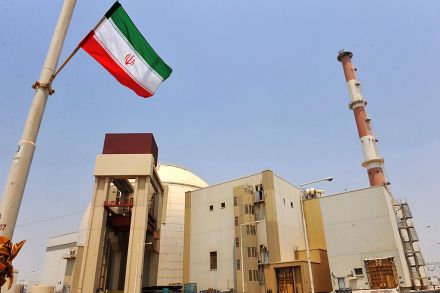
The decision whether to use American planes and bombs to demolish Iran’s Fordow nuclear facility is the most consequential of Donald Trump’s presidency. Iran’s hardened facility is buried deep inside a mountain, well beyond the striking power of Israeli fighter jets. The question is whether the US will use its B2 bombers to destroy Fordow with the mammoth, deep-penetrating bombs that only US planes are big enough to deliver. Whether to drop those bombs is the decision that now awaits President Trump. Reports are that he has already approved the strike plans but has not authorized their implementation. That’s the final decision that he has said he will make within two weeks. Two weeks, however, is the outside limit.

Iran

Whatever happens, Iran will still seek a nuclear weapon

An Iranian politician sits on a sofa giving an interview about Iran’s nuclear ambitions. "Why should Iran not have a nuclear weapon when France, the UK and the US all have nuclear weapons? What is the difference between our nations?" The politician goes on to lay out Iran’s regional intellectual and cultural superiority, citing an illustrious history going back centuries, explicitly linking Iranian exceptionalism with the issue of nuclear power. You’d be forgiven for thinking that this Iranian politician was an official of the Islamic Republic. It was the Shah and the year was 1973.

Will Iran take the nuclear win?

To enrich or not enrich? This seems to have been the question dividing Iranian and American negotiators, and there are swelling choruses in Tehran and Washington who hold strong views on the matter. In a report leaked to Axios, it appears that during the last round of talks, the US gave Iran a proposal that would allow limited low-level uranium enrichment for a specified period. The proposal suggested that Iran would be forbidden from building new enrichment facilities and must dismantle “critical infrastructure for conversion and processing of uranium,” adding that research and development on centrifuges would also have to stop. Sanctions relief will only come once Iran is demonstrably adhering to the terms of the deal and has clearly paused its underground enrichment activities.

Iran

Israel’s wake-up call to America

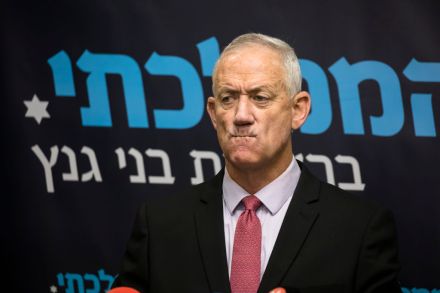
Last month, then-Israeli defense minister Benny Gantz made headlines when he said that Israel may strike Iran’s nuclear infrastructure within two to three years. Gantz has made readying Jerusalem for this contingency a priority, and in November said that Israel had “achieved preparedness, we have [more] capabilities we are developing and we have long-term processes I don’t want to elaborate on.” But while Israel may have the capability to hit Iran, the US should not force it to risk such a strike.

Learning to live with a nuclear Iran

A mere four years after President Donald Trump withdrew the United States from the Joint Comprehensive Plan of Action (JCPOA), the international agreement that had constrained Iran’s nuclear program, Iran is closer to building a nuclear weapon than ever before. Both the Trump administration’s pressure and the Biden administration’s diplomatic campaigns have failed to yield Iran’s capitulation, yet still the United States has not changed tack. Instead, it has only raised fears of a cataclysmic clash in the Middle East. To be sure, while the Trump team’s maximum pressure strategy had great success in “crushing” Iran’s economy, it was far less effective in achieving any of its stated objectives.