Iphone

Black Mirror season seven offers a welcome return to form

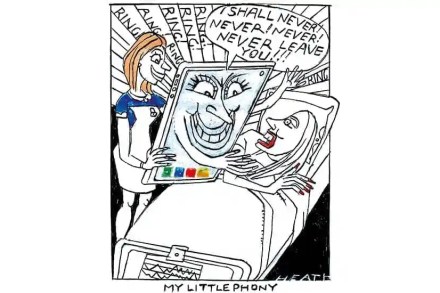
Charlie Brooker’s cautionary technological tales have now been running for well over a decade, and they are almost in danger of seeming old-fashioned. When Black Mirror began in 2011, Instagram was only a few months old, the iPhone was a new novelty just coming into the mainstream, and Elon Musk was best known for being CEO of Tesla. Now, virtually everything in the world has changed, and Big Tech plays roles in our lives that the ever-cynical Brooker could barely have imagined. There is, naturally, a residual irony that in order to afford the budgets – and starry casts – that the show continues to demand, it long since left its original home on Britain’s Channel 4 for the deeper-pocketed Netflix, which still funds it into its seventh series.

black mirror

Should you buy a folding phone?

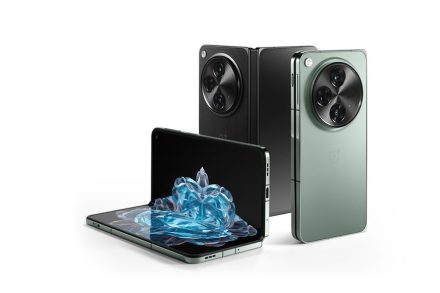
Just five short years ago, Samsung released the first mainstream folding phone with their debut Galaxy Fold. It had some quirks — a small, slim, external display, thick bezels, an odd asymmetrical notch and an unprecedented $1,980 price tag — but what mattered most was the screen. Open the slim, TV-remote-shaped phone and you gazed upon a great, wide, 7.3-inch screen, bigger than any you could carry in your pocket before, with a folding crease in the middle. You could multitask, watch full-screen YouTube videos and browse the web as you would on a tablet. That is, you could do so temporarily. Early review units catastrophically broke at even the mention of a grain of sand, creating a run of viral tweets and videos.

folding phone

My month using a tablet instead of a smartphone

Several years ago — long before Elon renamed it X, restricted most features behind a paywall and made it altogether less pleasant to use — I uninstalled Twitter from my phone. Then, on my laptop, I set the Minimal Twitter extension to hide all interaction counts. I still have no idea how many followers I have.  I wasn’t hopelessly addicted to the site, nor was it enraging me on a frequent basis. Put simply, though a Twitter-using liberal, I was not a “triggered lib.” But whenever I wasn’t doing something else, or waiting in line, or walking to make some coffee, I flicked through it. When I should have let the silence breath, I pulled out my phone and refreshed my feed.

tablet smartphone

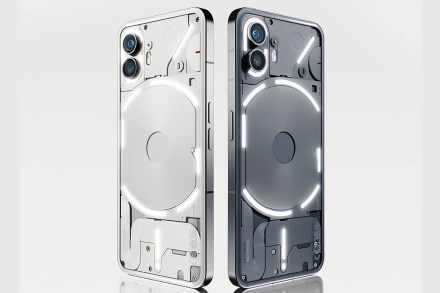
Nothing makes technology transparent again

Consumer technology is, usually, profoundly dull. I love technology, but even I must concede the undeniable. A new pair of light gray, plastic cupped, noise-canceling headphones are functional, and often great, but they hardly get the blood rushing. Yet another gray Windows notebook has released! I struggle to stifle a yawn. And then — worst of all — are the phones. In the sixteen years since the first iPhone debuted, smartphones have become ubiquitous; the market is so large and flooded that innovation is no longer worth the risk. Phones are not cool new devices, but tools. You don’t care how a hammer looks; you care about the price and if it can hit a nail. The latest iPhone is a tool for accessing the internet and taking selfies. Most Android phones are the same but cheaper.

Photo courtesy of Nothing

The golden noose around Apple’s neck

"Innovation comes from saying no to 1,000 things to make sure we don't get on the wrong track or try to do too much,” said the late Steve Jobs. “We're always thinking about new markets we could enter, but it's only by saying no that you can concentrate on the things that are really important." These days, Team Apple is all about finding new markets, no matter how removed they are from the company's core focus. Jobs once flirted with an advertising-supported operating system but ultimately gave it a pass. Now, in a strange twist, Apple is doing just that — selling ads in its services that are part of its platform. It wants to become a pooh-bah of digital advertising (it had tried before in 2010 with iAds, an effort that fizzled out).