Interviews

Interview with a writer: Jhumpa Lahiri, author of Booker longlisted The Lowland

From our UK edition

The Lowland is the magnificent new novel by Jhumpa Lahiri, which has been longlisted for this year's Man Booker prize. It tells the story of two brothers, Subhash and Udayan, who come of age in Calcutta in the late 1960s. ‘Subhash was thirteen, older by fifteen months. But he had no sense of himself without Udayan. From his earliest memories, at every point, his brother was there,’ writes Lahiri. This was the beginning of a troubled period in West Bengal, as a radical communist movement known as the Naxalite cause swept through the region, inciting idealistic young men, in particular, to violence and acts of terror.


Amartya Sen interview: India must fulfil Tagore’s vision, not Gandhi’s

From our UK edition

Amartya Sen is Thomas W. Lamont University Professor and Professor of Economics and Philosophy at Harvard University. Sen’s previous books include: Development as Freedom; Rationality and Freedom; The Argumentative Indian; Identity and Violence, and The Idea of Justice. In 1998 Sen won the Nobel Prize in Economics. Much of the work done by the Indian economist has focused on poverty, specifically looking at developing new methods to predict and fight famines. His research also discusses ways to measure poverty, so that more effective social programs can be designed to prevent it. Sen has recently co-written a book with fellow economist, Jean Drèze, called An Uncertain Glory: India and its Contradictions.

George Packer interview: The American Dream is dangerous because people yearn for it to be true

From our UK edition

George Packer is a staff writer at The New Yorker and the author of The Assassins Gate: America in Iraq, a book that received several prizes. Packer’s other non-fiction books include, The Village of Waiting and Blood of the Liberals, the latter winning the 2001 Robert F. Kennedy Book Award. He is also the author of two novels, The Half Man and Central Square.  Packer’s latest book, The Unwinding: An Inner History of the New America, is a work of non-fiction that attempts to document the massive political and economic changes that have taken place in the last three decades in the United States.

Timothy Beardson interview: It’s urgent that China reforms

From our UK edition

Recent convulsions in China’s banks will not, I suspect, have surprised Timothy Beardson, a sinophile, veteran Hong Kong financier and author of Stumbling Giant: The Threats to China’s Future. He argues that China’s extraordinary growth over the last 30 years has come in spite of its banking system. A dinner party might speculate where China would be if not for Mao; but a more immediate question is: where would China be if its banking system supported the private sector? “If the economy has grown by 10 per cent for 30 years, as is reported (and I think that the data in China is very frail – it probably hasn’t grown at 10 per cent a year – but it’s clearly grown at a very high rate and that’s all that matters).

Ben Fountain interview: Lies are an affront to writers because lying is the corruption of language

From our UK edition

Ben Fountain's debut short story collection, Brief Encounters with Che Guevara, was published in America eighteen years after he left his job at a Dallas real estate law firm to become a writer. It would appear that it was well worth the wait, as it immediately met with praise, awarded both the PEN/Hemingway and Whiting Award. This success continued when his first novel, Billy Lynn's Long Halftime Walk, was published five years later. In the last six months alone, it has won two awards in America, including the prestigious National Book Critics Circle award, and nominated for a further two here in the UK.

The fatuousness of a scientist. Steve Jones edition

From our UK edition

It’s refreshing to hear an eminent scientist like Professor Steve Jones concede that their discipline has delivered less than it promised, and to hear him voice scepticism about the pace of technological development. Society’s reverence for the digital, the technological or the scientific often reaches unnerving degrees; so it’s instructive to hear someone at the vanguard of progress caution that it is ‘always a big mistake’ for technology to run ahead of human understanding. I’d be interested to know what he thinks should be done about this problem. But, what is it about certain people’s attitude to religious faith?

Professor Steve Jones: Why I think religion is a bad thing

From our UK edition

Steve Jones is Emeritus Professor of Genetics at University College London. Some of his previous books include: The Language of Genes, Y: The Descent of Men, The Single Helix, and Darwin’s Island. Jones’ latest book is called The Serpent’s Promise: the Bible Retold by Science. The title suggests that Jones uses the Bible as a starting point to explain the world of science. In the preface, he says that the book is an attempt ‘to stand back and take a fresh look at the sacred writings in a volume that tries to interpret some of [the Bible’s] themes in today’s language.’ Really, this is a clever marketing ploy: the theme of religion and science is a hook to make this book shift more units.

Sheila Heti: ‘I did worry putting sex in the book would eclipse everything else’

From our UK edition

There is a question which writers (and readers) of literary fiction get tired of hearing: which bits really happened? The traditional and respectable answer is that this doesn’t matter. Everything in the book will have been transformed by art, and isn’t something that comes straight from an author’s imagination more autobiographical, more telling, than things that might have happened to them, anyway? But these serious maxims don’t always quell your desire for real-life incident or gossip. Sheila Heti’s How Should A Person Be, subtitled ‘A novel from life,’ had me googling paintings by Margaux Williamson: Heti’s best friend in real life and a character in her book. How Should A Person Be?

Chan Koon Chung – banned in China

From our UK edition

Chan Koon Chung’s previous novel, The Fat Years, was set in a gently dystopian Beijing of 2013, when a whole month is missing from the Chinese public’s awareness, and everyone is inexplicably happy. Since it first appeared in 2009, the novel has enjoyed cult success in both Chinese and English translation, even becoming, as Julia Lovell notes in her preface, a chic take-home gift from society hostesses in mainland China. It has shades of George Orwell’s Nineteen Eighty-Four and Aldous Huxley’s Brave New World, although the setting of The Fat Years may not be as brutal as either of those. Certainly, to read it now is eerie, so much has reality caught up with Chan’s fiction.

Jesse Norman interview: Edmund Burke, our chief of men

From our UK edition

When he arrived in London, Burke had a very brief career in law. He soon dedicated his time to critical thinking, writing and politics. Burke published a number of ground breaking books, including: A Philosophical Enquiry into the Origin of Our Ideas of the Sublime and Beautiful, and Reflections on the Revolution in France. In his new book, Edmund Burke, Jesse Norman dissects Burke’s outstanding intellect, and his career. He then asks how these ideas might be applied to modern politics. Jesse Norman is Conservative MP for Hereford and South Herefordshire. In 2012 he was named as the Spectator’s Parliamentarian of the Year. He is a member of the Treasury Select Committee and is a senior fellow at the think tank, Policy Exchange.

Michael Sandel interview: the marketization of everything is undermining democracy

From our UK edition

Michael Sandel is a political philosopher and a professor at Harvard University. He is best known for his  ‘Justice’ course, which he has taught for over two decades. Sandel first came to prominence in 1982 with his book Liberalism and the Limits of Justice. The book offers a critique of liberalism, arguing that individuals’ needs are rooted with a sense of community and obligation to others, rather than the self. Last year, Sandel published What Money Can’t Buy: The Moral Limits of Markets. When one initially begins to read this book, it seems as if Sandel is simply stating the obvious. He asks questions that many of us think about on a day to day basis, but perhaps are afraid to ask, such as: do we want a society where everything is up for sale?

Tan Twan Eng interview: ‘I have no alternative but to write in English’

From our UK edition

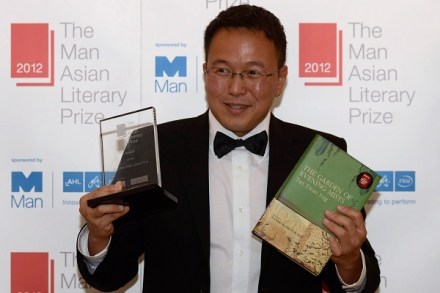
Tan Twan Eng's first novel was long-listed for the Man Booker Prize, his second was shortlisted and then won the Man Asian Literary Prize. To say that his work over the past five years has received praise and attention would be something of an understatement. Likened to Ishiguro and Ondaatje, his work explores the point at which untold personal history collides with the bellicose history of mid-twentieth century East Asia. In The Gift of Rain the elderly Philip Hutton is living out his days as a postcolonial remnant in his childhood home of Penang, with little but his memories to keep him company. These are revisited with arrival of Michiko, the former lover of Japanese diplomat Hayato Endo, with whom Philip had developed a strong relationship in the 1930s.

Nate Silver interview: ‘Politics is uniquely full of bullshit’

From our UK edition

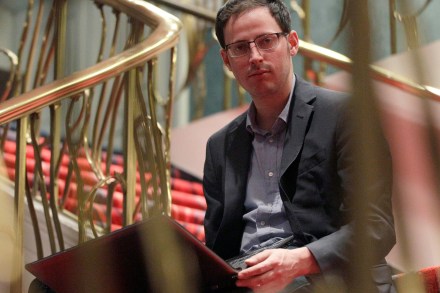
Nate Silver doesn't suffer fools gladly — especially fools who pass themselves off as experts. In the second chapter of his book, The Signal and the Noise: The Art and Science of Prediction, he describes just how bad most political pundits are. And in person, he goes even further. 'I think some of them are very skilled at the art of bullshit; I think some of them are just deluded; some of them aren't very smart; some of them are immoral; some of them are well-intentioned but wrong; some of them are behaving as party hacks. And there's not a lot of incentive for them to change that.' Most columnists are 'a waste of space', he says. 'A lot of them are nice people, but they're literally a waste of column inches.

Interview: David Graeber, leading figure of Occupy

From our UK edition

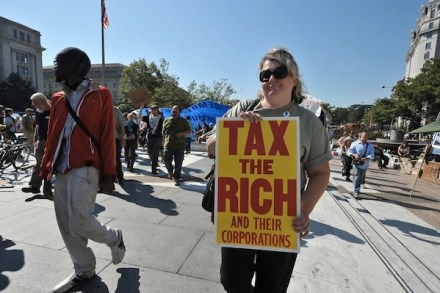
The anarchist movement in the United States has had the support of leading libertarian intellectuals, such as Noam Chomsky; but it has lacked a figure who could transform its guiding principles into something resembling a political movement. In the autumn of 2011, David Graeber seemed to be the man who could drag anarchism into mainstream politics. Graeber, along with other leading figures in the Occupy movement, coined the term ‘we are the 99 percent’. The catchphrase caught on, and within weeks — with the assistance of social media — Occupy transformed a small group of idealists with little support into a radical network occupying 800 cities around the world.

Brendan Simms: A strong, united Europe is in Britain’s interest

From our UK edition

Since the collapse of the Byzantine Empire, European history has been dominated by two themes: the centrality of Germany and the primacy of foreign policy. This is the argument of Brendan Simms’ new book, Europe: the struggle for supremacy 1453 to the present. Simms is a professor of the History of International Relations at Cambridge University and his decidedly European focus has allowed him to craft a detailed yet expansive account in the style of Paul Kennedy’s Rise and Fall of the Great Powers. One afternoon we sat down at Penguin’s offices on the Strand to discuss these issues, as well as their relevance to the current European Union debate.

Interview with a writer: Evgeny Morozov

From our UK edition

Evgeny Morozov is an iconoclast. He believes that technology, if abused or misused, has the potential to make society less free. His latest book, To Save Everything , Click Here, builds on his acclaimed polemic The Net Delusion (about which he spoke to the Spectator last year) to challenge those who suggest that technology is the solution to all of life’s problems. Morozov describes how the technology of perfection is not necessarily compatible with democratic institutions and processes that are imperfect by definition. He reveals how ‘technological fixes’, particularly when coupled with market forces, threaten to close public debate and curtail personal choice; thereby moulding individuals into an efficient, homogenised society.

Interview with James Wood

From our UK edition

James Wood is arguably the most celebrated, possibly the most impugned, and definitely the most envied, literary journalist living. By his mid twenties he was the chief book reviewer for The Guardian. From there he moved to America’s The New Republic, then, as of 2007, The New Yorker. He also teaches at Harvard. There is a tendency, therefore, for critics to spend more time reviewing the superlatives other reviewers have used about him than his books themselves. His previous collections have tilted on an axis of religious belief and philosophy: he writes that our investment and belief when we read fiction is a metaphorical substitute for religious faith because it ‘resembles’ real belief.

Interview with a writer: Kevin Maher

From our UK edition

Kevin Maher’s debut novel The Fields is set in the suburban streets of south Dublin in 1984. The story is narrated by Jim Finnegan: an innocent 13-year-old boy who lives in a carefree world that consists of hanging out in the local park and going on nightly bike rides with his geeky friend Gary. But shortly after his fourteenth birthday, Jim’s life drastically changes when he falls in love with a beautiful 18-year-old woman, Saidhbh Donoghue. After a brief honeymoon period their relationship turns sour when the young couple are forced to take a boat to Britain to arrange for Saidhbh to have an abortion.

Interview with a writer: John Banville

From our UK edition

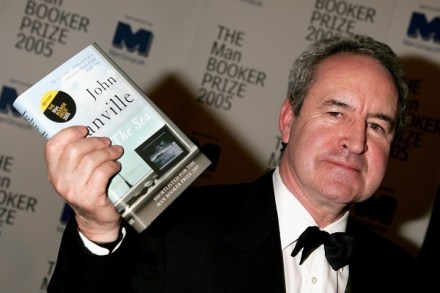
The salubrious surroundings of the Waldorf Hotel seem like a very apt setting to interview a master of style and sophistication. When I arrive in the lobby, John Banville is nowhere to be seen. Peeping into the bar, I notice a grey haired man with a moustache, wearing a tuxedo, softly playing a grand piano. Taking a seat, this strikes me as the kind of place that Alex Cleave would enjoy a drink. Alex is a semi-retired actor, and the central protagonist and narrator of Ancient Light; a novel that recalls a passionate love affair that took place over fifty years ago. The object of Alex’s desire was Mrs Gray, his best friend's mother, who was 35, when he was a naïve 15-year-old boy.

Interview with a writer: Jaron Lanier

From our UK edition

In his new book, Who Owns The Future?, computer scientist, Jaron Lanier, argues that as technology has become more advanced, so too has our dependency on information tools. Lanier believes that if we continue on our present path, where we think of computers as passive tools, instead of machines that real people create, our myopia will result in less understanding of both computers and human beings, which could cause the demise of democracy, mass unemployment, the erosion of the middle class, and social chaos. Lanier encourages human beings to take back control of their own economic destiny by creating a society that values the work of all industries, and not just those with the fastest networks.